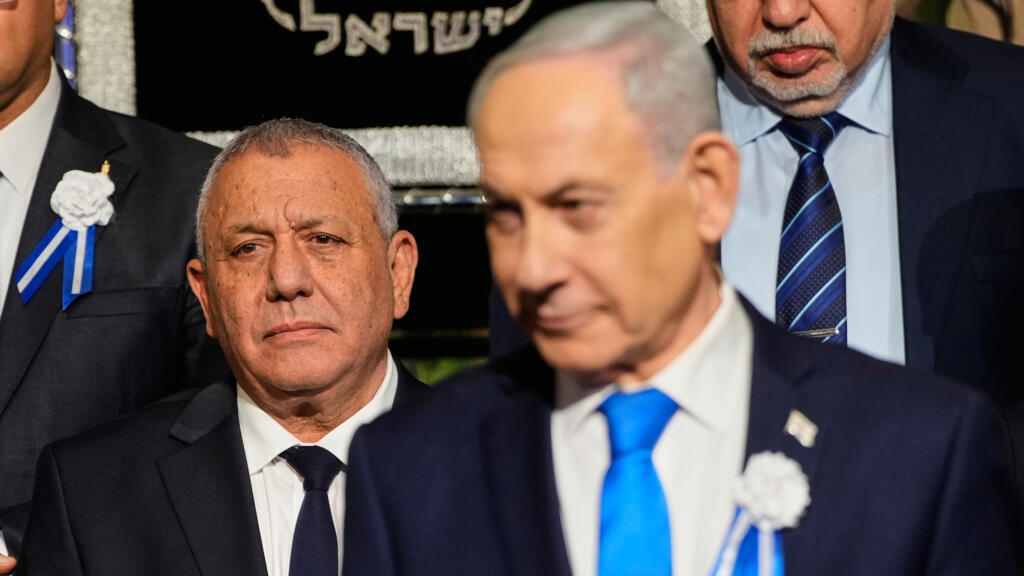
Gadi Eisenkot, a leading contender for the Israeli premiership, issued a sharp rebuke against caretaker Prime Minister Benjamin Netanyahu on Sunday, declaring that the incumbent “cannot remain at the head of the government for a minute longer.” The former army chief made these comments following media reports alleging that a senior aide to Netanyahu engaged in electoral interference on the eve of the recent vote.
Eisenkot launched the criticism just hours after representatives of the two political rivals met to discuss the prospect of forming a national unity government. In a statement, Eisenkot described the conduct of Netanyahu and his entourage as a “concrete, direct and immediate threat to Israeli democracy.” He called for the immediate opening of an investigation into the matter.
The controversy stems from a report by Channel 12, which indicated that Netanyahu’s chief of staff, Ido Norden, contacted the police commissioner’s office to complain about members of the Arab-Israeli Raam party. According to the channel, Norden directed officers to an intelligence source claimed to be a former employee of Netanyahu’s office. Based on this information, three members of Raam were arrested, though they were later released after police determined the claims were unfounded.
In response to these events, Netanyahu launched a campaign against the Arab-Israeli parties, accusing them of electoral fraud after they secured a record number of seats in the election. Netanyahu’s office has disputed Channel 12’s reporting, labeling it “false” and asserting that Norden had merely fulfilled a civic duty.
The Likud party, Netanyahu’s political bloc, accused Eisenkot of “outrageous incitement.” In a statement, the party claimed that while the prime minister was extending a hand for unity, Eisenkot and his associates were issuing statements filled with “venomous, inflammatory attacks.” The opposition has argued that Netanyahu is attempting to delegitimize Arab parties and the election results to maintain power. Following last month’s election, neither the Netanyahu bloc nor Eisenkot’s opposition secured the 61 seats necessary to form a government independently. The two main Arab parties, the Joint List and Raam, have indicated support for Eisenkot, who was tasked with forming a government last week. While Netanyahu renewed his appeal for a unity government on Saturday, Eisenkot dismissed the offer, accusing the prime minister of playing “tricks.”



It feels like a rigged system where one side gets arrested on weak claims just to win votes.
Likud calls it incitement, but pointing out illegal actions is basic civic duty, not an attack.
I am surprised how quickly the unity talks collapsed. Does this mean another election is just around the corner?
Eisenkot finally said what many Israelis are too afraid to voice. Democracy cannot survive this kind of interference.