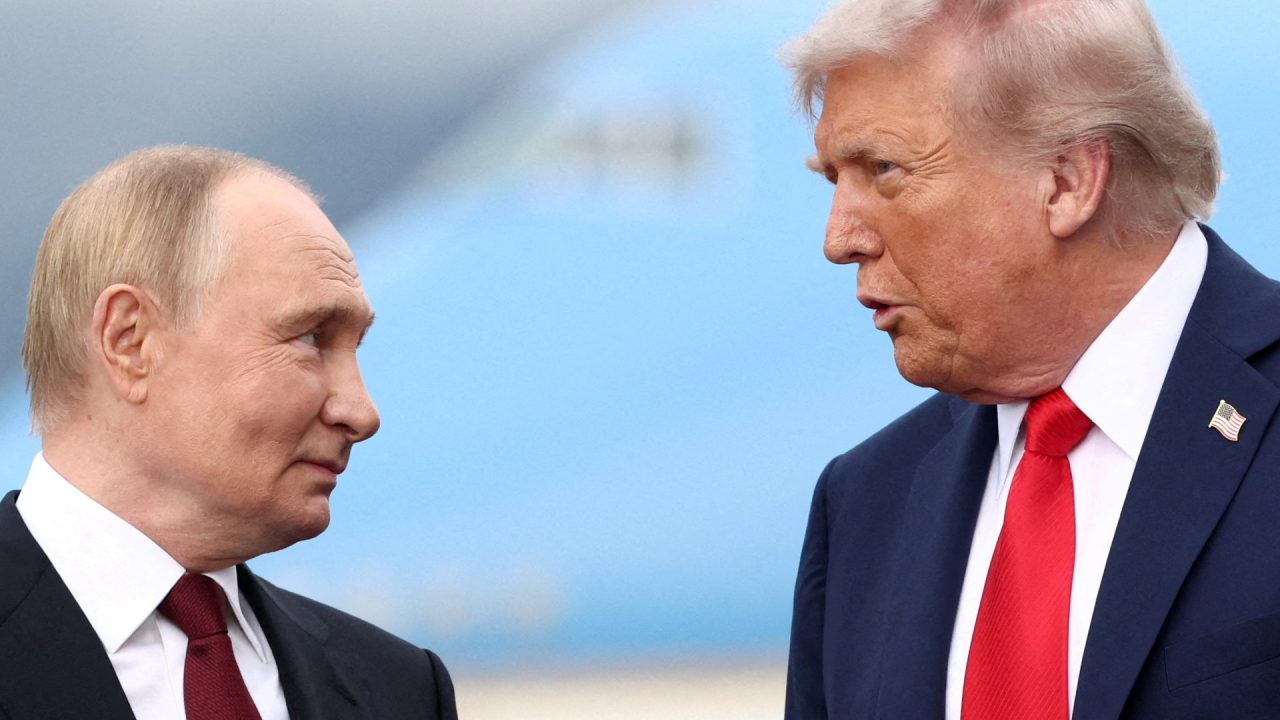
China is resisting efforts to join a new nuclear arms control treaty involving the United States and Russia, arguing that its significantly smaller arsenal does not justify participation at this stage. This diplomatic friction comes ahead of a historic trilateral meeting between US President Donald Trump, Chinese President Xi Jinping, and Russian President Vladimir Putin, scheduled to be held on the sidelines of the Asia-Pacific Economic Cooperation (APEC) summit in Shenzhen this week.
The core of the negotiation revolves around the New Strategic Arms Reduction Treaty (New START), which expired in February, ending more than half a century of limits on US and Russian strategic nuclear weapons. While the US and Russia are looking to establish a successor agreement, Washington insists that a true 21st-century framework must include Beijing. US officials argue that a bilateral treaty between Washington and Moscow no longer reflects the global balance of power, given China’s rapidly growing stockpile.
However, analysts point to a massive disparity in nuclear holdings as the primary reason for Beijing’s reluctance. According to the Stockholm International Peace Research Institute (SIPRI), the US and Russia each possess more than 5,000 nuclear warheads, whereas China is estimated to hold approximately 620. Although China’s arsenal is the fastest-growing among major powers—adding around 100 warheads annually since 2023—it remains a fraction of the Western and Russian totals. Chinese Foreign Ministry spokesperson Lin Jian stated that China will not participate in disarmament negotiations while its nuclear forces are not on the same level as those of the US and Russia.
Experts also cite structural and credibility concerns. Professor Zhao Minghao of Fudan University noted that China maintains a “minimum deterrence” policy, viewing nuclear weapons strictly as political instruments for assured retaliation rather than for warfighting. He argued that a treaty would cap China’s defensive insurance while imposing intrusive verification on a comparatively small force. Furthermore, the US withdrawal from previous agreements like the Anti-Ballistic Missile Treaty and the Intermediate-Range Nuclear Forces Treaty has eroded trust, leading Beijing to view arms control as a geopolitical tool used by Washington.
Analysts suggest that any future trilateral agreement would likely require the US and Russia to first reduce their arsenals to a point closer to genuine parity. While experts see potential for incremental steps like data exchanges and test moratoria, the fundamental obstacle remains political trust. With ongoing tensions related to the Ukraine war and the Asia-Pacific region, experts predict that formal arms control is unlikely in the near term, favoring informal restraints instead.



Honestly, I am not surprised Beijing refuses. Why negotiate from a position where you are numerically outgunned ten to one?
Fascinating to see how minimum deterrence doctrine clashes with Western expectations. They genuinely just want one shot back.
New START expiring was a disaster. Now adding China to the mix without parity feels like a political stunt.
The APEC summit in Shenzhen is going to be incredibly awkward if they can’t even agree on basic terms.
I wonder if this deadlock will just push everyone to quietly build more missiles instead of talking about limits.
Trump thinks he can charm Xi and Putin into a trilateral deal, but the trust deficit is way too deep.
It makes sense why China balks. Capping their arsenal when the US and Russia have thousands is just bad math.