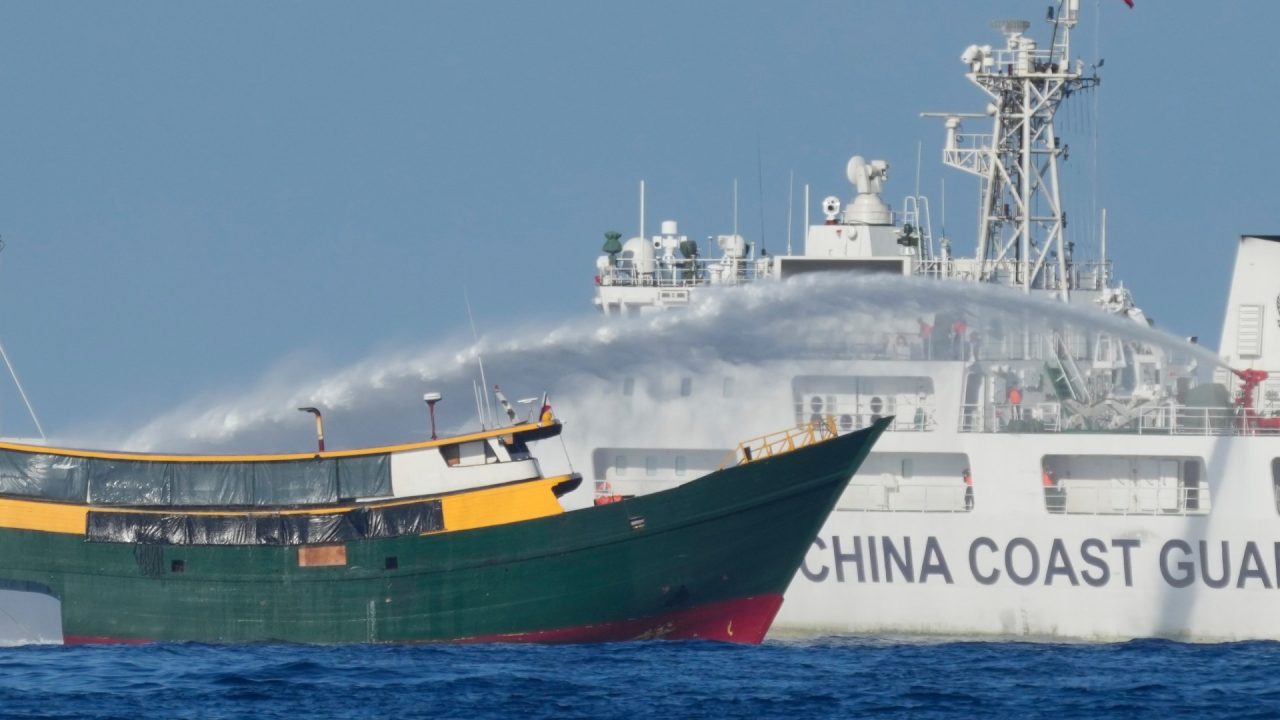
China and the Association of Southeast Asian Nations (ASEAN) have not reached a final agreement on a code of conduct for the South China Sea, concluding their latest round of negotiations in Manila without a definitive outcome. Despite making tentative progress on approximately 80 percent of the draft, critical disagreements persisted, particularly regarding whether the final code would carry legal binding force, according to Philippine Foreign Minister Theresa Lazaro.
“There is no conclusion yet,” Lazaro stated during the ASEAN summit on Sunday. She noted that member states and Beijing continue to hold divergent views on key operational and legal aspects of the draft. The two parties have been engaged in this negotiation process for over two decades to manage overlapping territorial claims in the region.
The Philippines, currently holding the rotating chairmanship of the 11-nation bloc, had previously committed to expediting the process to reach an agreement by the end of this year. However, Lazaro indicated that officials still anticipate the code might be finalized under the leadership of Singapore, which will assume the ASEAN chair role in the coming year.
Tensions in the South China Sea remain high due to Beijing’s expansive claims, which overlap with the exclusive economic zones of Brunei, Indonesia, Malaysia, the Philippines, and Vietnam. While an international arbitration tribunal ruled in 2016 that China’s claims lacked a legal basis under international law, a decision Beijing rejects, maritime confrontations have intensified in recent years. The Philippines has accused Chinese vessels of aggressive maneuvers and interference with resupply missions, while China has accused Manila of intruding into its sovereign territory. These disputes escalated significantly after President Ferdinand Marcos Jr took office in 2022.
In a separate matter, ASEAN leaders maintained their ban on Myanmar’s top political figures attending the bloc’s summits, citing the country’s failure to adhere to a peace plan established in 2021. The group expressed deep concern over ongoing violence and civilian casualties in Myanmar’s civil war, urging all parties to cease attacks on civilian infrastructure. Although Myanmar President Min Aung Hlaing, a former military chief, has recently visited several ASEAN member states, the association emphasized that the Five-Point Consensus remains the primary framework for resolving the political crisis, limiting Myanmar’s participation to lower-level diplomats.

I doubt China will ever accept a truly binding code that limits their expansive territorial claims.
It is good that ASEAN is also focusing on Myanmar’s civilian casualties during this summit as well.
Twenty years of talks and we still have no deal. This process is incredibly slow and frustrating.
The fight over whether the code is actually binding remains the biggest hurdle for everyone involved.
Why did they even think they could finish this by the end of the year? Singapore is now responsible.
It is concerning that they only reached 80 percent. The delay just allows more aggressive maneuvers in the sea.