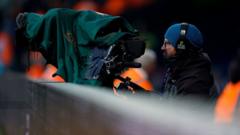
Andy Burnham has called for a measured approach to discussions regarding the potential removal of the Saturday 3pm television blackout in UK football, emphasizing that the financial health of the professional football pyramid must remain the priority.
The regulation, which prohibits the broadcast of live matches in the UK between 2:45pm and 5:15pm on Saturdays, was originally introduced in the 1960s to incentivize fan attendance at lower-league games. It is currently enforced through Article 48 of the UEFA Statutes and is imposed by the English and Scottish football associations when half of the fixtures in the top two divisions are scheduled for that time slot.
Burnham noted that while the Premier League is navigating a record £6.7bn domestic broadcasting deal with Sky and TNT, allowing for up to 270 live games per season, expanding coverage at the 3pm slot could undermine the economic viability of the English Football League and non-league clubs.
“I would urge a bit of caution [on the blackout], because it does protect the income of lower-league clubs,” Burnham stated. “If you have effectively wall-to-wall Premier League football at any time, it takes away perhaps the incentive to go and watch the football league or non-league.”
The issue is timely as the broadcast rights deals for the Premier League, EFL, and Scottish Professional Football League (SPFL) are all set to conclude in the 2028-29 season, potentially allowing for rule changes in the next cycle. In October, the SPFL indicated flexibility regarding the number of matches included in new television agreements, which BBC Sport understands may include Saturday afternoon games.
Burnham argued against a purely consumer-driven view, stating: “I’m not going to take the pure consumer view here. I’ll take the health-of-football approach to this particular issue.”
He added that protecting the experience of paying supporters and the integrity of the football pyramid are more important than simply increasing the volume of live football available on television. “I would first of all want to protect the football pyramid before I agree to saying ‘let’s have even more live football’,” he said.


If Premier League games are everywhere, where does that leave the Championship? I worry about their attendance.
We need a balanced approach here, not an all-or-nothing strategy. Compromise might be the best answer.
I remember when the whole town attended matches on Saturday afternoons. That community spirit is worth protecting.
Is this really about consumer choice or just protecting existing interests? The logic seems a bit outdated.
The pyramid structure is fragile. Removing this safeguard would disproportionately hurt the lower leagues financially.
It feels archaic to ban live football just because. I prefer watching matches from home comfortably.
As a small town supporter, this protection is vital for our local club’s survival. Keep the blackout.