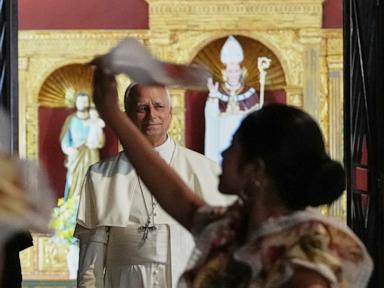
Pope Leo XIV is concluding his visit to his birth country of Peru with a dual itinerary covering the high Andes and the dense Amazon rainforest, placing the rights of Indigenous communities and environmental protection at the center of his final days in the region.
The pontiff, who is currently recovering from lung cancer surgery, will first travel to Cusco, the former capital of the Inca Empire located at an elevation of 3,400 meters (11,000 feet). His schedule there includes a visit to the historic Sacsayhuamán fortress and a ceremony in the Plaza de Armas to present a shroud from the Holy See for the image of the Lord of the Earthquakes.
Following this stop, the Pope will fly to Pucallpa, an Amazonian city with a population of approximately 434,000, where he is expected to focus on the challenges facing local tribes, including the Shipibo, Asháninka, and Kukama communities. The trip aims to address the severe impacts of illegal mining, deforestation, and organized crime on ancestral lands.
Cardinal Pedro Barreto, president of the Amazon bishops conference, stated that the Pope is continuing the path established by his predecessor, Pope Francis, in advocating for the protection of the vulnerable and the environment. The visit also includes a symbolic planting of a shihuahuaco tree, which Rev. Luca Zanta, one of the trip’s organizers, described as a representation of the Church’s desire to endure and protect its values for future generations.
Illegal gold mining in the region has become a lucrative but destructive enterprise, utilizing toxic mercury and causing significant pollution and health issues. Raphael Hoetmer from Amazon Watch noted that rising global gold prices have increased the incentive for these operations, leading to environmental degradation and encroachment on Indigenous territories.
On the day prior to the Pope’s arrival in Pucallpa, Peruvian police conducted operations against illegal mining in the Madre de Dios region, destroying extraction equipment valued at $4.1 million. Authorities also highlighted concerns regarding Indigenous groups living in isolation, such as the Mashco Piro and Kakataibo, who face threats from logging concessions and drug cartels exploiting the remoteness of their reserves.
The visit also includes attention to sexual violence, with particular focus on a recent case involving the abuse of Awajún and Wampis girls in Condorcanqui province. Rev. Peter Hughes, an Irish priest who has lived in Peru for over six decades, emphasized that the visit reflects the Church’s commitment to justice and peace for the marginalized and those without a voice.
Cusco is always beautiful, but seeing the Holy Father there makes it feel like a real event.
It is heartbreaking to hear about the vulnerable isolated tribes being threatened by cartels and loggers.
The police raid on the illegal mines is a good start, but we need much more enforcement.
High altitude travel right after surgery seems risky. I wonder if the medical team approved this itinerary.
Planting a shihuahuaco tree feels like a powerful symbol for the future, especially given the deforestation threats.
Do you think this visit will actually lead to concrete policy changes or just more empty promises?
It is inspiring that he continues this important environmental work despite his recent health struggles and recovery.