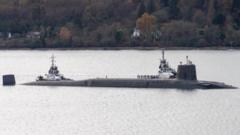
HMS Vengeance, a Royal Navy submarine equipped with Trident nuclear missiles, has returned to its Scottish base following a historic deployment of 217 days. The vessel, which departed Faslane near Helensburgh on 12 April, marks the longest continuous patrol in the history of the British fleet.
Defence Secretary Wes Streeting welcomed the 140-member crew back at HM Naval Base Clyde, acknowledging the unprecedented duration of the mission. He noted that the extended deployment reflects a broader trend, with Vanguard-class patrol lengths more than doubling in recent years due to a shortage of available vessels. Streeting expressed personal gratitude to the crew, stating that the country should be ‘extraordinarily proud’ of their dedication and the professional service they provided to maintain the nuclear deterrent.
The extended timeline was further complicated by a technical fault in a replacement submarine, which delayed the original expected return date. Upon arrival, the hull of HMS Vengeance was visibly encrusted with marine growth, and some sound-absorbing tiles were missing, reflecting the intensity of the long underwater operation.
First Sea Lord Gen Sir Gwyn Jenkins recently praised the commitment of submariners to NATO security but emphasized the urgent need for the UK to improve fleet maintenance. Currently, only three Vanguard-class submarines are operational, as HMS Victorious undergoes a £560 million deep maintenance overhaul in dry dock that began in 2023. The government has confirmed that the Dreadnought-class replacement programme is on track to begin in the early 2030s.
Since 1969, the UK has maintained a continuous patrol of at least one ballistic missile-armed submarine to provide a credible nuclear deterrent. Crews on such missions remain in radio silence to avoid detection, relying on weekly 120-word family messages and specialized communication methods. Returning submariners often face physical adjustments, including altered distance perception and sensitivity to external smells, after months living in confined, filtered-air environments.



Defence Secretary should focus on funding the new fleet instead of just praising them for doing more with less.
Hull encrusted with marine growth sounds like a nightmare for the engineers. Great resilience from the Navy though.
Those weekly 120-word messages must be the most painful part of the whole job for their families back home.
Doubling patrol lengths because we lack vessels is not a long-term solution. We need better infrastructure planning.
I am genuinely impressed by these sailors. Staying in radio silence for seven months takes serious mental fortitude.
Missing sound-absorbing tiles? That seems like a serious issue for stealth operations. Glad they got back safely though.
The fact that only three subs are operational really highlights our maintenance failures. We need the new Dreadnoughts faster.
217 days sounds incredible, but I worry about the crew’s mental health in such a confined space down there.