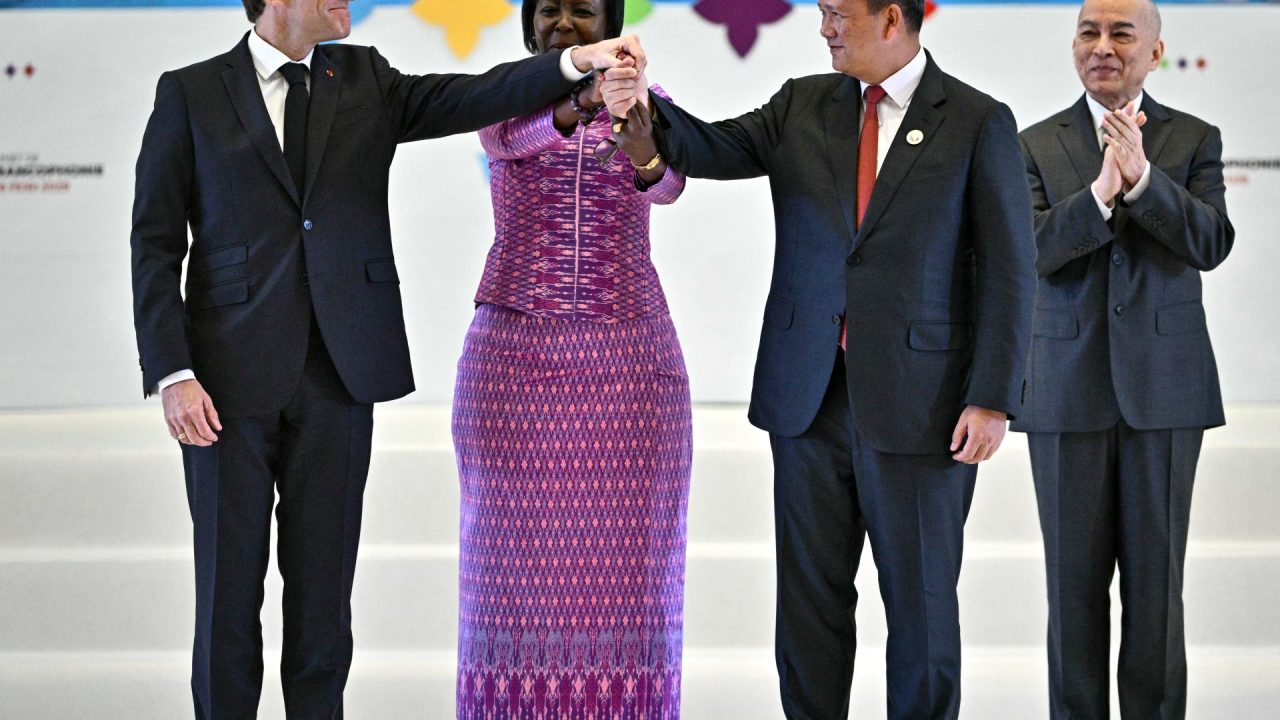
The three-day summit of the Organisation internationale de la Francophonie (OIF) opened in Phnom Penh, Cambodia, against the backdrop of a significant diplomatic dispute between the Democratic Republic of the Congo (DRC) and Rwanda. The core of the conflict centers on the selection of the next secretary-general for a four-year term, a decision that threatens to fragment the loose confederation of French-speaking nations.
French President Emmanuel Macron, who chaired the previous summit in 2024, arrived in Cambodia on Saturday to hand over the chairmanship. He is expected to meet with Cambodian Prime Minister Hun Manet. Approximately 20 national leaders are attending the event, which continues through Monday. Notable attendees include Canadian Prime Minister Mark Carney, Vietnamese President To Lam, Rwandan President Paul Kagame, and DRC President Felix Tshisekedi.
Rwanda’s incumbent OIF head, Louise Mushikiwabo, is seeking a third term. However, the DRC has threatened to withdraw from the organization if she is re-elected. Kinshasa accuses Kigali of supporting the M23 armed group in the east of the country, an allegation backed by the United States and United Nations experts. Rwanda denies these claims. As a concession, the DRC withdrew its own candidate, Juliana Lumumba, and endorsed Romanian former Prime Minister Dacian Ciolos to foster a consensus, while Rwanda’s foreign minister Olivier Nduhungirehe confirmed that Mushikiwabo would remain in the race. Mauritania’s Coumba Ba is also a candidate.
The DRC, which has a population exceeding 110 million and is the most populous nation where French is an official language, represents a vital member of the OIF. The organization has already faced contraction, with Mali, Niger, and Burkina Faso announcing withdrawals in March 2025 following suspensions related to military coups. France remains the largest financial contributor, funding the bulk of the OIF’s 71.7 million euro ($79 million) budget for 2026.
Beyond the leadership dispute, the summit, titled “Reinvest in Peace for Shared Prosperity and Lasting Stability,” is under scrutiny for human rights issues in the host country. UN Special Rapporteur Tom Andrews urged delegates to advocate for the release of detained activists in Cambodia, a de facto one-party state. “No one should be detained for defending human rights, reporting on matters of public concern, or voicing critical opinions,” Andrews stated. Macron is scheduled to visit the Angkor World Heritage Site on Monday before traveling to Malaysia.
The title says ‘Reinvest in Peace’, yet the biggest power players are actively fighting over bureaucratic control of it all.
Louise Mushikiwabo wanting a third term feels excessive to me. The organization desperately needs fresh leadership ideas.
It is strange to see a Vietnamese president at this summit. Is the organization really trying to broaden its geographic scope?
With three African nations already leaving, the OIF is shrinking fast. This leadership fight might be the final blow.
I am curious how Macron will navigate this tricky situation between the two major players at this summit.
France keeps paying for this whole operation, yet the DRC is threatening to leave if their demands are not met.
The fact that Rwanda is accused of supporting M23 really makes their stance on the OIF leadership much harder to digest.
Interesting that the DRC pulled out their own candidate to support a Romanian one. That is a bold move.
Why are we holding this summit in a country with such serious human rights issues? It feels deeply hypocritical to everyone.
It is shocking that a leadership dispute could threaten the entire unity of our beloved Francophone organization right now.