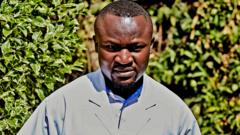
Dr. Raymond Kasereka Kamwanga, a 30-year-old doctor at Katwa Hospital in Butembo, Democratic Republic of Congo, is using his personal experience surviving Ebola to challenge widespread misconceptions about the disease. In July, two months after the World Health Organization declared the outbreak a public health emergency of international concern, Dr. Kamwanga suspected he was infected and decided to seek treatment despite his family’s objections.
His 50-year-old mother, Masika Ndungo, pleaded with him not to go to the specialized treatment center, which the community referred to as a “death house” due to the low survival rate for patients admitted in the late stages of the illness. “Why are you choosing to die at the Ebola treatment centre?” she asked him. However, Dr. Kamwanga recognized that staying home would likely be fatal. He noted that while the disease is real, recovery is possible, and he views his survival as “living proof” that patients can overcome the virus.
The current outbreak, caused by the Bundibugyo species of the virus, has resulted in the deaths of 5,400 people and infected approximately 11,000, making it the second-most deadly outbreak on record. Butembo, in North Kivu province, serves as the epicenter of the crisis. Dr. Kamwanga believes he contracted the virus through contact with a patient in a setting where protective measures were inadequate. His symptoms began with a bitter taste in the mouth, headaches, and malaise, progressing to severe vomiting and diarrhea over several days. Due to the lack of local testing equipment in Butembo, samples had to be sent 54 kilometers away to Beni, a journey that can take 48 to 72 hours owing to poor road conditions in the war-torn region.
After a 13-day hospitalization during which he feared for his life and observed the deaths of other patients, Dr. Kamwanga recovered. Despite receiving a certificate confirming he was Ebola-free, he and his family maintained social distance for 21 days, the standard incubation period for the virus. “We welcomed him home warmly. But because of our fear, we didn’t get close to him any more,” Ms. Ndungo told the BBC.
Since his recovery, Dr. Kamwanga has dedicated himself to community outreach to combat misinformation. He is writing a book titled *The Price of Saving Lives*, using a draft during awareness-raising sessions to convince skeptical residents that Ebola is a tangible threat. He also distributes photographs from his own illness to reinforce this message. However, his efforts face significant obstacles, including death threats and accusations that he is paid to spread information. Mistrust in healthcare authorities is fueled by years of armed conflict and poverty, with some residents viewing the epidemic as a tool used by those in power to threaten vulnerable populations.
Dr. Kamwanga also echoed concerns raised by Médecins Sans Frontières that funds allocated to the Ebola response are being misappropriated by the government, leaving healthcare workers without sufficient protective equipment. “Our government is taking things lightly,” he said. The BBC has requested comment from the Congolese government regarding these allegations. Despite the intimidation and limited resources, Dr. Kamwanga remains committed to fighting the disease, emphasizing that giving up is not an option.
Calling it a death house is wild. His book sounds important for changing minds in those communities.
The forty-eight hour wait for test results is terrifying. Basic infrastructure failures make epidemics so much worse.
Does anyone know if there are updates on the government funding issues? Accountability seems critical here.
I am surprised he faced death threats. People who refuse facts are the real danger to public health.
It is heartbreaking that even a doctor’s mother thought treatment meant certain death. Misinformation really kills.