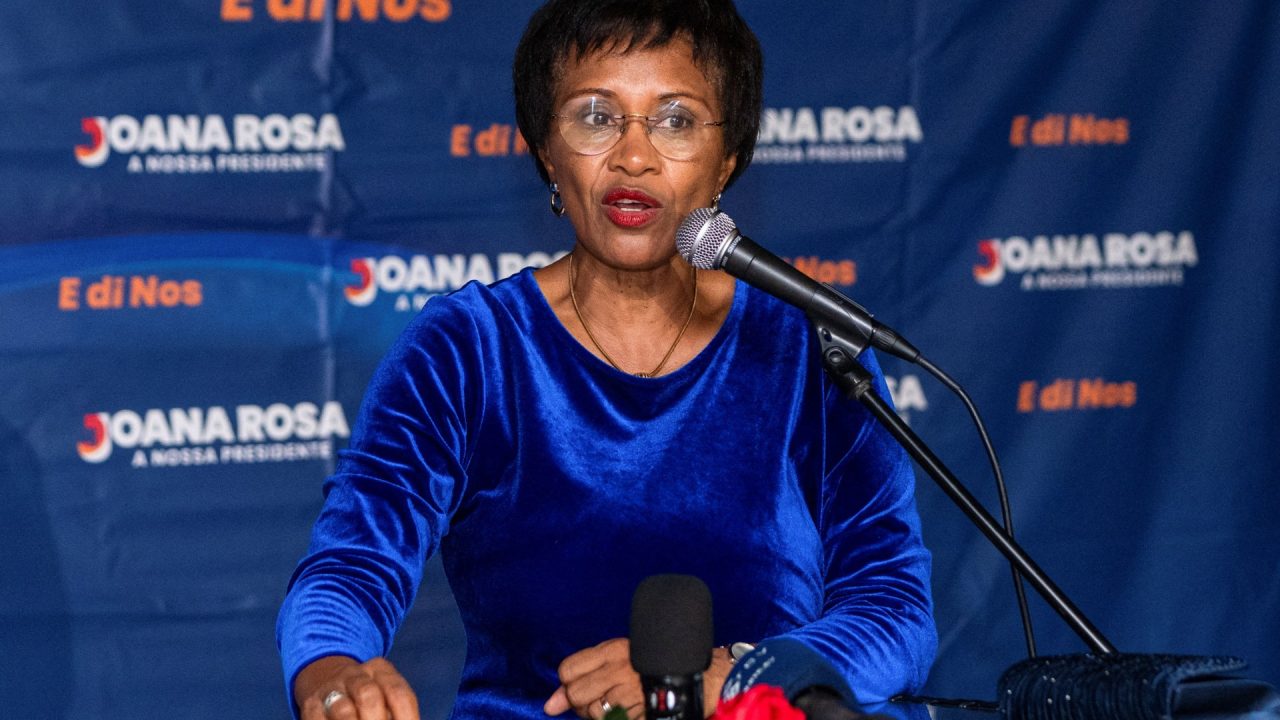
Voters in Cape Verde began casting their ballots on Sunday in a presidential election featuring the West African island nation’s first female candidate. Incumbent President Jose Maria Neves is competing against Joana Rosa, the nominee for the Movement for Democracy, in a contest heavily influenced by the issue of persistent emigration.
More than 300,000 eligible voters had the option to choose from six candidates between 8:00 AM and 6:00 PM local time (09:00 to 19:00 GMT). The election takes place in a country renowned for its political stability, despite surrounding regional volatility.
Neves, representing the African Party for the Independence of Cape Verde (PAICV), is considered the favorite to retain power. The 66-year-old leader served as prime minister for 15 years before assuming the presidency in 2021. His party secured 37 of 72 parliamentary seats in May, enabling Neves to appoint Francisco Carvalho, the former mayor of Praia, as prime minister.
Rosa, a former justice minister and opposition figure, is the first woman to run for the highest office since the country gained independence in 1975. Her party previously governed the nation for a decade until the recent parliamentary vote. Under the country’s hybrid parliamentary-presidential system, the president holds veto powers and serves in a mediating capacity.
Cape Verde, an archipelago off the coast of Senegal, recently gained international attention after its men’s football team advanced to the World Cup knockout stages this year. However, the nation faces significant challenges regarding migration. The diaspora population exceeds the roughly 500,000 residents living on the islands, with many emigrants residing in Portugal and the United States. Approximately 77,000 diaspora citizens are registered to vote at embassies abroad.
If elected to a second term, Neves has pledged to organize a youth summit to address the emigration crisis. Rosa has campaigned for a government that empowers young people to build their futures domestically, aiming to prevent the continued exodus of youth abroad. Political scientists note that voters often feel disconnected from the political class due to a perceived lack of understanding of daily economic difficulties.
Results are expected to be announced within two to three days. A candidate must secure more than 50 percent of the vote to win outright; otherwise, the top two contenders will compete in a runoff election scheduled for November 29.



Six candidates but only two really matter? The other four seem like a waste of voters time.
As a Cape Verdean in Portugal, I hope this new leadership actually brings real jobs back home.
Why are we even still talking about emigration? These small islands simply cannot support the current population density.
It is incredible to see Joana Rosa run, marking a major milestone for women in West African politics.