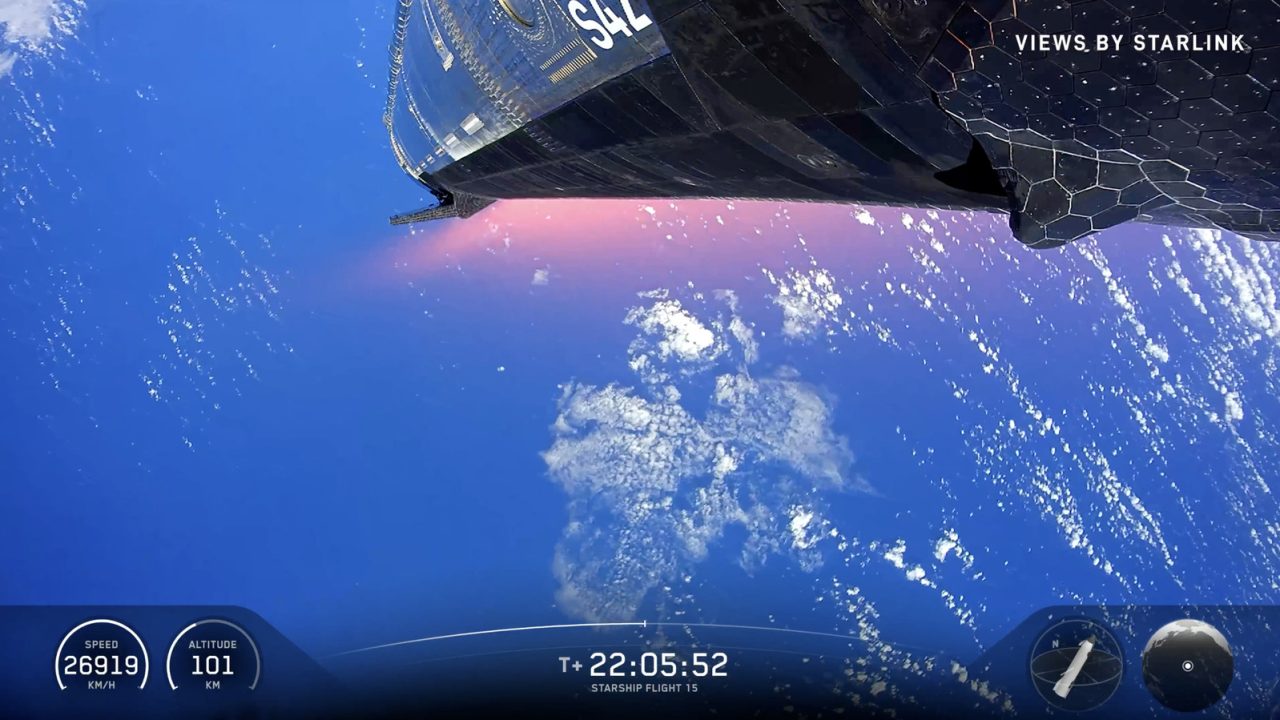
SpaceX conducted its 15th Starship test flight on Friday, launching from Texas with the ambitious goal of demonstrating a first double catch. The mission aimed to have the Super Heavy V3 booster return to the launch site to be caught by the tower’s mechanical arms, with the upper stage, known as the Ship, planned to attempt a similar landing maneuver the following day. While the company has previously recovered V1 Super Heavy boosters, this would have been the first time attempting to capture the upper stage.
The mission achieved several key objectives, including the successful deployment of 26 Starlink V3 satellites into orbit. However, the first stage booster encountered issues during its descent and aborted the catch attempt. Instead of landing on the tower, the booster changed course and splashed down in the Gulf of Mexico, exploding upon impact with the water.
Despite the booster’s failure to land, the Starship upper stage continued its journey, circling Earth for approximately 22 hours. SpaceX is now watching as the Ship makes its descent, with the landing attempt scheduled for shortly after 4 PM ET on Saturday. The live stream of the flight has been available on SpaceX’s website and X account, marking a significant milestone for the reusable launch system even amidst the partial success of the mission.
Watching live every time is a ritual. That gulf splashdown video is already going viral on tech Twitter. Wild engineering.
First time catching the upper stage? I’m skeptical it will work cleanly, but I want to be proven wrong.
Does the splashdown mean the booster is totally scrap now? Or can they still use the data for the next flight?
Still impressive deploying all those Starlink satellites even when the booster didn’t catch. SpaceX is moving fast regardless.
Twenty-two hours of orbiting before landing is wild. The re-entry plasma must look incredible from the sensors. Great footage probably.
That splashdown explosion was concerning. I hope the structural analysis shows why the catch was aborted before it becomes a safety issue.