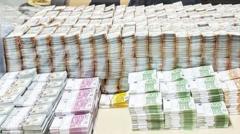
Hungarian authorities have recovered nearly $20 million in cash hidden across rural and forested areas of the country as part of a corruption investigation targeting a former minister from the Viktor Orbán administration. Miklós Seszták, who served as the national development minister during the previous government’s 16-year rule, is accused of accepting bribes linked to the state transport company. He has denied any wrongdoing.
The new Prime Minister, Péter Magyar, who defeated Orbán in a landslide election earlier this year on a promise of anti-corruption measures, described the discovery of the funds as the dismantling of a “mafia”. Magyar’s administration has launched a sweeping cleanup effort, which he has referred to as “Operation Purgatory,” to undo many of the policies and practices from the previous regime.
According to the National Asset Recovery and Protection Office (NVVH), the seized money was discovered during a two-day search in secluded locations, including safes, agricultural buildings, residential structures, warehouses, and underground burials in woodlands. The total value of the cash, comprising 5,071,632,000 forints, €2,658,350, and $1,257,100, amounts to approximately $19.5 million. The NVVH stated that the funds have been deposited into the Hungarian State Treasury.
Corruption and cronyism have long been associated with Orbán’s tenure, which the European Union has characterized as an “electoral autocracy”. Allegations have included the distribution of lucrative government projects to political allies, claims Orbán has consistently denied. In addition to Seszták, two other former ministers and György Matolcsy, the former central bank chief, have been detained since September in separate investigations into graft. All defendants maintain their innocence. The latest probe also resulted in the detention of Orbán’s brother and three others on Monday in connection with a people-smuggling case. The ex-prime minister has dismissed these actions as political revenge, stating that the goal is to eliminate political opponents and establish a one-party system.
The EU calling it electoral autocracy was bold. This arrest supports that assessment quite strongly.
Orbán calling it political revenge is typical. He is used to deflection when his allies are in trouble.
Is this legally admissible? The process of recovery seems a bit chaotic for a proper legal investigation.
This is huge news. It shows that new leadership is actually taking action against old corruption.