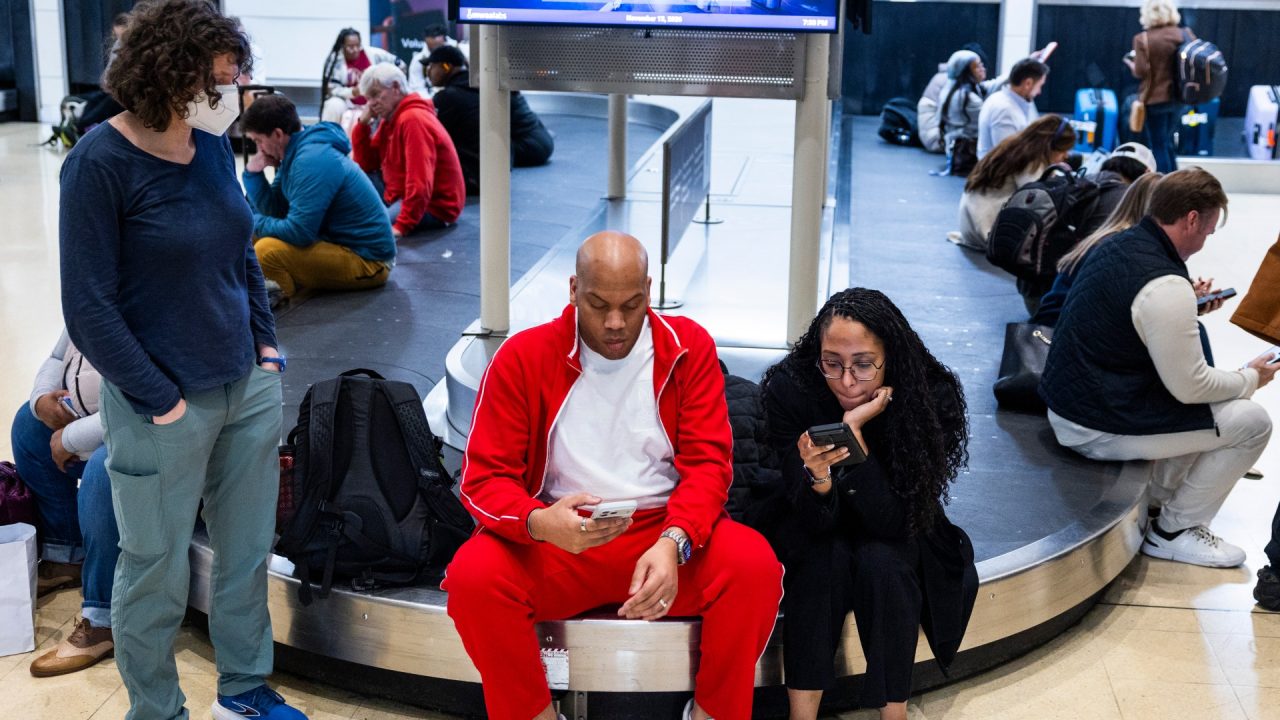
The US Federal Aviation Administration (FAA) lifted a nationwide ground stop late Friday evening, resuming air traffic operations after hours of disruption caused by a telecommunications outage. The agency had issued the emergency order at 3:54 pm Eastern Time, citing “extraordinary circumstances and reasons for safety.” This marks the third time a nationwide ground stop affecting all departing flights has been implemented since the attacks of September 11, 2001.
Transportation Secretary Sean Duffy confirmed that airspace reopened at 8:15 pm Eastern Time, more than four hours after the halt began. He warned that the resumption of flight operations would be gradual, depending on the availability of pilots and crew, and advised passengers to contact their airlines for the latest updates. Aviation data firm Cirium reported that approximately 11,000 flights carrying over 1.5 million passengers were scheduled to depart after the initial halt. By 7:05 pm Eastern Time, at least 827 flights had been diverted, with the majority returning to their departure airports.
The disruption resulted in over 4,700 flight cancellations and more than 10,000 delays on Friday, with an additional 700 cancellations recorded for Saturday, according to FlightRadar24. Passengers faced significant confusion and inconvenience; one traveler from New Zealand, Nicholas Erdodi, described being stranded at Los Angeles International Airport for six hours without clear information on rebooking or accommodations.
Officials attributed the outage to overloaded switches and routers within the air route traffic control centers, which manage transcontinental flights. Secretary Duffy clarified that the incident did not involve a total loss of radar or communications capabilities. Homeland Security Secretary Markwayne Mullin stated that there was no evidence of a cyberattack and assured the public that safety was not compromised, explicitly distinguishing the event from the 9/11 attacks.
Aviation experts raised questions about the failure of backup systems during the outage. Ron Bartsch, a professor of international aviation law, noted that the aviation industry relies heavily on redundancy, and the lack of immediate failover capabilities sparked concerns. Meanwhile, Duffy called for $50 billion in upgrades to the national air traffic control system to prevent similar future incidents. Aviation safety expert Todd Curtis predicted it would take several days for airlines to fully restore their schedules due to the interconnected nature of flight networks and the upcoming peak travel period for Thanksgiving.



Finally! I’ve been watching Twitter all afternoon. Hope my flight tonight actually leaves on time.
Millions of passengers affected? That number sounds high. Did they count every delayed leg of a journey?
Good that airspace reopened gradually. Rushing it would have been dangerous. Safety first, always.
Interesting that it was overloaded switches. I thought modern systems were more resilient than that.
I was stuck in Denver. Airline agents had zero answers. Just wait, they kept saying. Useless.
Why do we need fifty billion dollars just to keep planes moving? The bureaucracy in aviation is exhausting.
Thanksgiving travel is going to be a total nightmare now. Airlines are not ready for this backlog.
Third time this has happened since 2001. We really need to stop ignoring infrastructure funding requests.
Surprised we didn’t lose radar entirely. Glad officials confirmed no cyberattack, but the backup system failure is worrying.
Six hours at LAX is brutal. Where are the hotel vouchers they promised? This is unacceptable service.