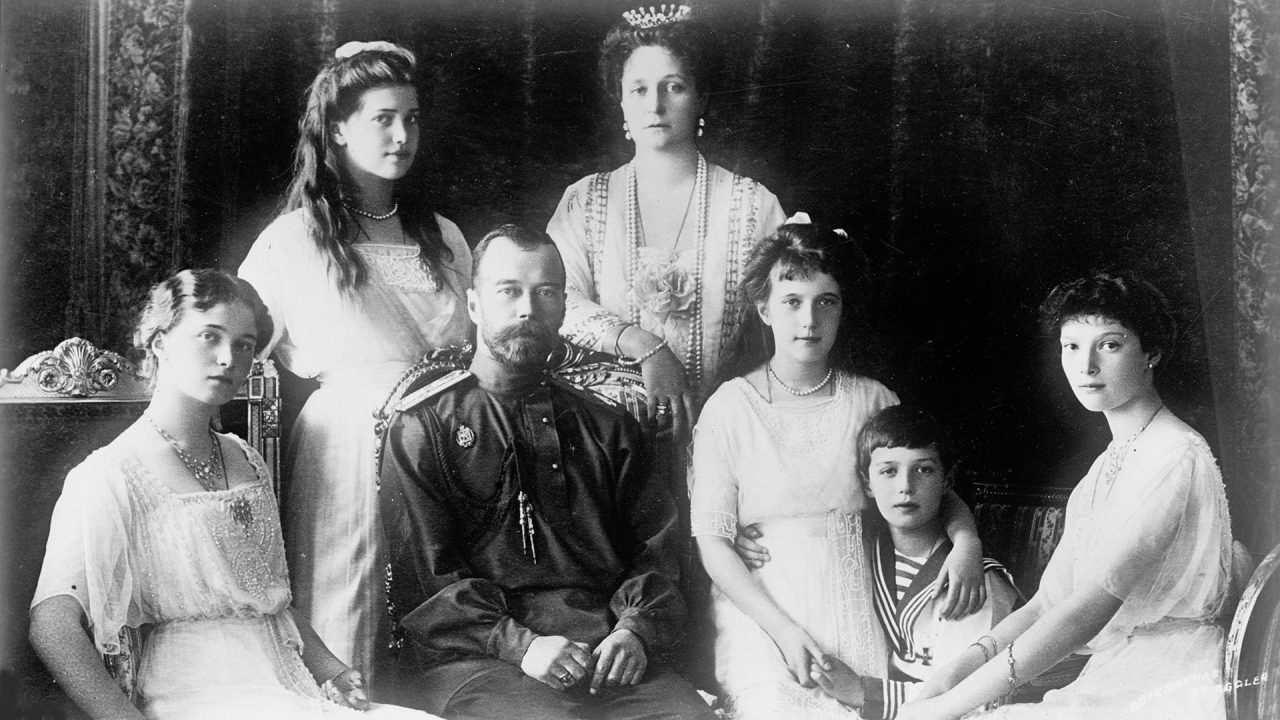
In 1917, Tsar Nicholas II abdicated the Russian throne during the revolution and was exiled to Siberia. Although plans existed to relocate the family to the United Kingdom, King George V withdrew the offer of asylum due to political concerns. After the Bolsheviks took power in October 1917, the imperial family, including the tsar, his wife, their five children, and several staff members, were moved to Ipatiev House in Yekaterinburg. In July 1918, they were executed and buried in a shallow grave treated with sulphuric acid to destroy identifying features. The location of the mass grave was lost for nearly seven decades.
In 1991, amateur archaeologists discovered skeletal remains approximately 20 miles from Yekaterinburg. Forensic examination revealed nine individuals, missing two of the 11 killed. Initial identification relied on historical data and physical traits, such as aristocratic dental work. To confirm these identities, a British team led by Erika Hagelberg employed DNA fingerprinting and mitochondrial DNA analysis. Mitochondrial DNA, passed from mothers to all children but only inherited by daughters, provided a crucial link. The team secured a DNA sample from Prince Philip, who was related to the Tsarina through the female line. His mitochondrial DNA matched that of the Tsarina and her daughters found in the mass grave.
Researchers also compared the remains with living relatives of the Tsar, including Princess Xenia Cheremeteff Sfiris and James Carnegie, 3rd Duke of Fife. While their DNA matched the Tsar’s remains, a rare genetic variation known as heteroplasmy caused a single base mismatch. To verify the connection, the team exhumed the remains of the Tsar’s brother, Georgij, in 1996, confirming the same heteroplasmy pattern. This evidence suggested that the probability of the remains being the Romanovs was millions of times higher than if they were an unrelated family.
The mystery of the two missing children was resolved in 2007 when additional skeletons were found just 70 meters from the original grave. Genetic analysis confirmed these were a young woman and a male aged between 12 and 19. Y-chromosome testing linked the male skeleton to the Tsar’s paternal line, matching relatives descended from Tsar Nicholas I. This finally identified the two missing children as Alexei and one of the daughters, conclusively proving the identities of the entire executed family.


Ninety percent of the work was done by amateurs. We need to support grassroots archaeology more often.
I still can’t believe two children were left out of the first grave. That is just tragic.
Yekaterinburg history is always somber. This closure feels appropriate for the victims of that era.
Heteroplasmy sounds complicated but crucial here. Glad they could verify it by exhuming the Tsar’s brother.
Did King George V really have a chance to save them? That detail about the withdrawn asylum offer shocked me.
The sulfuric acid detail makes the shallow grave story even darker. How did anyone recover so much?
It is fascinating that Prince Philip’s DNA helped identify a Russian Tsar. Global connections really are everywhere.
Seventy years is a long time to solve this. I wonder why the original dig didn’t use DNA immediately.
Finally, scientific proof ends the long debate about the Romanov family. Goodbye to the fake princess claims.