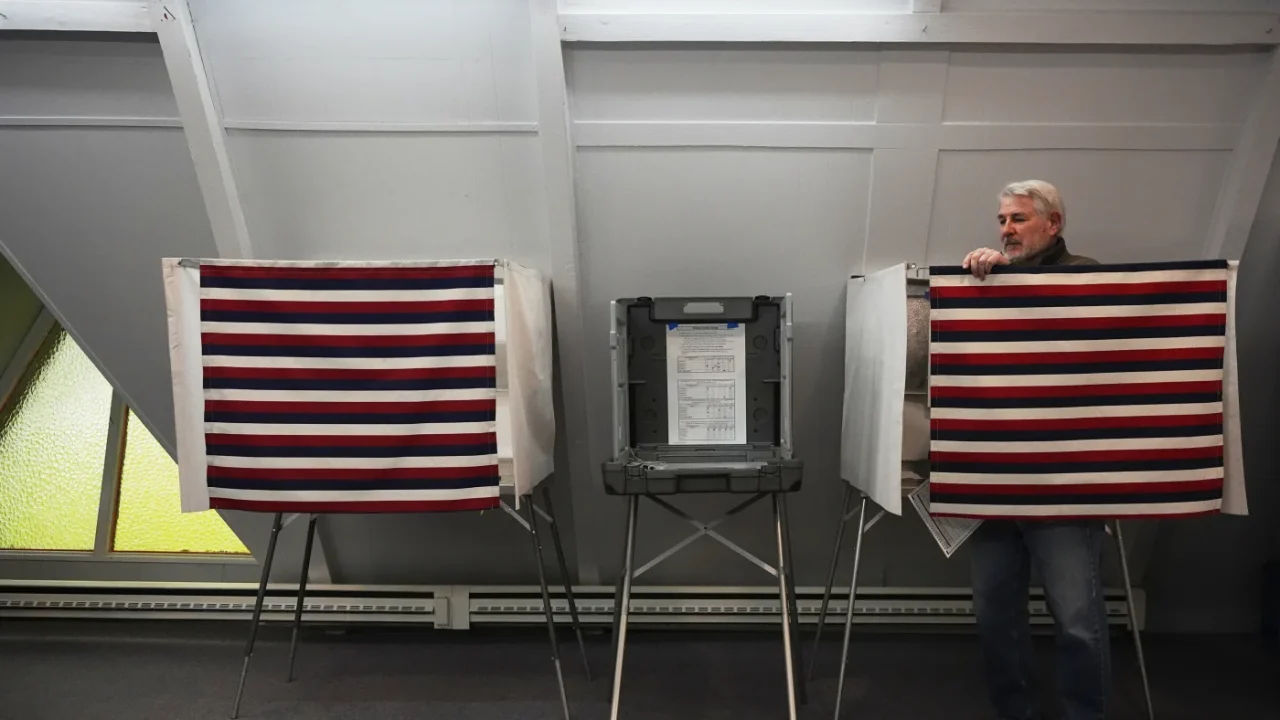
Alaska residents have once again voted to preserve the state’s distinctive election framework, rejecting a ballot measure that would have dismantled the nonpartisan primary system and ranked choice voting (RCV).
The result, confirmed by an overnight call from the Associated Press, marks the second time in two cycles that Alaskans have declined to repeal the system originally approved in 2020. A similar repeal effort failed narrowly in 2024. This year’s decision came amidst intense national scrutiny of Alaska’s election methods, particularly following the inclusion of two candidates with the same name on the U.S. Senate general election ballot.
The state’s Senate race is expected to proceed to a ranked-choice tabulation. Nick Troiano, executive director of the philanthropic venture fund Unite America, stated that voters of all political affiliations support the freedom to choose any candidate regardless of party. He noted that while many general elections in the country are effectively decided before voting begins, Alaska is demonstrating an alternative approach.
Alaska’s system allows the top four candidates from a nonpartisan primary to advance to the general election. If no candidate secures a majority of votes in that general election, ranked choice voting is utilized to determine the winner. While California and Washington use top-two nonpartisan primary systems, Alaska’s top-four model is distinct.
Critics of the system argue that it is confusing and susceptible to manipulation, citing the recent Senate race where an independent candidate named Dan Sullivan was alleged to have been recruited to divert votes from the Republican incumbent, also named Dan Sullivan. Democrats denied involvement in recruiting the independent candidate, who successfully made the top-four ballot and defended his candidacy. Proponents of the current system argue that the ranked choice mechanism mitigates such issues, allowing voters to rank candidates effectively. Meanwhile, voters in Massachusetts recently rejected a move to a top-two nonpartisan system, continuing a trend where similar nonpartisan measures proposed in other states during the 2024 cycle were also rejected by voters.

I wonder if other states will finally copy this. Massachusetts just said no to nonpartisan primaries though.
The double Dan Sullivan situation really scared me. Glad the system held up without total chaos.
Still find it incredibly confusing. Why not just use the standard system like the rest of the country?
Glad Alaska keeps doing its own thing. Ranked choice actually makes voters think harder about choices.