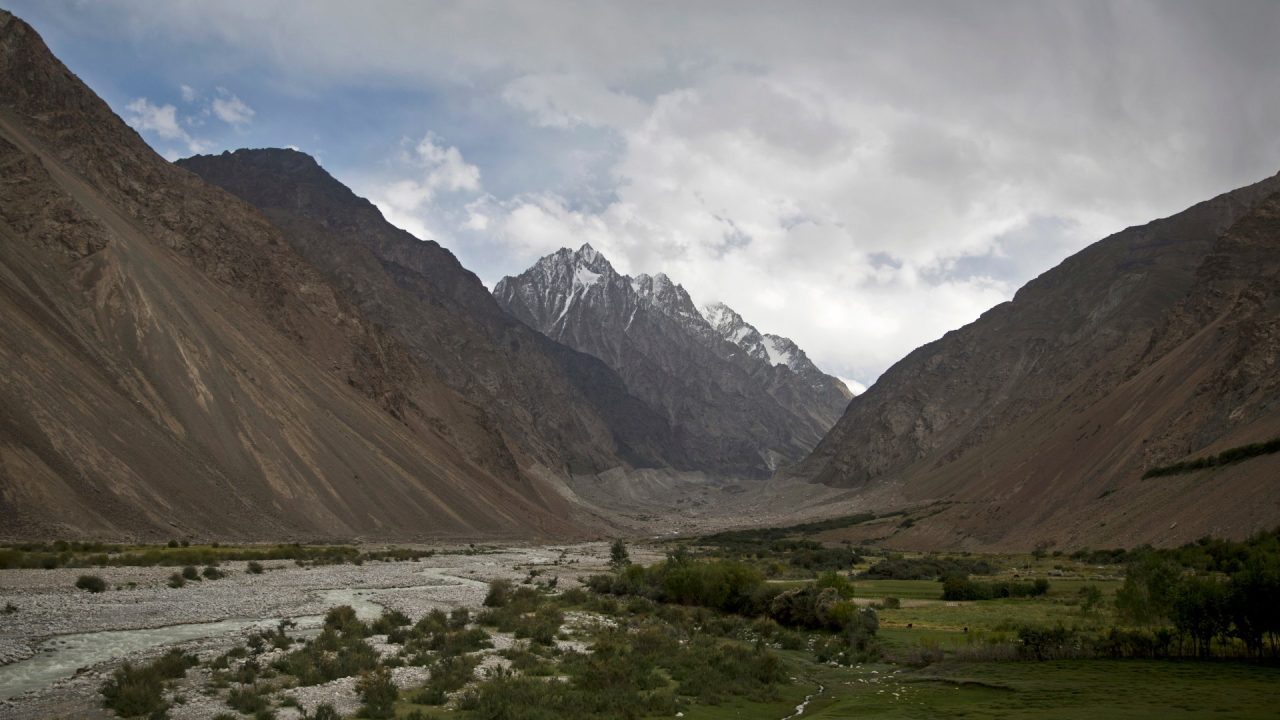
Afghanistan’s Taliban-led government marked the opening of a new road in the Wakhan Corridor on October 4, a project that finally connects the country’s Badakhshan province to its border with China. Although the road reaches the Wakhjir Pass, a key border point, the crossing itself remains closed, with no official border facilities established on the Chinese side.
The unpaved, gravel track in the narrow 350-kilometre corridor was constructed over two phases at a cost of 365 million Afghanis (approximately $5.5 million), funded entirely by Afghan government resources. The corridor, situated between Tajikistan and Pakistan, has been a subject of geopolitical interest due to its strategic location. While the road was first proposed in 2009, construction was delayed for years due to Afghanistan’s political instability and security concerns, only resuming significantly after the Taliban took power in 2021.
China has prioritized security over economic integration in the region. In August 2025, Foreign Minister Wang Yi visited Kabul to discuss border patrols and urge the Afghan government to counter the East Turkestan Islamic Movement. Chinese officials have stated that opening the border is contingent on effective security guarantees, particularly to protect the western border and prevent separatist groups from entering the Xinjiang region. Consequently, major Chinese investments in Afghanistan, including the Mes Aynak copper mine, have faced delays.
For Kabul, the road is a strategic alternative to its trade routes through Pakistan and Iran, which have recently faced disruptions due to regional conflicts and cross-border tensions. Afghan officials envision the corridor as a future link to China’s Belt and Road Initiative, potentially generating transit fees and connecting South, East, and Central Asia. However, analysts note that the region remains sensitive, with recent security incidents in Badakhshan complicating efforts to realize the corridor’s economic potential.

The Wakhan Corridor is always interesting geopolitically. Connecting China to South Asia would completely reshape regional dynamics.
Funny how the Taliban got construction moving when the previous government stalled for fifteen years. Irony is thick here.
I wonder if this corridor actually helps local villages or just serves as a geopolitical checkpoint for big powers.
The ETIM threat is real for Beijing. Until Kabul proves it can handle security, the border stays closed.
Afghanistan is trying so hard to diversify its trade routes away from Pakistan. This feels like a smart move.
Five million dollars for a gravel track? That seems cheap, but the strategic value is likely much higher.
China will always prioritize security over trade. They need Xinjiang stable, so Afghanistan gets left waiting.
It is wild that the road exists but the border is shut. Why build it if you cannot use it?