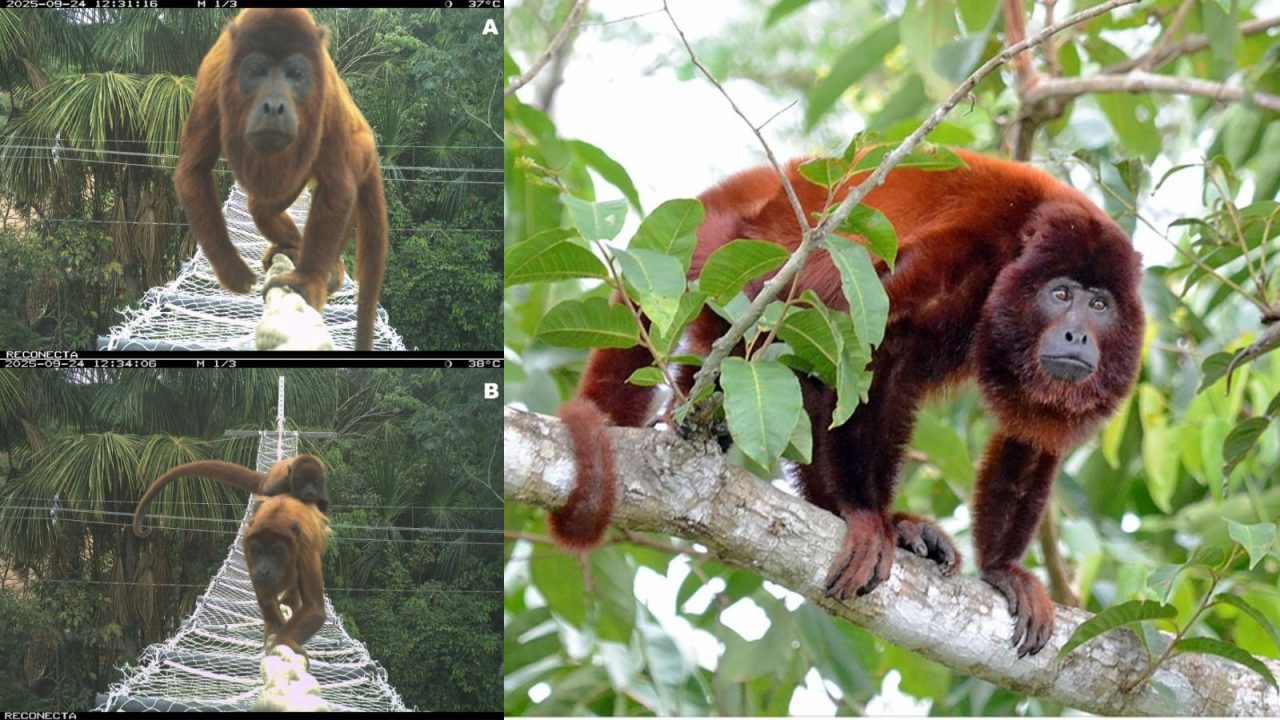
Scientists have identified two previously unknown species of howler monkeys within the Amazon rainforest, a discovery that reshapes the understanding of primate evolution in the region. The new species, named Alouatta iroi and Alouatta matogrossensis, are distinguished by their bushy beards, bright red fur, and expressive faces. This identification brings the total number of recognized howler monkey species to 16.
According to a study published on October 30 in the journal Communications Biology, the findings reveal that the Amazon still harbors significant biological surprises among well-known animal groups. Romina Batista, a biodiversity scientist at the University of Gothenburg in Sweden and the University of Salford in the U.K., noted that the research highlights the region’s enduring ecological complexity.
The conservation status of the new species is alarming. Alouatta matogrossensis is considered to be on the brink of extinction, while the other species faces habitat disruption due to a proposed dam project on the Rio Branco River.
To determine the evolutionary timelines and relationships of these primates, the research team analyzed the genomes of 11 howler monkey species found across South and Central America. By combining existing DNA datasets with new genomic data from specimens held in Brazilian zoological collections, the researchers established that howler monkeys diverged from their closest relatives between 19 million and 13.5 million years ago. However, the genetic analysis challenged previous assumptions about recent evolutionary branches, indicating that the Tapajós red-handed howler and the Amazonian black howler are not as closely related as previously thought. Additionally, the study recommends confirming the Trinidad howler as a distinct species.
Natural geographic barriers, such as the Amazon, Xingu, and Branco rivers, have played a crucial role in driving the independent evolution of these monkeys. While the animals can swim across smaller waterways, major rivers have historically prevented interbreeding, leading to the development of distinct species over time.
Experts warn that this scientific revelation comes at a precarious moment. Jean Boubli, a professor of primate ecology and evolution at the University of Salford, emphasized that deforestation, climate change, and habitat loss are endangering Amazonian wildlife before these species are fully understood by the scientific community.

Red fur and bushy beards? Nature really loves giving these monkeys wild hairstyles.
This proves how much we still don’t know about the rainforest’s actual biodiversity.
Science is moving fast here, but construction projects barely wait for new discoveries to be made.
Wait, are the beards actually red too? Those sound like they belong in a storybook.
I had no idea there were that many species. Rivers really do act like natural fences.
It is heartbreaking that we find them just as the dam threatens their very survival.