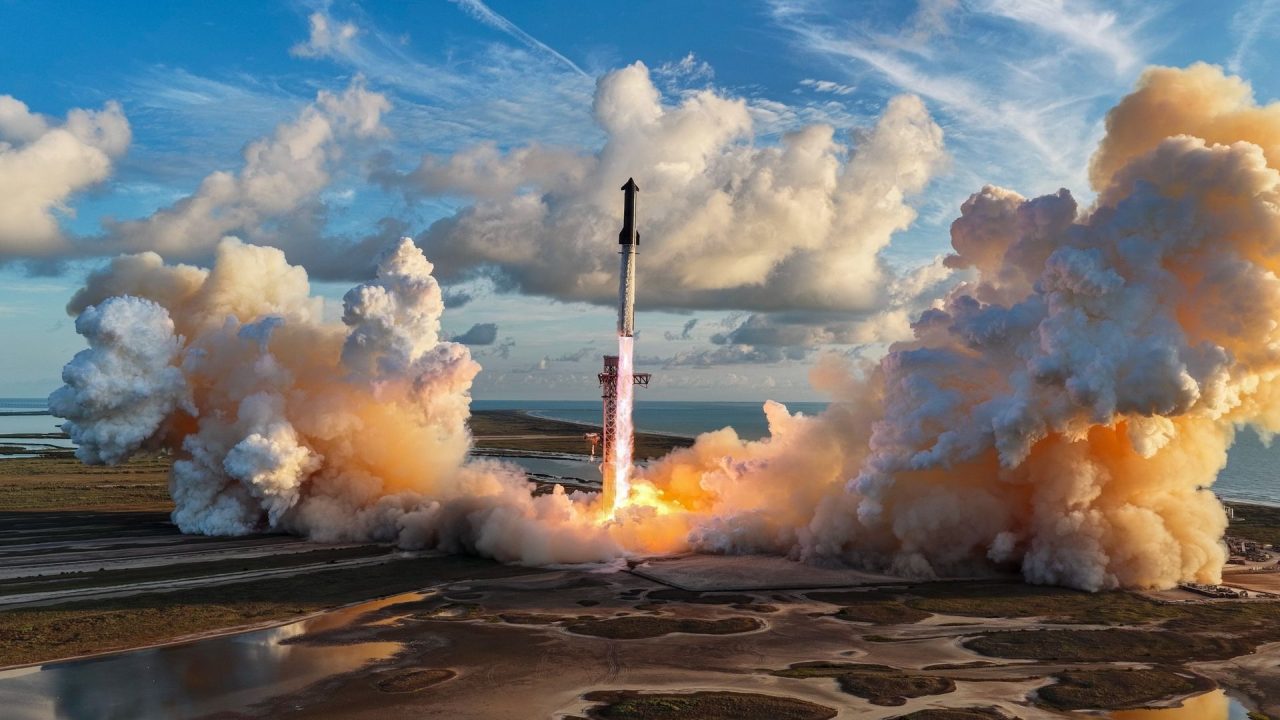
SpaceX is preparing for the 15th flight of its Starship megarocket, a mission designed to achieve the first simultaneous recovery of both the Super Heavy booster and the Ship upper stage. Launching from the company’s Starbase facility in South Texas on November 13, the mission aims to validate a “double-catch” maneuver where the rocket components return to the launch pad and are secured by mechanical arms, marking a significant milestone toward full orbital reusability.
The 75-minute launch window opens at 5:45 p.m. EST on November 13. Early in the flight, approximately 6.5 minutes after liftoff, SpaceX will attempt to catch a next-generation V3 Super Heavy booster. If the upper stage achieves orbital insertion, it will deploy 26 Starlink V3 satellites into low Earth orbit starting about 35 minutes after launch. Twenty-one hours later, subject to on-orbit assessments and FAA-approved safety conditions, SpaceX will attempt to recover the Ship upper stage.
Unlike previous missions that saw the upper stage splash down in the ocean, the Ship vehicle for Flight 15 will maneuver over sparsely populated regions of northern Mexico and southern Texas before descending to Pad 2 at Starbase. The vehicle will perform a bellyflop maneuver as it approaches the site, then flip vertical to be captured by the launch tower’s mechanical arms. Elon Musk stated on the X platform that a successful dual capture would be the first time all parts of an orbital rocket returned to Earth intact, describing it as a critical step for making life multiplanetary.
SpaceX is targeting a launch cadence of approximately 10,000 Starship launches per year by 2030, equivalent to more than one launch every hour. This ambition is necessary to support the deployment of up to 100,000 next-generation Starlink V3 satellites, each adding one terabit of capacity to the broadband network. Additionally, the company plans to support the Starmind project, which aims to launch up to 1 million satellites for orbital AI data centers. A recent contract with German firm Singulus Technologies for a solar cell production line underscores the terrestrial infrastructure buildup required for these orbital plans.
Despite the ambitious timeline, current Starship launch frequencies remain significantly lower. The vehicle flew five times in 2025, and Flight 15 will be its fourth launch of 2026. SpaceX projects that Starship will fly weekly by the first half of 2027 and twice weekly by the end of that year. Future steps following a successful catch will include demonstrating reflight of the upper stage, conducting orbital refueling missions necessary for NASA’s Artemis program, and testing crewed life support systems.
Success for Flight 15 is contingent on the upper stage passing safety checks after reaching orbit. If conditions are not met, controllers may divert the reentry to the Pacific Ocean or the Gulf of Mexico. While SpaceX describes the outcome as “more likely than not,” the mission will serve as a definitive test of the company’s ability to transition from orbital flight to rapid, airplane-like launch cadence.



I am excited to see the belly flop maneuver in action. The mechanical arms look so cool.
Finally, the upper stage stays on land. No more floating debris in the ocean for this flight.
Ten thousand launches yearly seems insane. How do they even manage the regulatory approval for all that traffic?
Catching both pieces at once? That sounds impossible. I hope they know what they are doing here.