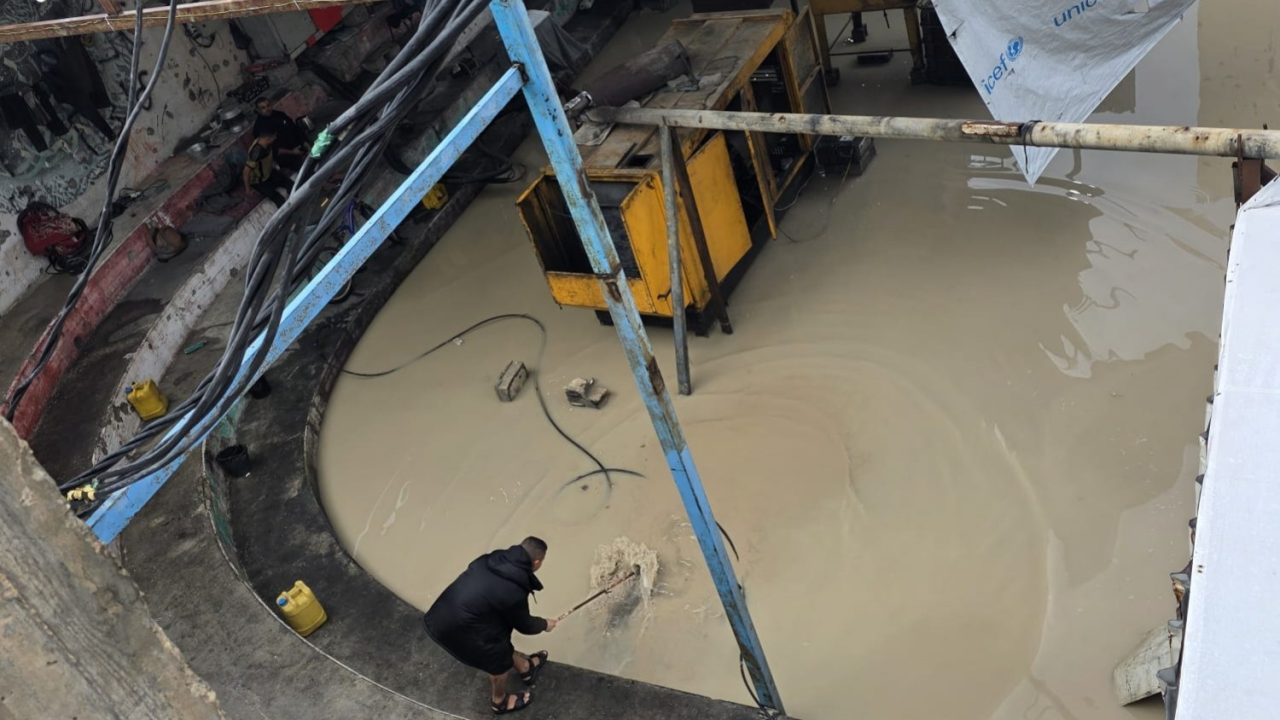
Resident Abu Sajed, a 65-year-old diabetic living in the Bureij refugee camp in central Gaza, spent recent rainy nights moving his family to chairs as water penetrated his makeshift shelter. The flooding damaged his family’s solar power equipment, leaving them without light or a functioning blood glucose monitor. “We could no longer stay in bed because of the heavy rain,” Abu Sajed said, noting that he struggled to help his wife and daughter lift him after slipping on the muddy floor.
According to UNICEF, the recent rainfall has affected more than 106,000 people, while approximately 950,000 displaced individuals reside in flood-prone zones, including 400,000 in high-risk areas. Mohammed al-Hour, who charges phones for neighbors using solar power in northern Gaza, noted that persistent cloud cover hampers solar generation, making it difficult for residents to access lighting or communication.
The Abu Zayed Electricity Company reported that water intrusion damaged equipment at several facilities, forcing the temporary suspension of services at affected branches. Aya Shaheen, the company’s general manager, stated that despite preventive measures such as covering panels with plastic sheeting, the extent of infrastructure destruction exceeds available resources. “Municipalities are also dealing with enormous pressure. Flooded tents need urgent intervention, so they cannot respond to every request for assistance,” Shaheen said.
A joint assessment by the World Bank, the United Nations, and the European Union estimates that 80 percent of electricity generation and distribution assets in Gaza have been destroyed or rendered inoperable. This widespread damage exacerbates the electricity crisis, particularly as solar output declines on cloudy days and equipment remains vulnerable to water damage.
Mohammed Abu Khaled, an energy engineer, warned that rainwater can cause short circuits and corrosion in solar batteries and inverters. He estimated that malfunctions in household and camp solar systems increased by 40 to 50 percent following recent rainfall, with inverter repairs costing between $200 and $500. Solar panels’ output can drop by 60 to 80 percent on cloudy days, further limiting household reliance on stored electricity.
The risks extend to the healthcare sector, where many facilities operate from temporary structures with inadequate weather protection. Abu Khaled noted that water seepage exposes operating-room equipment, portable oxygen generators, and laboratory devices to moisture, threatening essential medical services during a period of severely limited resources.



Leave a Reply