
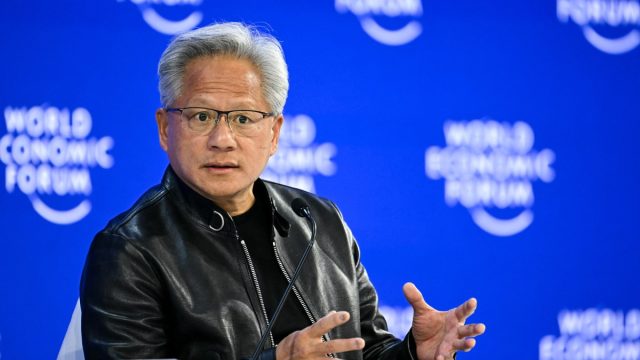
The resignation of Nvidia founder Jensen Huang from the US chip giant following a personal scandal involving a Singapore-based data centre executive has intensified scrutiny of the city-state’s role in global semiconductor trade. Huang stepped down after admitting to an affair with Alice Huang, who leads Megaspeed, a Singaporean company and major purchaser of Nvidia chips that is suspected of facilitating illicit access to restricted technology for Chinese firms.
Singapore has built a reputation as a business-friendly hub that connects US and Chinese markets. Last year, it served as Nvidia’s second-largest billing centre globally, accounting for nearly 20% of the company’s revenue. However, less than 1% of this earnings volume represented chips physically entering Singapore; instead, the island functioned as a central hub where orders were placed and subsequently shipped to other Asian destinations.
Since the United States imposed export restrictions on advanced semiconductors to China in 2022, officials have expressed concern that Singapore could be exploited to bypass these controls. Megaspeed, which became the largest buyer of Nvidia chips in Southeast Asia, is under investigation for allegedly misdeclaring the final destinations of servers purchased through Singapore. While the equipment was stated to be bound for Malaysia, authorities suspect it was diverted elsewhere.
In a statement released this week, the Singaporean government confirmed that it has been investigating Megaspeed and other firms since February 2025 for potential fraud related to false declarations about data servers. The government noted that despite repeated requests for assistance regarding Supermicro, a US-based supplier, it has received limited cooperation. Authorities also investigated Alice Huang for her potential role in the fraud; however, they found insufficient evidence of criminal conduct and allowed her to leave the country in February after holding her passport for several months.
Analysts point to the case as an example of ‘Singapore-washing,’ where entities with Chinese origins use the city-state’s neutral image and ease of doing business to obscure their affiliations. Corporate records reviewed by the BBC suggest that Megaspeed was restructured from a Singaporean subsidiary of a Chinese gaming firm in 2023. The US security analysis group C4ADS assessed that Alice Huang maintained practical control over the company even after transferring ownership. Megaspeed maintains that it has acted lawfully and welcomed government scrutiny.
The situation places Singapore in a diplomatic dilemma. The city-state prides itself on maintaining neutral relations with both the US and China, a stance described by Prime Minister Lawrence Wong as ‘pro-Singapore.’ However, political scientists warn that this balancing act is becoming increasingly difficult to manage. Beijing may question why Singapore is enforcing US-centric investigations, while Washington could view Singapore’s limited cooperation with US authorities as a failure to uphold shared export control norms. The incident underscores the vulnerabilities inherent in an open economy positioned at the crossroads of two geopolitical superpowers.


How does Singapore maintain neutral relations while actively blocking US export controls from being bypassed?
The 20 percent revenue figure is wild. Most of those chips never actually touched the island.
Singapore as a middleman for tech transfer is a dangerous game to play long-term.