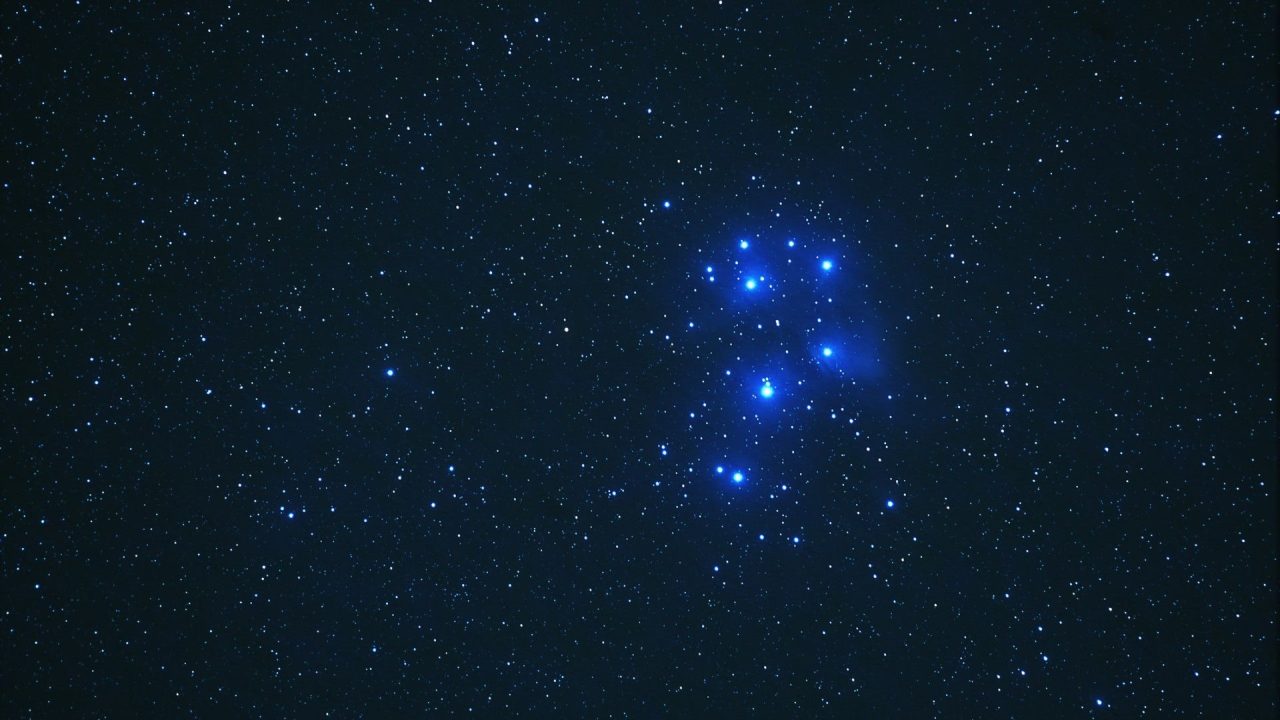
Astronomers and stargazers are encouraged to use the Pleiades star cluster, also known as M45 or the “Seven Sisters,” to informally test their night vision capabilities. Located in the constellation Taurus roughly 444 light-years from Earth, the cluster is becoming prominent in the autumn and winter evening skies. While no telescope is required to observe the group, the number of individual stars visible to the naked eye varies significantly based on an observer’s dark adaptation.
The Pleiades consist of some of the youngest stars visible to the human eye, estimated at 100 million years old. Despite the nickname “Seven Sisters,” observers rarely see exactly seven stars; typically, six are distinct under dark conditions, with the brightest six forming a shape similar to a miniature Big Dipper. The cluster actually contains approximately 1,000 stars, but the count of visible stars depends on factors such as eyesight, light pollution, and atmospheric clarity.
To maximize visibility, experts recommend avoiding bright lights and phones for at least 10 minutes after stepping outside. This period allows the eyes to adjust to darkness, potentially revealing more stars in the cluster. Using 10×50 binoculars or averted vision techniques—looking slightly off-center—can further enhance the experience by revealing fainter stars that are otherwise invisible to direct gaze.
In addition to observing the Pleiades, astronomers have highlighted other celestial events for the week of November 13-19, 2026. The waxing crescent Moon will display “Earthshine,” a faint glow caused by sunlight reflecting off Earth onto the Moon’s dark side. On the night of November 15-16, Mars and Jupiter will be in conjunction, appearing less than two degrees apart in the eastern sky. The Leonid meteor shower is also expected to peak on November 17-18, offering the best viewing opportunities in the pre-dawn hours.


Love the mention of Earthshine. That faint glow on the Moon is always a subtle and beautiful sight.
We call it the Seven Sisters here, but my grandfather always called them the M45 cluster. Old school.
Ten minutes is a long wait, but worth it. My phone screen ruins my night vision instantly.
The Mars and Jupiter conjunction sounds amazing. I hope I can get out from the city to see it.
Is this really a scientific test or just a fun stargazing activity? I feel like it lacks rigor.
Fun fact: I tried averted vision and saw way more stars. Definitely recommend looking slightly off-center.
I used to count ten stars easily before city lights got worse. Now I struggle to see even six.