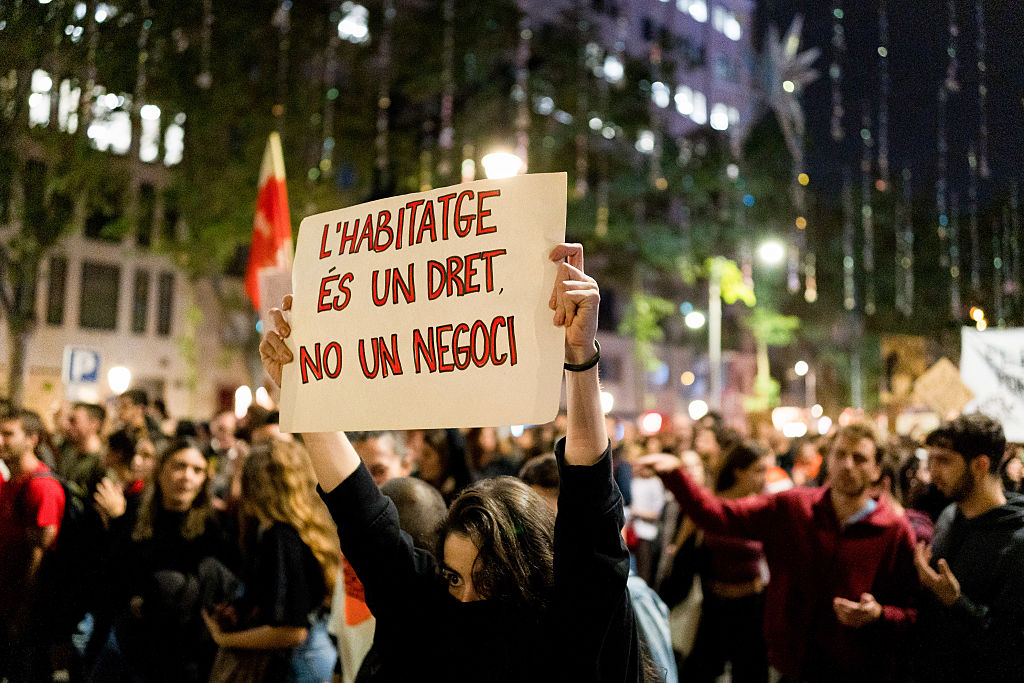
Millions of workers across Spain observed a general strike on Wednesday, marking the first nationwide work stoppage of its scale in 14 years. The union-organized walkout drew an estimated 4 million participants, representing approximately 17% of the country’s 23 million workforce, as they demonstrated against the escalating housing and cost-of-living crisis.
The strike was coordinated by Spain’s two largest labor unions, the General Union of Workers (UGT) and the Workers’ Commissions (CCOO), along with various tenants’ associations. Protests erupted in major cities including Madrid, Barcelona, and Valencia, with hundreds of thousands demanding immediate measures to reduce rental prices. The action comes 13 years after the last general strike in 2012, which was staged in response to austerity measures during the Eurozone debt crisis.
Political tensions have heightened as the strike occurs weeks before Spain’s national election scheduled for November 29. Prime Minister Pedro Sánchez ordered snap elections following widespread protests triggered by the eviction and death of an 87-year-old tenant in September. In a rare maneuver, Sánchez’s government publicly endorsed the strike, expressing hope that public frustration with the opposition’s blocking of housing legislation would benefit their electoral prospects.
Supporting the action, Sánchez posted on social media that social rights such as pensions and public healthcare were collective achievements that would be protected. Social Rights Minister Pablo Bustinduy noted that every right enjoyed by workers in the country was won through struggle. Conversely, Spain’s main employers’ confederation, CEOE, disputed the unions’ figures, claiming fewer than 5% of workers participated and labeling the strike a “failure” that unfairly burdened employers with housing policy demands.
While unions reported the strike was largely peaceful, police announced at least 75 arrests nationwide and documented over 1,000 incidents. In Barcelona, riot police used batons and pepper spray against demonstrators, leading the CCOO Madrid branch to file a criminal complaint regarding the “disproportionate” police response. Meanwhile, in Madrid, protesters linked arms to block the Gran Vía shopping district, causing temporary closures at retail locations including H&M and Stradivarius.
The housing crisis has dominated political discourse ahead of the vote. Opposition parties, including the conservative Popular Party (PP) and the far-right Vox, accused the Sánchez government of politicizing the strike. PP leader Alberto Núñez Feijóo warned unions that aligning with the government would permanently tie their image to Sánchez, while Vox leader Santiago Abascal described the event as an election campaign. Despite these accusations, Sánchez maintained that the right to strike is constitutional and not targeted at any specific group, arguing that all public institutions must address the nation’s housing needs.
Public frustration reached a breaking point in September when Maricarmen Abascal, 87, died two weeks after being evicted from her home following a fivefold rent increase attempt. The Bank of Spain estimates a housing shortfall of 750,000 units, which may exceed one million by 2028. Rents have surged by 87% between 2015 and 2025, a stark contrast to the 30% increase in wages during the same period. The average monthly rent of €1,176 now accounts for nearly 99% of the average salary for young workers aged 16 to 29, pushing the average age of leaving the parental home to 30.2 years.
Sánchez’s government attempts to pass legislative reforms strengthening tenant rights and curbing rent costs were recently rejected by opposition lawmakers. Although Congress’s Permanent Deputation is scheduled to vote on revised housing decrees later this week, the government faces significant headwinds. Beyond housing, Sánchez must contend with a deadly migration crisis in Ceuta and a fatal train accident in October, alongside corruption allegations involving associates of his administration. Recent polls suggest Sánchez’s Spanish Socialist Workers’ Party is trailing the PP, with projections indicating that the conservative PP and far-right Vox could form a majority coalition.



Leaving home at thirty is the new normal? It feels like we are losing our youth.
Vox calling this an election campaign is so transparent. They just want to ignore the crisis.
Poor Maricarmen. Her death really showed just how bad the housing situation has become here.
The employers saying it was a failure are lying. I saw empty streets in Madrid.
I was at the H&M when they closed. Scary to see normal shops shut down like this.
Rents up 87% while wages barely moved? The economy is broken and they know it.
Do you think these protests will actually change the election results or is it just noise?
My sister lives in Barcelona and said the police were way too rough today. Very concerning.
It is wild that the PM is supporting the strike while running for office. Pure politics, I guess.
Finally, someone is saying what we all know. Rents are completely insane and nobody is listening.