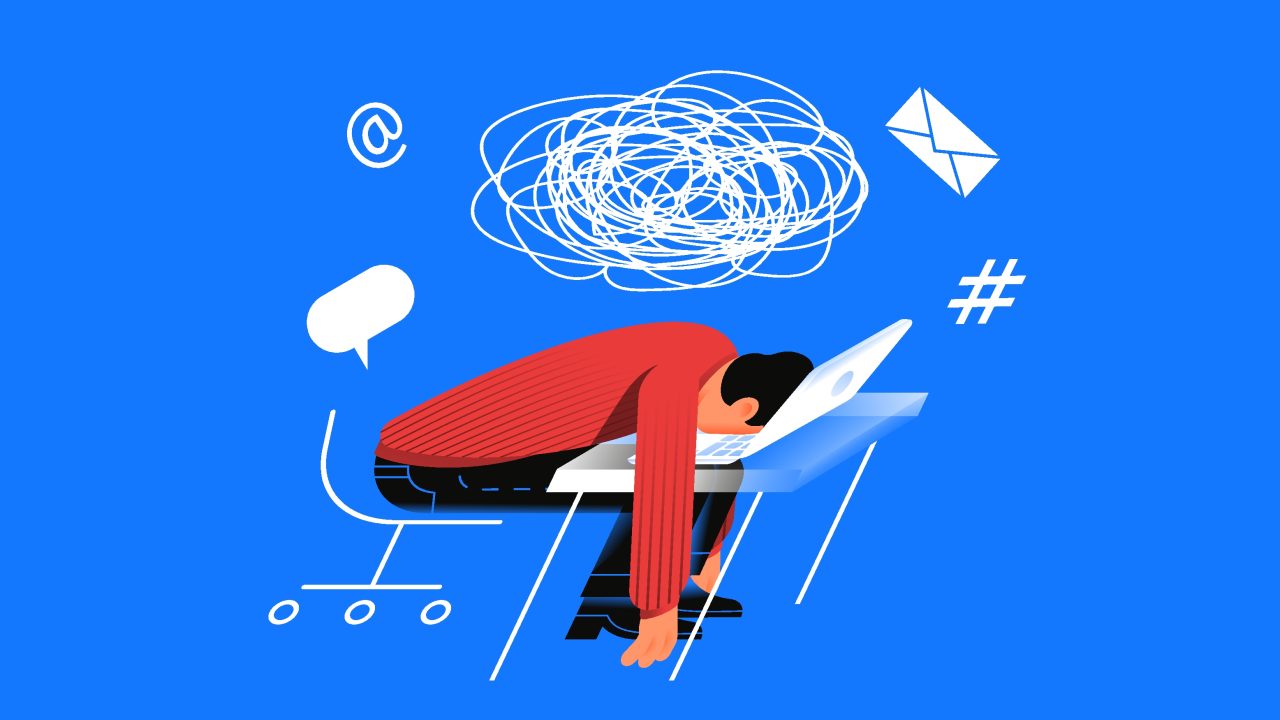
A recent study published in the Proceedings of the National Academy of Sciences suggests that short-term sleep deprivation significantly compromises individuals’ ability to identify and resist phishing attacks. The research, which involved a controlled experiment with over 10,000 participants, focused on the period surrounding the transition to Daylight Saving Time (DST) in March 2026.
Eitan Schechtman, a professor of neurobiology and behavior at the University of California, Irvine, led the study by leveraging a routine cybersecurity initiative at his institution. The university typically sends simulated phishing emails to staff to educate them on spotting fraudulent messages. To test the impact of sleep loss, Schechtman coordinated with the IT team to send these spoofed emails to two distinct groups: half received the messages on the Monday before the clocks spring forward, while the other half received them on the Monday after.
The data indicated that while the time shift did not alter the likelihood of participants opening the suspicious emails or reporting them as spam, it did affect their next action. Participants who experienced the loss of an hour of sleep were 13% more likely to click on the embedded links within the messages. In a real-world scenario, such clicks could have exposed users to malware, fake websites, or data theft.
“Our interpretation of this is that sleep loss rendered people more impulsive and less likely to carefully think about their decisions,” Schechtman explained. “They didn’t have their full mental capacity to critically examine whether this might be an email that’s trying to lead them astray.” He noted that the DST transition provides a natural and mild form of sleep deprivation that serves as a useful benchmark for studying these effects.
Jason R.C. Nurse, a professor at the University of Kent in the United Kingdom who was not involved in the research, corroborated these findings by pointing out that stress, workload, and personality traits like impulsiveness also influence vulnerability to scams. “Sleep deprivation can fit this profile in some ways because it has a direct impact on our decision-making and state of mind,” Nurse said. “If we’re not thinking properly or rationally about what we’re seeing in our inboxes, there’s every chance that we might get caught out and fall for a phishing attempt.”
Schechtman also addressed whether the same risks apply when clocks fall back in the autumn, as seen on November 1 in the U.S. Although the fall transition theoretically grants an extra hour of sleep, Schechtman suggested that people rarely use the additional time for extra rest, opting instead to stay awake longer. “My guess is, and previous studies have shown, that you don’t gain as much sleep from the fall transition as you lose in the spring,” he said.
The study author noted that data collected from the recent fall transition is currently being analyzed and will be the subject of a follow-up publication. Schechtman had kept the fall data collection secret until the spring paper was published to ensure the integrity of the results. While he believes it will be difficult to replicate this specific study at his institution now that the methodology is known, he hopes other academic and corporate bodies will adopt similar approaches to further investigate the intersection of sleep health and cybersecurity.
Funny how losing one hour makes you click links. I guess we are all just walking, talking vulnerabilities when we are tired.
We should just abolish daylight saving time altogether. It disrupts our sleep and apparently makes us digital targets. Why keep it?
Skeptical about the 13 percent figure. How do you control for everything else happening in that specific Monday week?
Does this mean I should delete my old browser history every spring? That feels like a lot of extra work.
I am always tired after the clock change. No wonder my security awareness drops that week. Makes sense now.
Wow, ten thousand participants is a massive sample size. I trust these numbers are actually solid and not just an outlier group.