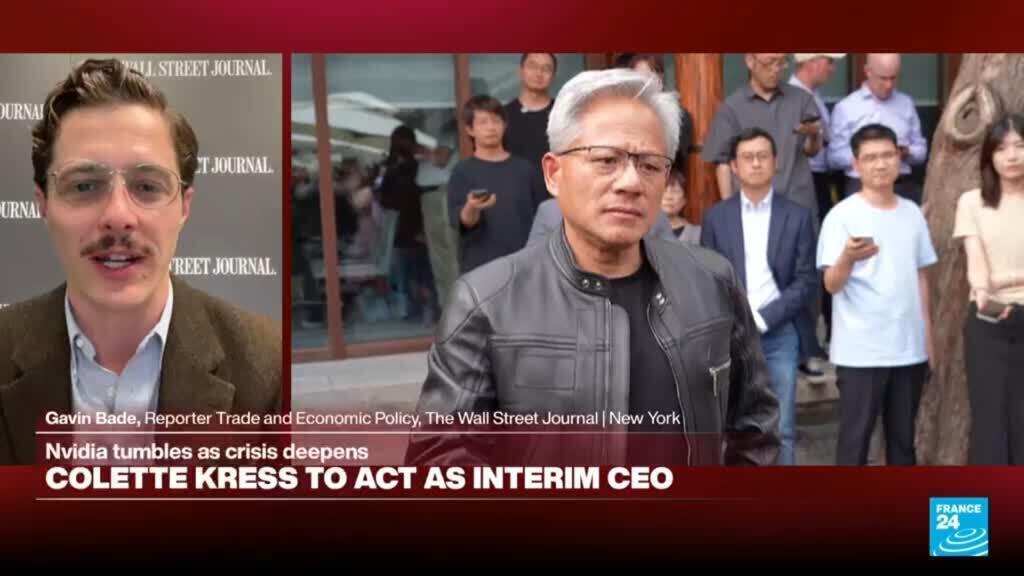
The resignation of Jensen Huang, the founder of Nvidia, has plunged one of the world’s leading technology firms into a leadership crisis. The consequences of this upheaval are expected to extend well beyond Silicon Valley, given Nvidia’s critical role in the rapidly expanding artificial intelligence industry, where competition between the United States and China is intensifying.
While the immediate focus is on questions of corporate succession, the event has also ignited a broader discourse regarding economic resilience, national security, and the political clout held by major technology companies. Gavin Bade, a trade and economic policy reporter for The Wall Street Journal, notes that this controversy highlights the extreme concentration of economic power in the hands of a select few corporations and their leaders.
“Do these CEOs actually have more authority and more influence than our elected officials?” Bade asked, framing the issue as a central concern for policymakers and the public.


Not surprised. These companies have become too big to fail and too powerful to check. It feels like a shadow government.
The successor process will be interesting to watch. Hopefully they pick someone who actually understands the AI landscape.
Typical. Every time a CEO resigns, we have to rewrite the entire national security strategy around one person’s exit.
Is it really just him, or does the whole board share responsibility for this concentrated mess of power?
Politicians talk about sovereignty, but they rely on these tech giants for everything. The power imbalance is genuinely scary.
Jensen stepping down? I thought he was immortal. How will Nvidia handle the China competition without his strategic vision?
It is wild to think one person could shake the entire AI market like this. Corporate governance needs a serious overhaul.