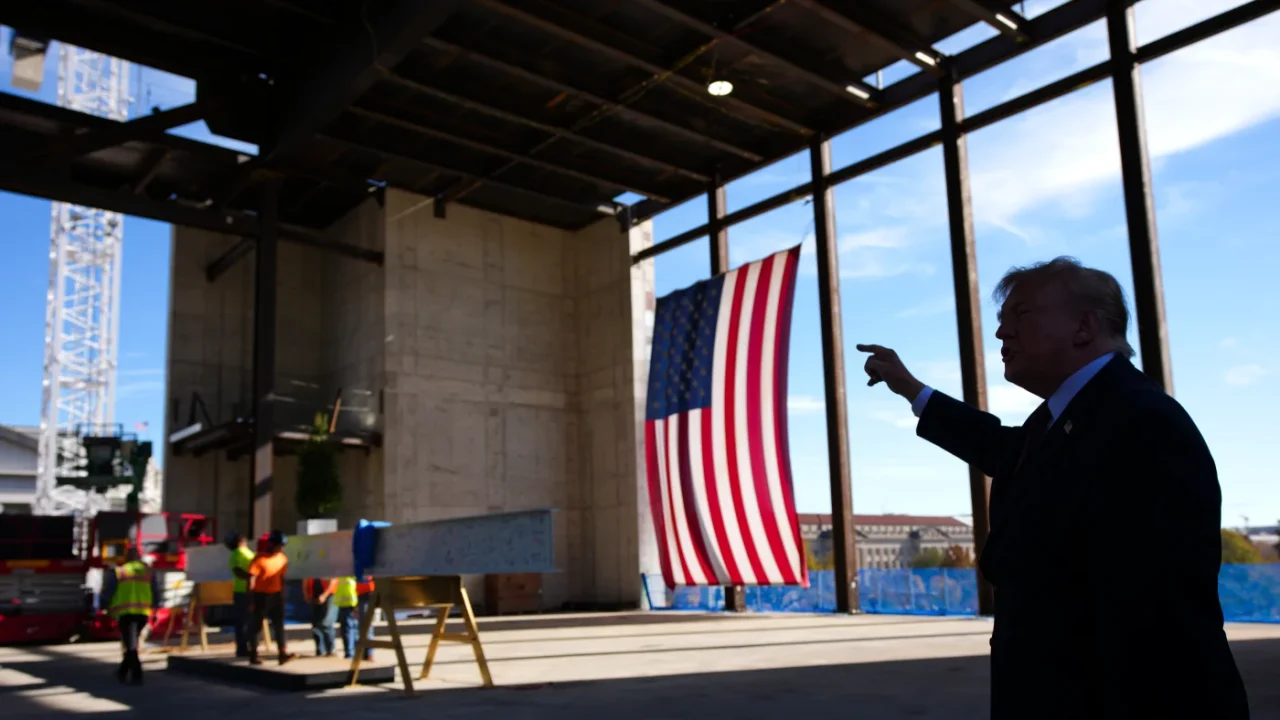
Democratic lawmakers have signaled that they will employ legislative and oversight mechanisms to challenge President Donald Trump’s extensive construction projects in Washington, D.C., following their party’s victory in the midterm elections. While some of the administration’s actions, such as executive orders declaring areas national monuments, can be easily reversed by a future president, physical infrastructure changes like the demolition of the White House East Wing for a new ballroom and the clearing of hundreds of trees at East Potomac Park represent more permanent alterations to the capital.
Rep. Jared Huffman, D-Calif., who is set to chair the House Natural Resources Committee, stated that the Trump administration has aggressively proceeded with construction projects, relying on courts to intervene rather than seeking congressional approval. Huffman has issued letters to administration officials and private companies ordering them to preserve records for potential investigations into legal violations regarding public lands and national parks.
Experts indicate that while legislation is the ideal method to block these projects, President Trump has threatened to veto such bills, and the new Democratic majority may not have enough votes to override a veto. Consequently, controlling federal spending is seen as the most viable strategy. Under the U.S. Constitution, the federal government can only spend money that Congress appropriates. Trump has not sought or received specific congressional authorization for projects like the proposed triumphal arch or the White House ballroom, maintaining that such approval is unnecessary.
Rep. Chellie Pingree, D-Maine, chair of the House committee overseeing Interior Department funding, emphasized that Congress holds the ultimate power of the purse. She noted that Democrats can draft appropriations bills with specific language restricting where funds can be allocated. For instance, they could limit the use of diverted national park entrance fees to their intended purposes, such as conservation in the Everglades or Yosemite, rather than allowing them to fund local D.C. beautification projects.
Both Huffman and Pingree have advocated for language in the upcoming short-term appropriations bill, which must be passed by December 11 to avoid a government shutdown, that would prohibit the use of federal funds for the East Potomac golf course renovations. This measure would restrict spending to necessary repairs, such as the crumbling seawall, while halting the development of a championship-level golf course. Pingree expressed surprise at the public outcry against these projects, noting that voters are concerned about the misuse of taxpayer dollars and corruption, and stated that Democrats are prepared to use every available tool to address these issues from January 1.

Leave a Reply