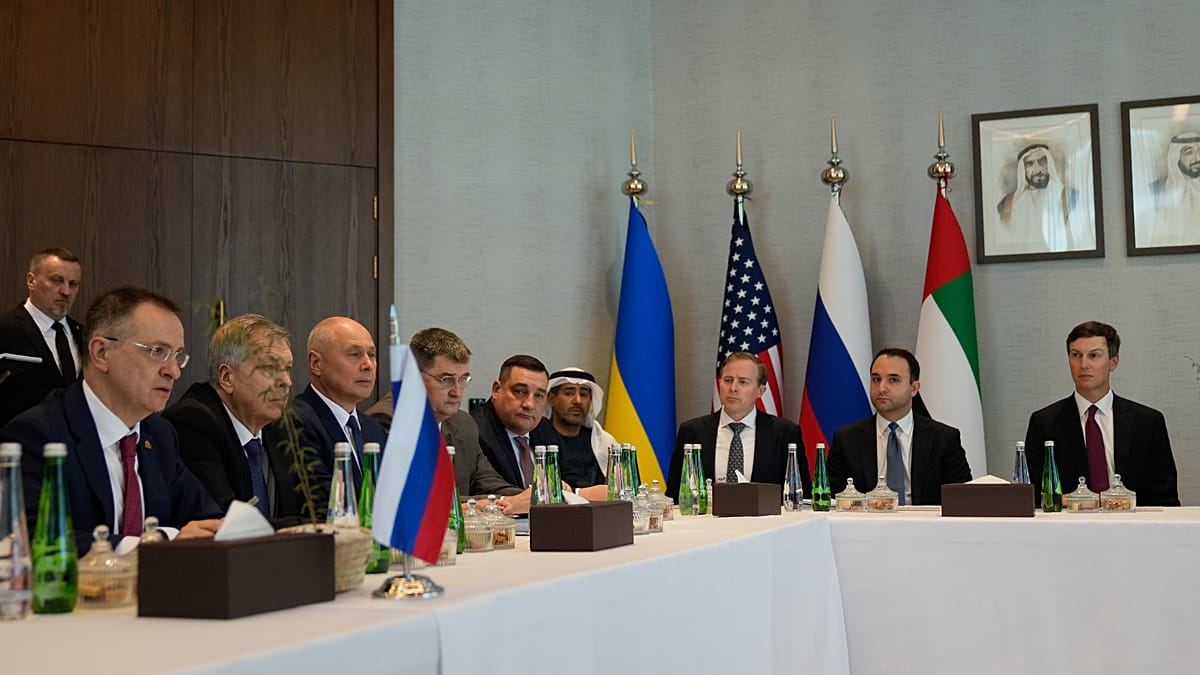
Ukrainian, Russian, and US negotiators reconvened in Abu Dhabi on November 11, marking the resumption of US-mediated talks after a nine-month hiatus. While Kyiv and Washington characterized the previous day’s discussions as constructive and productive, Moscow maintained a defiant stance, complicating efforts toward a ceasefire.
Ukrainian President Volodymyr Zelenskyy described the initial talks as substantive, while US Secretary of State Marco Rubio labeled them very productive. The agenda included prisoner exchanges, security guarantees, and de-escalation measures. However, Russian Foreign Minister Sergei Lavrov rejected the prospect of a truce, accusing European officials of seeking a ceasefire solely to deploy troops into Ukraine. Lavrov dismissed the presence of European observers, stating they could “sit there in the hotel,” as they are currently excluded from the trilateral negotiations despite signals from Washington that they might eventually join.
According to a senior US official, both sides have shown some private flexibility regarding territory, though public positions remain far apart. The territorial issue remains the primary obstacle, with Moscow demanding control of the entire Donbas region, including areas it has not captured, while Ukraine refuses to cede any territory. The issue has also unsettled European allies, who view a potential deal as a mechanism for Russia to reassert its sphere of influence in Eastern Europe.
In related developments, German Chancellor Friedrich Merz’s attempt to link approval of the EU’s long-term budget to new financial support for Ukraine has backfired. Prime Ministers from Slovakia, Czechia, Hungary, and Bulgaria opposed the move, with Slovak PM Robert Fico accusing Merz of political blackmail. These nations, part of the EU’s cohesion group, argue that tying the issues risks alienating countries opposed to cuts in cohesion spending.
Meanwhile, NATO Secretary General Mark Rutte drew criticism from Portugal for remarks suggesting that some Western European nations view Russia as a distant threat. The Portuguese Foreign Ministry responded by telling Rutte he should “know better” regarding allies who have stood firmly behind Ukraine. In a positive step for support, Denmark pledged a new €643 million military aid package for Ukraine, alongside €20 million for its energy sector, following a meeting between President Zelenskyy and Nordic leaders in Copenhagen.
Other news items include the European Commission’s upcoming release of the Digital Fairness Act, which aims to update consumer laws for new digital technologies, and Prince Harry and Meghan Markle’s visit to the European Parliament to campaign against online harassment.


I am cautiously optimistic about the private flexibility mentioned. It is rare to hear such nuanced progress notes.
Lavrov’s refusal to stop is alarming. It feels like these talks are just theater while the war grinds on.