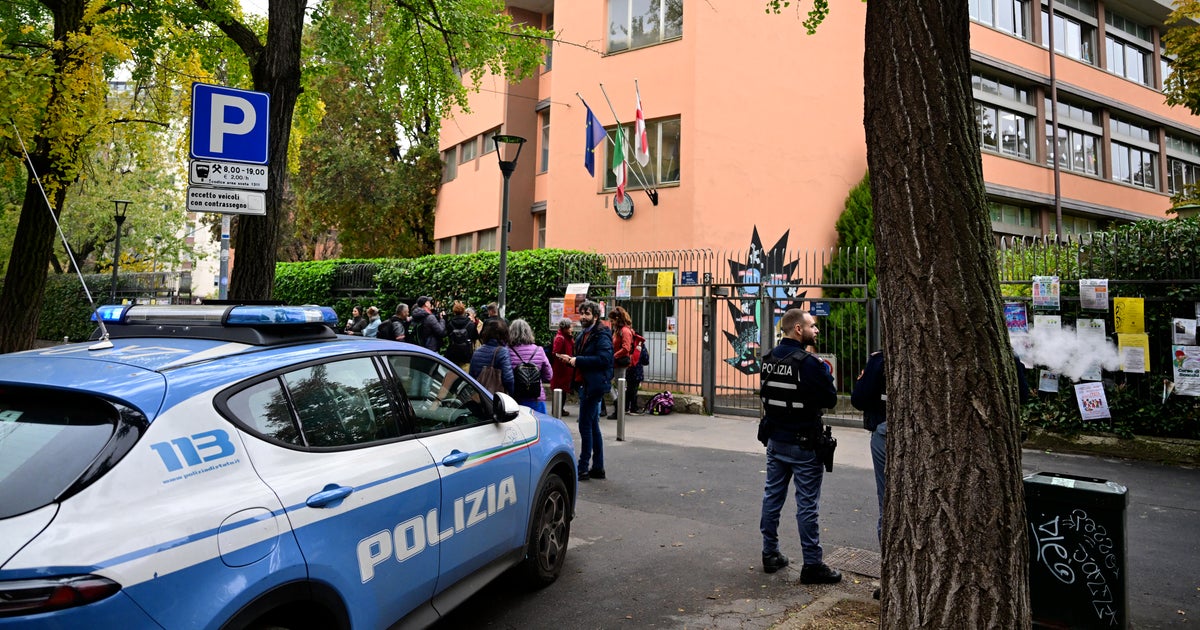
Thousands of schools across Europe were targeted by apparently hoax bomb threats on Wednesday, triggering mass evacuations in Italy. The malicious messages reached at least 6,300 educational institutions in Italy alone, as well as hundreds of schools in the United Kingdom and Ireland. No explosives or suspicious devices have been discovered so far, but authorities are continuing their investigations into the origin of the threats.
The incident occurs less than a week after over 20 European commercial flights received similar fake bomb threats, forcing several to divert. While no group has yet been officially blamed for the school hoaxes, the events are intensifying concerns about broader hybrid warfare tactics. Security officials and experts believe that Russia and Iran are using such methods to destabilize Europe amid the ongoing conflicts in Ukraine and the Middle East.
In Italy, cities including Rome, Milan, Naples, Palermo, and Bologna were affected, with lessons suspended and precautionary evacuations ordered. Police, bomb disposal specialists, and postal police conducted inspections. Italian media reported that the email threats claimed to be from ‘Mikhail Andropov,’ a figure associated with the Russian extremist group ‘Vilayat of Misoginistan,’ which was previously banned by Moscow authorities. The message, which included threats to Italian Prime Minister Giorgia Meloni, stated that a powerful explosive device had been left in a plastic bag within the school buildings.
Prime Minister Meloni addressed the situation, stating there was no ‘concrete danger’ and describing the acts as part of a ‘strategy aimed at causing alarm and concern.’ She convened a meeting with intelligence officials and cybersecurity experts to explore links between the school threats and the recent airline incidents. This marks the third wave of bomb threats against Italian schools in the past month, following similar messages received in October and early November.
Meanwhile, authorities in Ireland and the United Kingdom reported receiving the threats. Ireland’s national police, the Garda, deemed the communication ‘not credible’ and did not advise evacuations. Police in Northern Ireland noted that the emails appeared to originate from outside the U.K. These incidents coincide with international investigations into cyberattacks on grocery store refrigeration units and blood banks in Europe and the U.S., which Western authorities largely attribute to Russian and Iranian sabotage efforts.
Earlier this year, Sir Ken McCallum, head of Britain’s MI5, warned that security threats in the region were evolving to target ‘people, businesses, communities,’ not just government assets. He accused Russian military and intelligence services of escalating hybrid warfare while staying below the threshold that would trigger NATO’s collective defense clause. Iran, he noted, was targeting harder military sites and using criminal proxies to intimidate opposition groups and media outlets across Europe.
Many recent attacks on soft targets have been claimed by Harakat Ashab al-Yamin al-Islamiya (HAYI), a group sanctioned by U.K. authorities and linked to Iran’s Quds Force. A CBS News investigation in March revealed links between the group and Iran, with members stating their intent to threaten U.S. and Israeli interests globally. The broader pattern of disruptions highlights the growing complexity of hybrid security challenges facing European nations.


I am skeptical about blaming Moscow directly without proof. It feels convenient for everyone to point fingers at Russia.
It is terrifying that they target children like this. These fake threats cause massive panic for parents and staff.