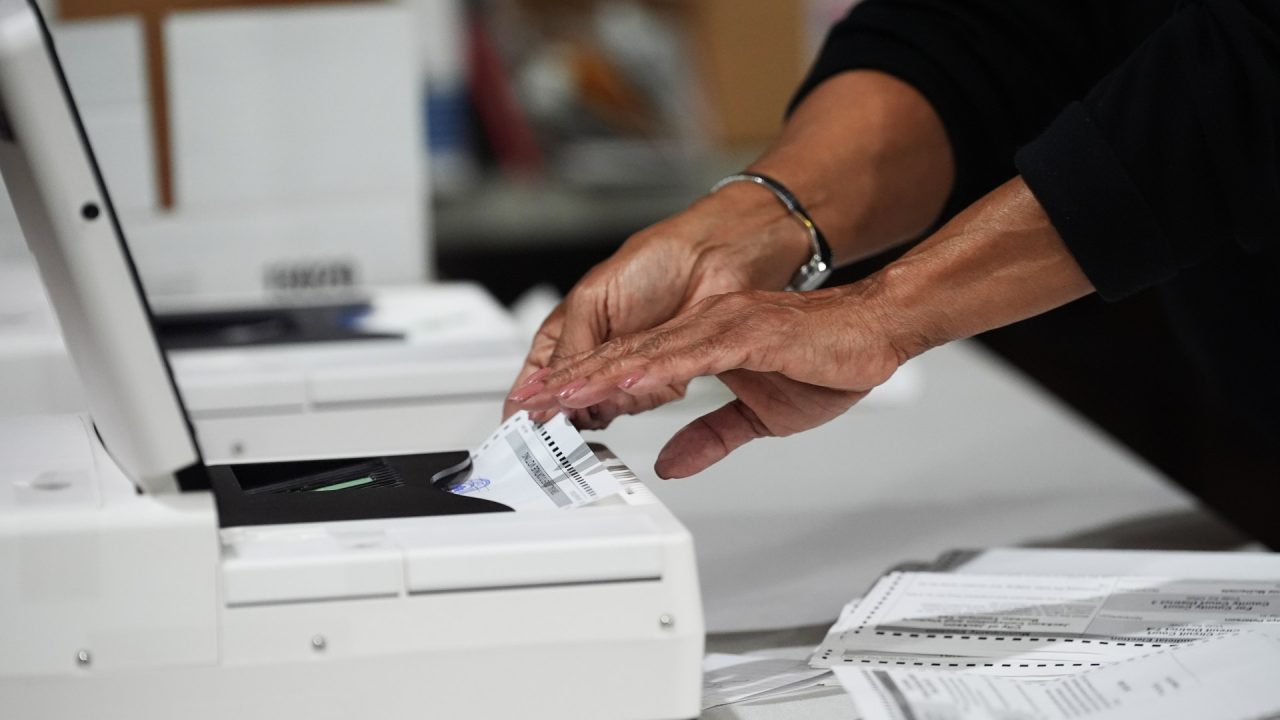
More than a week after United States voters cast ballots in the midterm elections, the final outcome of several key congressional and gubernatorial races remains undetermined. While Democrats have secured 54 seats in the Senate and their largest House majority since 2008, the extent of their majorities in the incoming Congress scheduled to convene in January is still subject to change as votes are counted in pending contests.
In the US Senate, Democrat Mary Peltola leads Republican incumbent Senator Dan Sullivan by approximately 2,500 votes in Alaska, with an estimated 76 percent of the vote counted. The state continues to process absentee ballots, with final overseas mail-in ballots accepted until November 18. Peltola currently trails the threshold for an outright majority by just over one percentage point; if no candidate achieves 50 percent, the race will proceed to ranked-choice tabulation on November 18. The state’s target date for certifying results is November 25.
The Senate race in Mississippi is also too early to call, with Democrat Scott Colom holding a lead of about 2,600 votes over Republican incumbent Cindy Hyde-Smith. The state lacks a central online reporting system for vote totals, meaning journalists and analysts must coordinate directly with all 82 counties to track the count. Key deadlines include the receipt of mail-in absentee ballots by Tuesday and the submission of certified county results, including provisional ballots, by Friday. Approximately 14,200 provisional ballots have been processed, with about 80 percent accepted, while 2,700 mail-in ballots have not yet been returned. Mississippi certifies results on December 3 and does not allow candidate-requested recounts unless ordered by a court.
In the House of Representatives, a dozen races remain undecided, with margins in most contests less than one percentage point among the votes counted. North Carolina has the most unresolved races, with four districts undecided where Republican incumbents face challenges. Recount requests in North Carolina must be filed by noon Eastern Time on November 17. In California, one decisive race remains in the 23rd District, while another uncalled contest involves two Democratic candidates. State certification is scheduled for December 11.
Several district races in other states continue to hinge on small vote differences. In South Carolina’s 2nd District, Republican incumbent Joe Wilson leads Democrat Zyon Khalifa by roughly 3,000 votes, with a recount currently ongoing. In Minnesota’s 1st District, the top two candidates are separated by approximately 300 votes. Tennessee’s 4th District also sees a gap of about 300 votes between Democrat Victoria Broderick and Republican incumbent Scott DesJarlais, a state where recounts are only permitted through legal challenges in court.
Two governorships also remain undecided. In Kansas, Democratic State Senator Cindy Holscher leads Republican Ty Masterson by less than one percentage point. A close-race audit triggered on November 4 requires a hand count of selected ballots to be completed before the November 16 county certification deadline. In Alaska, Democratic gubernatorial candidate Jonathan Kreiss-Tomkins leads Bernadette Wilson by approximately 45,000 votes, with 49.6 percent to 28.9 percent as of Tuesday. This race will also advance to ranked-choice tabulation if no candidate secures more than 50 percent of the vote.

Whoever controls the final certification in these states wins the narrative. The legal battles over recounts will drag on for months.
Democrats winning the biggest House majority since 2008? This changes everything for January. Those undecided races are just noise now.
Mississippi having 82 counties report separately is a nightmare. No wonder there is no real-time tracking, it is essentially dark ages for data.
Recounts in South Carolina are finally happening. Hope they don’t delay everything until December, which is when the new Congress is supposed to start.
I appreciate the detailed breakdown, but it just highlights how fragmented our reporting is. No central database means pure chaos for journalists.
In Minnesota, 300 votes decides a district? That is insane. One missing ballot could flip the whole thing on its head.
Did anyone check if Alaska’s ranked-choice voting will actually change the Senate seat? I thought Peltola was ahead, but that 50% threshold is confusing.
Waiting a whole week for results feels absurd. Our entire election system needs a serious overhaul, especially with so many counties not counting mail-ins properly.