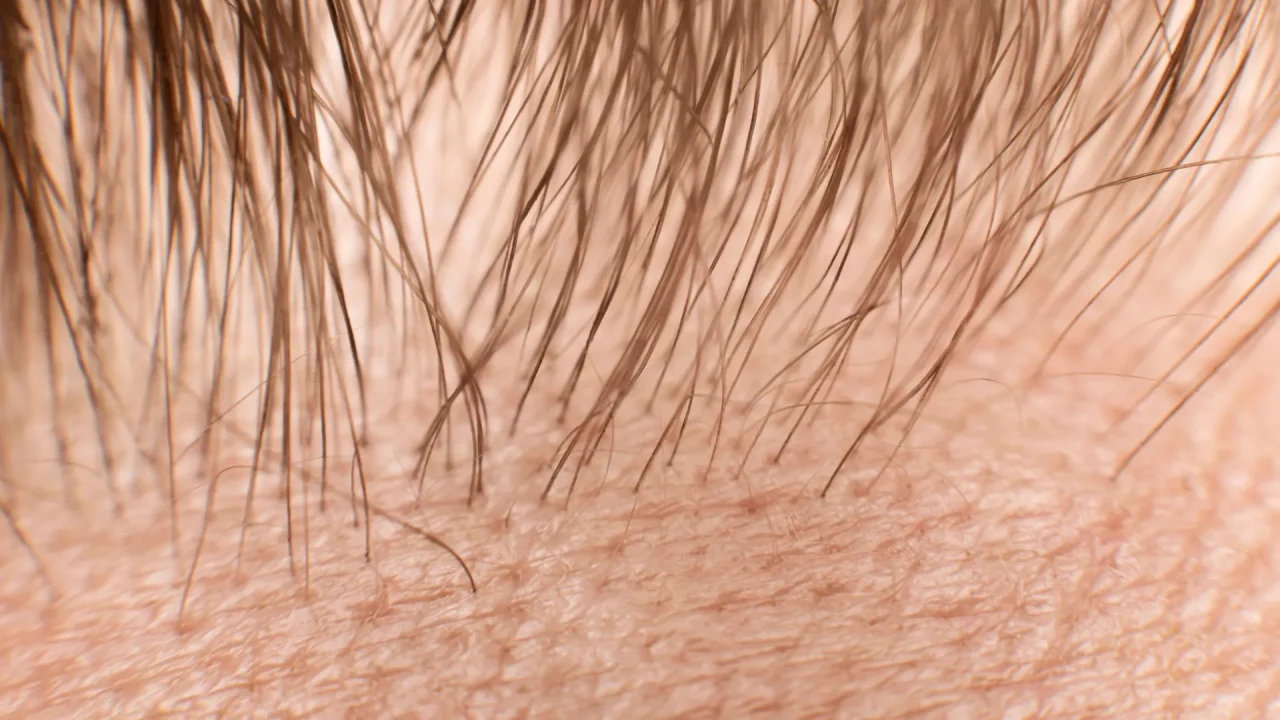
Researchers at the University of Geneva (UNIGE) have identified a fundamental process that may explain how hair follicles determine their locations during embryonic development. Published in the journal PNAS, the study suggests that complex geometric patterns in mammalian skin emerge naturally from basic interactions between neighboring cells, rather than from a dedicated instructional system.
The research challenges the long-standing expansion-induction model, which posits that new placodes—the early structures of hair, feathers, and scales—release chemicals to prevent neighboring placodes from forming too closely. While this theory has been widely accepted for laboratory mice, it has not fully accounted for the diverse follicle patterns observed across different species.
Instead, the team led by Senior Lecturer Athanasia Tzika and Professor Michel Milinkovitch from UNIGE’s Department of Genetics and Evolution focused on chemotaxis, the movement of cells in response to chemical gradients. Using mathematical models to simulate embryonic skin growth, the researchers tracked how mobile cells in the dermis interact with signals from the epidermis. Their simulations successfully reproduced the developmental patterns seen in mice, demonstrating that placodes can emerge spontaneously from local cellular interactions without complex top-down instructions.
To test the universality of this mechanism, the scientists examined the spiny mouse (Acomys dimidiatus), a rodent known for its unusually regular and directionally aligned hair follicles, a pattern that contradicts the traditional expansion-induction model. By adapting their simulations to reflect the spiny mouse’s specific biochemical and growth characteristics, the team found that the same simple chemotaxis process could also reproduce this distinct arrangement.
The findings indicate that the variety of tissue architectures seen throughout the animal kingdom likely arises from a shared set of simple biological rules. “Our work suggests that simple cellular interactions can generate the remarkable diversity of tissue architectures observed throughout evolution,” concluded Tzika. The differences between species are attributed to variations in cellular interactions and chemical signals, rather than entirely distinct developmental blueprints.



Expansion induction is not dead yet, but this paper definitely forces us to rethink the textbooks.
Wait, so hair patterns are just spontaneous? That feels a lot less like a blueprint and more like art.
Using math models to simulate biology is brilliant. It bridges the gap between theory and observation perfectly.
My head would look very different if my follicles aligned like a spiny mouse. Nature is strange.
This is a significant step. Testing across species helps verify if the mechanism is truly universal in development.
I am skeptical. Can a simple process really replace a decades old, widely accepted scientific model?
The spiny mouse example is fascinating. I never knew their hair alignment was so scientifically distinct from others.
How does this affect humans? Do we have the same cellular mechanisms as mice and spiny rodents?
I am surprised that simple movement explains such complex patterns. It makes evolutionary biology feel much less mysterious.