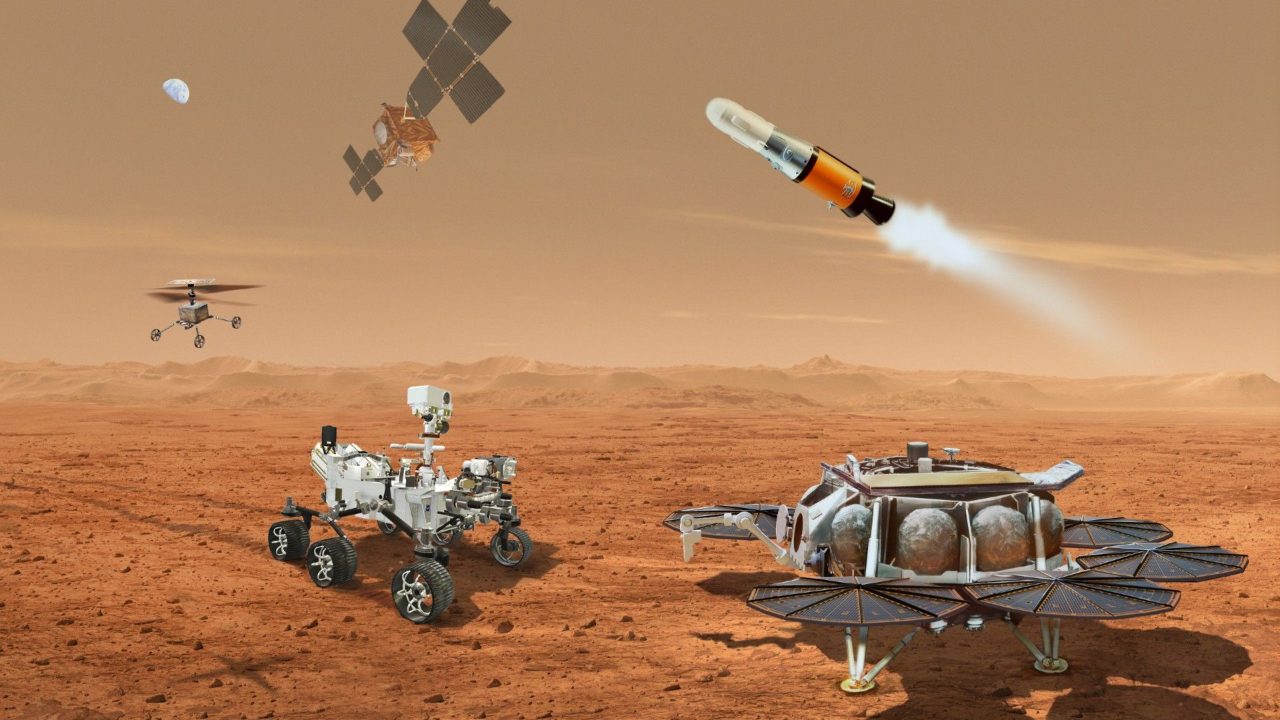
NASA has initiated a fresh push to retrieve samples collected by the Perseverance rover on Mars, launching a new strategy known as the Perseverance Sample Retrieval Architecture (PSRA). The initiative aims to develop a viable plan for returning Martian specimens to Earth, addressing previous concerns regarding the cost and feasibility of the original Mars Sample Return (MSR) program.
Tiffany Morgan, director of NASA’s Mars Exploration Program, announced the start of the PSRA initiative on November 9 during a virtual meeting of the Mars Exploration Program Analysis Group. The strategy involves developing impartial recommendations for retrieving the samples, assessing mission requirements, reviewing past lessons, and evaluating current acquisition options. A dedicated team will kick off in January 2027, with a final report expected in the winter of 2027–2028.
The previous versions of the MSR project faced significant hurdles due to high costs and extended timelines. Independent reviews previously estimated the cost of a mission to return samples in 2040 at approximately $11 billion, a figure NASA deemed unmanageable. A later assessment suggested a more feasible approach to bring back samples by 2035 at a cost of around $8 billion.
While the Perseverance rover, which landed in Jezero Crater in February 2021, continues to seal and store samples on the surface and within its own chassis, experts argue that returning these materials is also crucial for preparing future human missions to Mars. Bruce Jakosky, a researcher from the University of Colorado Boulder and the University of Washington, emphasized that sample return helps reduce risks for astronauts by identifying hazardous substances in Martian soil, such as perchlorates and chloromethanes, and characterizing fine dust that could impact respiratory health and equipment wear.
Additionally, bringing samples back serves to demonstrate the technical capabilities required for human exploration, including round-trip travel, entry, descent, and landing procedures. There is also an urgency to the program due to international competition. China’s National Space Administration has the Tianwen-3 mission on track to launch in 2028, with the goal of returning roughly 500 grams of Martian material to Earth by 2031.



Finally restarting this. Those sealed samples have been sitting in Jezero Crater for years.
Still over $8 billion? Seriously, we need a fundamentally different approach to interplanetary logistics.
Perchlorates are nasty. Good to focus on health risks for future astronauts before sending anyone up there.
Does this mean we are really behind China now? Their 2031 timeline feels quite aggressive compared to our schedule.
Beats the old plan. Hopefully this new architecture actually works without another billion dollar delay.