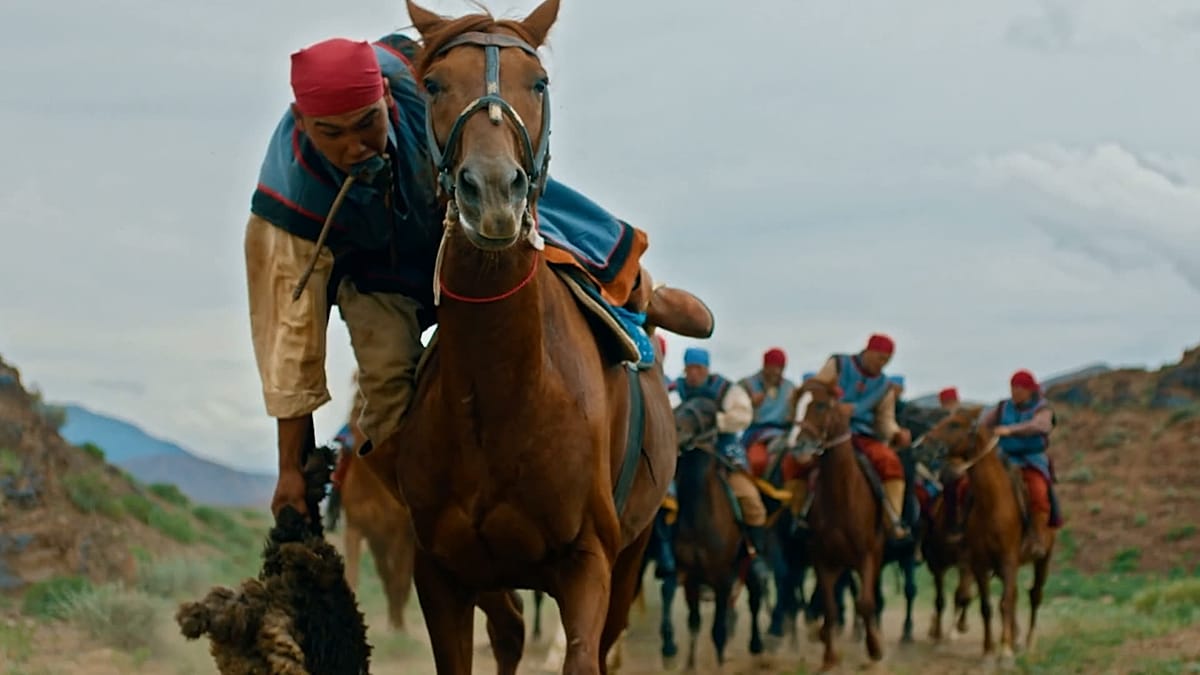
The sixth World Nomad Games, held in Kyrgyzstan in September 2026, highlighted the evolution of ancient survival techniques into major international athletic competitions. Originating in 2014 as a regional cultural initiative, the event has expanded significantly, with more than 3,000 participants from 109 countries competing across 43 disciplines.
While these sports now have a global audience, they retain deep roots in the historical practices of Central Asian nomadic peoples, including Kazakhs, Kyrgyz, Mongols, and Uzbeks. Skills originally developed for hunting and warfare, such as archery, wrestling, and horsemanship, serve as vital markers of cultural identity and continuity.
Kokpar, a game where riders compete to retrieve and transport a carcass, remains a central attraction. Trainer Baurzhan Mugyzharov noted that these equestrian games are the ‘soul’ of the Kazakh people, a tradition maintained by introducing children to horses from a young age. The sport is widely watched, with thousands of spectators crossing borders to view finals.
Other key events include long-distance endurance races, such as a 300-kilometre marathon, and horseback wrestling known as Audaryspak. Kazakh wrestlers secured top positions in recent competitions in Kyrgyzstan, reflecting the organized development of these traditional forms. Non-equestrian contests also feature prominently, including distinct wrestling styles like Mongolian bökh and Kazakh kuresi, as well as precision-based games like horseback archery and asyk, which uses sheep knuckle bones.
Nurzhan Zhaksylikuly, an archer from Kazakhstan, explained that nomadic archery techniques differ from modern European methods, utilizing thumb rings to shoot while moving. Meanwhile, Ashat Turlybekov emphasized the value of games like asyk for developing agility and discipline in younger generations. For organizers and athletes alike, the revival of these sports is less about international fame and more about restoring core national identity through the preservation of steppe heritage.



Calling equestrian games the soul of the Kazakh people really resonates with me. It adds so much depth.
Do you think these specific nomadic skills will translate well to modern military or survival training techniques? Just curious.
It is nice to see children being introduced to horses early. That cultural continuity is really what matters here.
The jump from a regional initiative to a massive global event in just a decade is honestly pretty impressive.
I wonder if the modern Olympic committee is ever considering adding wrestling styles like Kazakh kuresi to their standard programs.
Thumb archery sounds incredibly difficult to master. Glad to see these distinct historical techniques are getting proper recognition.
Kokpar always looks chaotic on TV. Are the athletes not worried about serious injuries during those high-speed horseback scrambles?
Finally, a sporting event that prioritizes cultural preservation over corporate branding. These traditions deserve a global audience.
I had no idea a 300-kilometer horseback marathon was actually a thing. That endurance level is genuinely terrifying for any animal.