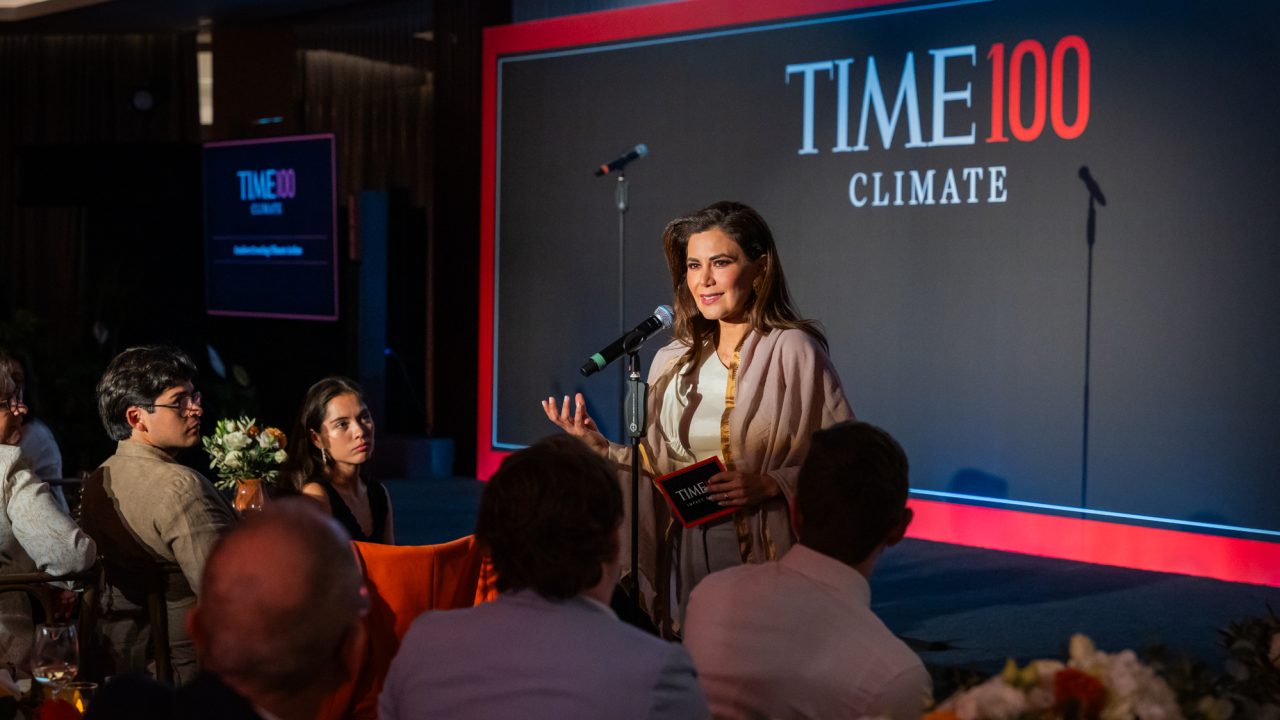
Five prominent climate leaders gathered at the TIME100 Impact Dinner on November 10 in Antalya, Türkiye, during the annual United Nations climate conference, COP31. The event, presented by Rolex, brought together 2026 TIME100 Climate honorees to discuss the opportunities and challenges inherent in the global shift toward clean energy.
Among the speakers was Michael Sheldrick, co-founder of Global Citizen, who emphasized the need to link poverty alleviation with climate action. Sheldrick highlighted the dual narrative of the energy transition by contrasting the optimism of young solar technicians in South Africa with the concerns of veteran coal plant supervisors who fear job losses. He stated that the organization’s goal is to scale up renewable energy without leaving workers behind, a stance reinforced by the recently launched Perth Declaration, which targets the expansion of electricity access to over four million homes and the delivery of three gigawatts of renewable capacity.
Ani Dasgupta, president and CEO of the World Resources Institute, offered a counterpoint to bleak climate headlines by showcasing existing solutions, such as the democratization of solar power in Pakistan and the regeneration of degraded land in Kenya through macadamia cultivation. Dasgupta urged the audience to actively support, mentor, and fund young leaders who are eager to drive economic and environmental change.
Journalist Vanessa Hauc, a veteran correspondent covering climate issues, spoke of the devastation caused by climate change, from the Amazon rainforest to the Andes glaciers and Florida’s coral reefs. Despite the severity of these challenges, Hauc emphasized the resilience observed in scientific research and Indigenous conservation efforts. She characterized hope as a daily choice and asserted that the future of the planet depends on immediate action.
Matthew Tilleard, CEO of CrossBoundary Energy, discussed the technological distinctions of the current energy shift compared to historical fuel-based transitions. Tilleard noted that solar and battery systems benefit from efficiency curves, with modern panels being 98% cheaper than those from 25 years ago. He also highlighted the economic advantages of decentralized energy systems, which reduce transmission costs and enhance energy sovereignty.
Closing the event, climate activist and 2023 TIME100 Next honoree Xiye Bastida reminded attendees of their responsibility to future generations and equity in just transitions. Bastida shared that United Nations Secretary General António Guterres told youth leaders that their perspectives have grounded his public statements on climate action. She concluded by advocating for a framework based on Indigenous practices of stewardship, stating that the global transformation is already underway.



The Perth Declaration sounds ambitious. Let us hope they actually deliver that three gigawatts of capacity.
Antalya sounds like a beautiful place to discuss such heavy topics. Maybe the vibes will help.
Vanessa Hauc makes a good point. Hope is hard work, not just a feeling. We need to act daily.
The connection between poverty and climate is so important. We need to stop treating them as separate issues.
I hope these nice dinners actually lead to real policy changes and not just more photo opportunities.
Xiye Bastida has been a powerful voice for years. It is great to see young leaders at the table.
Is anyone else excited about the macadamia trees in Kenya? Nature really knows best when it comes to regeneration.
I never realized solar panels are 98 percent cheaper now. That stat really changes how I see the transition.
Love hearing about the coal workers. We cannot just ignore the economic reality of people losing their livelihoods.