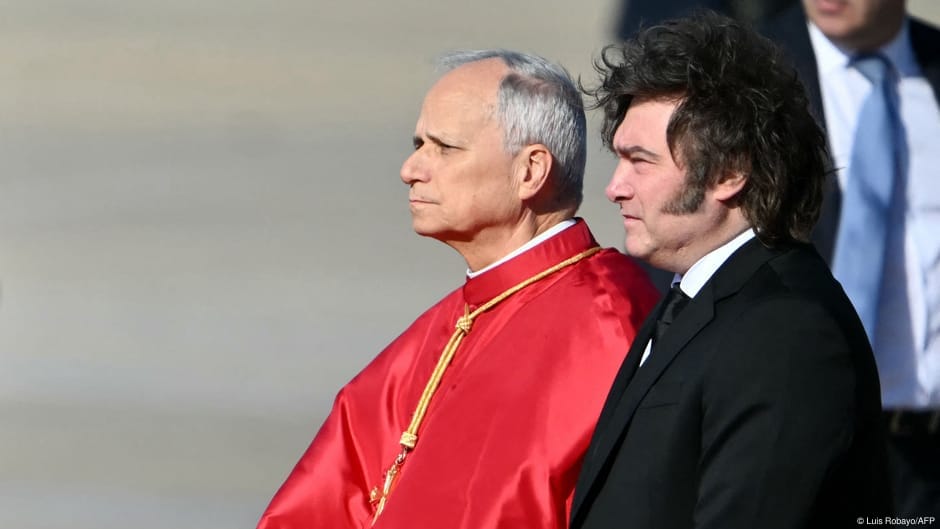
Pope Leo XIV’s recent tour of South America has attracted massive crowds, with approximately 2.5 million people lining the streets of Buenos Aires to witness his open-air Mass on Monday. The event highlighted the pontiff’s significant influence in Argentina, where attendees described the visit as a crucial moment for national unity and a reaffirmation of faith in the Catholic Church.
However, the visit also generated political controversy following remarks made by the Pope on Sunday. Leo, the first US-born pope, issued what many observers interpreted as a critique of Argentine President Javier Milei and his strict austerity program. “The economy must be at the service of the people, rather than people being at the service of the economy,” Leo stated, specifically acknowledging those who struggle to meet household needs despite hard work.
These comments were widely seen as a targeted rebuke of Milei’s policies, which include sweeping cuts to social services and the elimination of thousands of public sector jobs. Online supporters of the Argentine president suggested that the Pope, who recently returned to duty following cancer surgery, had overstepped his religious role. Jocelyne Cesari, a professor of religion and politics at the University of Birmingham, described the Pope’s words as “carefully calibrated” but clearly aimed at the current administration’s approach.
The incident adds to a broader discussion regarding the political boundaries of the modern papacy. While historical figures like Pope Innocent III wielded direct power over European monarchies, contemporary popes generally avoid direct party politics. Leo’s stance was previously tested earlier in his tenure by US President Donald Trump, who had publicly criticized the Pope as “weak.” In response, Leo asserted that he is not a politician but a messenger of the Gospel, a position Cesari notes has been walked by popes for nearly two millennia, given their status as heads of state and diplomats representing over one billion Catholics.
Meanwhile, in Argentina, the impact of Milei’s austerity measures continues to drive public unrest. Pensioners have held weekly protests in front of Congress in Buenos Aires, demanding higher benefits as they face declining incomes and rising living costs.
This is going to make for one interesting election cycle in Argentina right about now.
Carefully calibrated words, as the professor said. No need to shout, but the message is loud enough.
Love that the first American pope is making such waves in Latin America, his home turf.
Pensioners are right to protest. The economy shouldn’t sacrifice the most vulnerable just for balance sheets.
Trump called him weak before? Honestly, that reaction proves just how strong a symbol he really is.
Does anyone know if his health is holding up okay after that recent surgery? Hope he rests.
Milei needs to listen. Cutting social services this drastically will never work for long term stability.
He’s not a politician, sure, but calling out austerity is just as political as any thing else.
Unbelievable turnout. 2.5 million people really shows just how much influence the Vatican still holds down there.
The crowds in Buenos Aires say it all. Faith still matters more than any political party argument.