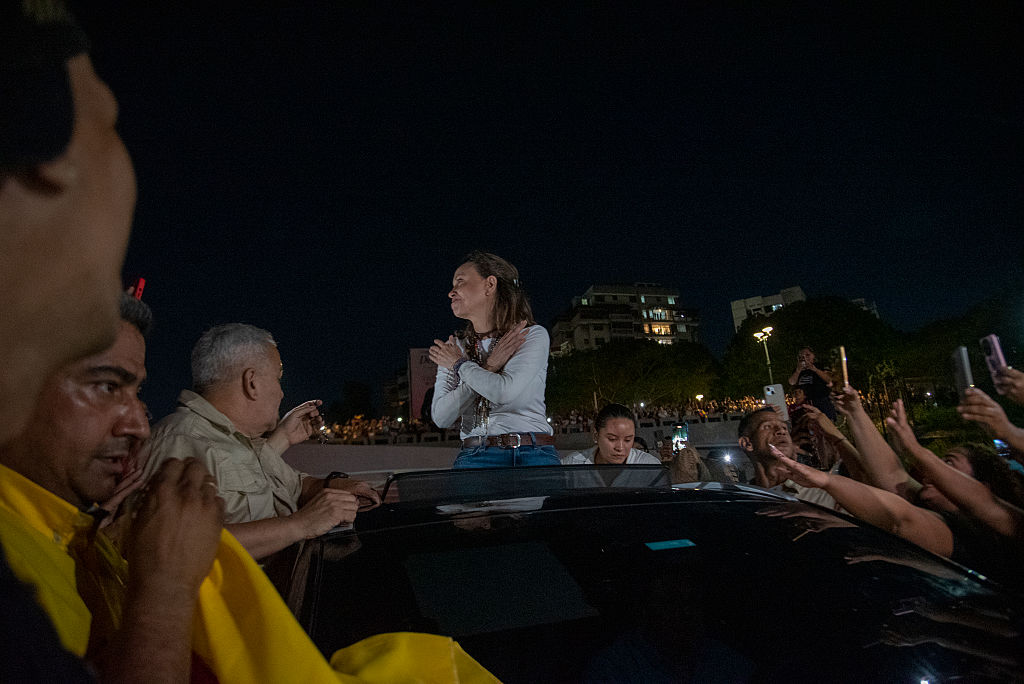
Maria Corina Machado, Venezuela’s leading opposition figure, returned to Caracas on October 25, 2026, ending approximately a year in exile. Upon her arrival, the Nobel Peace Prize winner expressed gratitude to the Trump Administration for the removal of former President Nicolás Maduro and reiterated her confidence that free and fair elections will take place in the country in 2027.
The prospect of an election timeline remains unclear more than nine months after U.S. Special Forces captured Maduro in Caracas in the predawn hours of January 3. Following the raid, Delcy Rodríguez, Maduro’s vice president and longtime ally, assumed power with the approval of President Trump, and negotiations between the two governments began. Although Machado presented her Nobel medal to Trump at the White House two weeks after the raid, hoping to secure early elections, the U.S. president maintained that Venezuela required stabilization before holding a vote, estimating the process would take 18 months.
On August 28, the United States and Venezuela announced a comprehensive agreement to revive the Venezuelan oil sector. The 100-year contract grants the U.S. an ownership stake in 17 oil fields and access to over 65 billion barrels of proven reserves. The deal involves U.S. government departments partnering with North American Blue Energy Partners, a private company owned by Venezuelan businessman Alejandro Betancourt. The U.S. holds a 35% stake in the venture with guaranteed access to 20% of the output at cost, resulting in an effective 55% share. President Trump described the arrangement as the “biggest oil deal in world history,” arguing it would lower domestic gas prices and reduce the influence of China and Russia in the Western Hemisphere. Interim President Rodríguez hailed the deal as a major victory for the Venezuelan people, promising significant investment and revenue to alleviate economic stagnation and restructure national debt.
However, the oil agreement has drawn little attention to democratic progress. Prior to her return, Machado signaled growing frustration with her marginalization in negotiations involving representatives of the 2015 National Assembly, the last internationally recognized democratically elected body in Venezuela. In an October 15 interview with The New York Times, she accused Betancourt of “obscene corruption” and blamed him for persistent electricity shortages. While she did not call for repudiating the oil deal if elected, she stated that Betancourt would have no role in it. The interview represented her sharpest effort to distance herself from an agreement involving both Maduro’s former deputies and a U.S. administration facing declining popularity in Venezuela.
As Machado works to balance relations with a U.S. president who holds significant leverage over the country’s future while leveraging Trump’s domestic unpopularity, Washington remains focused on managing the transition. Secretary of State Marco Rubio, who praised Machado’s return, warned that “you’re not going to street-protest your way into a democracy,” indicating that the U.S. intends to maintain control over the political process ahead of any potential elections.
Lowering gas prices in the US while seizing long-term oil control? Sure, let me hear your justification.
The contrast between Machado’s frustration and Rubio’s warning feels like a setup for future conflicts. Tense situation.
Did anyone verify if the new Venezuelan government actually agrees to those 17 fields? Or is it just a signature?
It is huge that Machado is back home. The road to 2027 will be long and full of challenges.
Seventy billion barrels? That sounds like a resource grab, not a partnership. I hope history judges this transaction fairly.