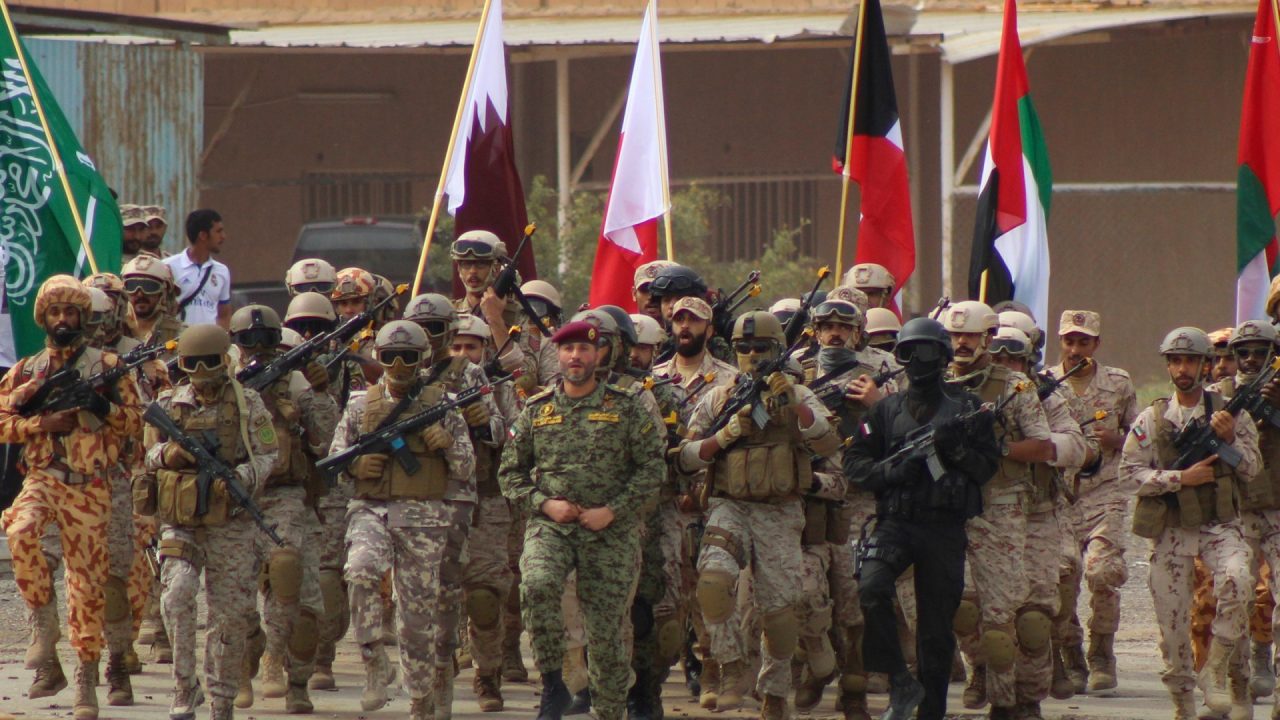
The Gulf Cooperation Council (GCC) has approved the creation of an advanced headquarters for its Unified Military Command in Kuwait. The decision was reached during the 23rd meeting of the GCC’s Joint Defence Council, which was attended by the defense ministers of Bahrain, Kuwait, Oman, Qatar, Saudi Arabia, and the United Arab Emirates. The bloc agreed to assign suitable military forces to the new facility, although specific details regarding its exact location, troop strength, and types of forces remain undisclosed.
This development follows a period of intensified regional tension, including missile and drone attacks on Gulf states linked to the US-Israeli conflict with Iran. These hostilities, along with continued Houthi strikes on Saudi Arabia, have exposed vulnerabilities in the region’s energy infrastructure and disrupted trade routes. Experts suggest the new headquarters, positioned at the northern end of the Gulf, serves to establish a more unified and permanent command structure to address these threats.
Muhanad Seloom, a nonresident fellow at the Middle East Council on Global Affairs, noted that placing a unified command in Kuwait signals a readiness for various scenarios and serves as a deterrent to both Iran and Iraq. He emphasized that the move is part of a broader long-term strategy to develop indigenous deterrence capabilities rather than a reaction to an immediate specific threat.
The GCC statement also condemned recent Houthi attacks on Saudi Arabia, with Secretary-General Jasem Albudaiwi describing the assaults as a violation of sovereignty and security. Notably, a Houthi attack on Riyadh’s King Khalid International Airport on October 10 resulted in 14 deaths and over 300 injuries.
Analysts indicate that this new command structure complements existing defense pacts, such as the Makkah Joint Defence Agreement signed by Saudi Arabia, Pakistan, and Türkiye, and bilateral treaties between Saudi Arabia and Pakistan. Albert Vidal, a Gulf and Middle East analyst at the International Institute for Strategic Studies, argued that this initiative does not imply a retreat from security partnerships with the United States. Instead, it is viewed as a necessary step for GCC nations to manage their own security affairs more effectively, which ultimately strengthens their overall military readiness.



Is this going to cost taxpayers more? I worry these new military posts are just expensive band-aids for bigger regional issues.
Finally seeing a unified command structure feels like progress. Placing it in Kuwait makes strategic sense given the northern threats.