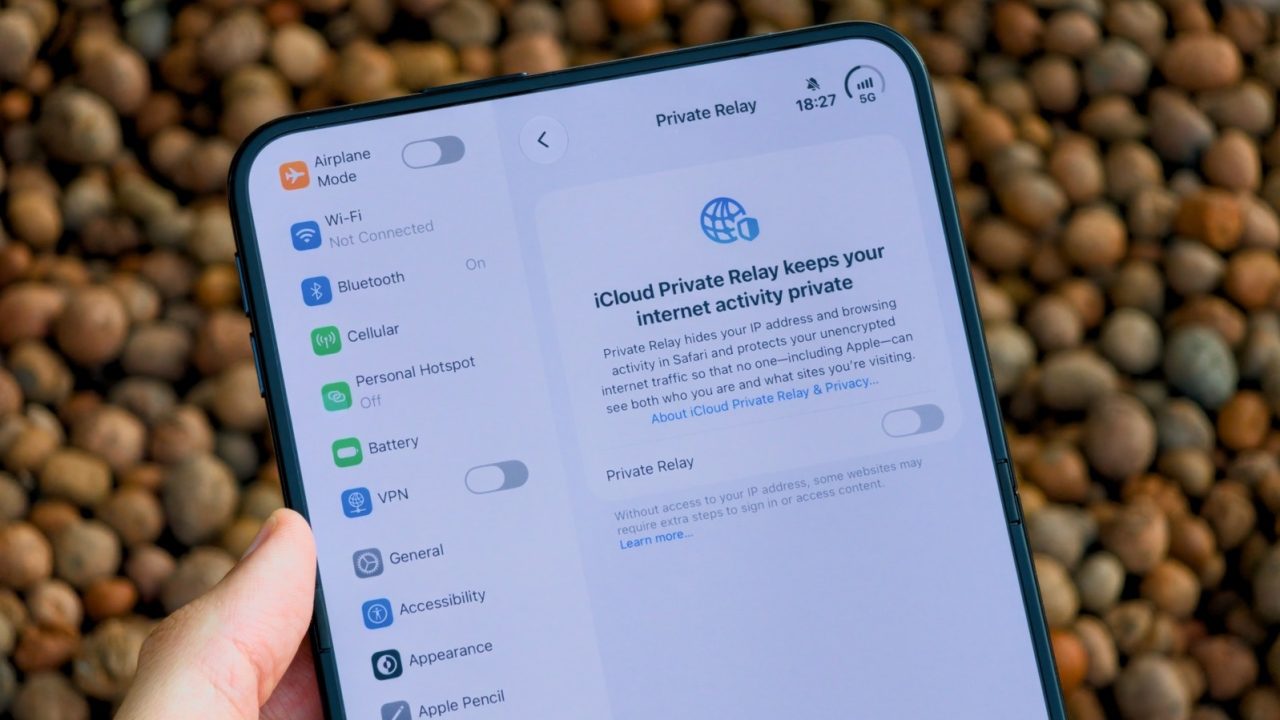
Apple’s iCloud Private Relay, a feature included with iCloud+ and Apple One subscriptions, offers a layer of privacy for web browsing by masking a user’s IP address. However, it functions differently from traditional Virtual Private Networks (VPNs) and does not provide equivalent comprehensive protection.
Private Relay operates through a dual-layer system. Apple acts as the first layer, seeing the user’s original IP address but not the websites they visit. A second layer, managed by partners such as Cloudflare or Akamai, handles the connection to the destination website without knowing the request’s origin. This split prevents either party from having a complete view of the user’s browsing history.
Despite this architecture, Private Relay has significant limitations. It only functions within the Safari browser and for app traffic sent over unencrypted HTTP. All other browsing activity, including use of Chrome or Firefox, bypasses the service entirely. Additionally, the service does not allow users to change their apparent location to bypass geo-blocking; websites are assigned an IP address corresponding to the user’s general region. A recent issue also emerged where using passkeys with Private Relay could expose the real IP address, a problem Apple was investigating as of August 2026.
The feature is also not available globally, with restrictions in countries including China, Russia, and Saudi Arabia. In contrast, a standard VPN encrypts all data leaving a device, regardless of the app or browser being used. VPNs can be installed on various platforms, including Windows and Android, or even set up on routers to secure entire networks. They also offer the flexibility to switch IP locations, which is useful for accessing region-locked content.
Users relying on a VPN must trust the service provider with all their traffic data. Experts recommend choosing reputable services like ProtonVPN or ExpressVPN to avoid risks associated with malicious apps or data selling. For maximum privacy, users can combine both methods: keeping Private Relay active for Safari browsing while utilizing a VPN for other applications, public Wi-Fi connections, or travel to regions where Private Relay is unavailable.


The part about bypassing geo-blocking is a huge downside. I need that feature for work, so I’m sticking with ExpressVPN.
Combine both methods, as suggested. I keep Private Relay on for Safari and use WireGuard for everything else.
Did anyone else notice this is only in Safari? Feels like Apple is just padding their subscription value.
I use a router VPN for my whole house. It’s simpler than juggling different apps for different browsers.
Living in Russia, I can’t even use this. The geopolitical restrictions on basic internet privacy are getting worse.
That passkey bug was terrifying. I was worried Apple would leak my actual location data during login attempts.
Honestly, a $3 VPN subscription beats this limited feature. Why pay for iCloud+ if you still need a real VPN?
The dual-layer approach is clever. Apple and Cloudflare not seeing the whole picture is a nice touch for privacy.
Just realized Private Relay only works in Safari. That makes it pretty useless for my daily Chrome browsing habits.