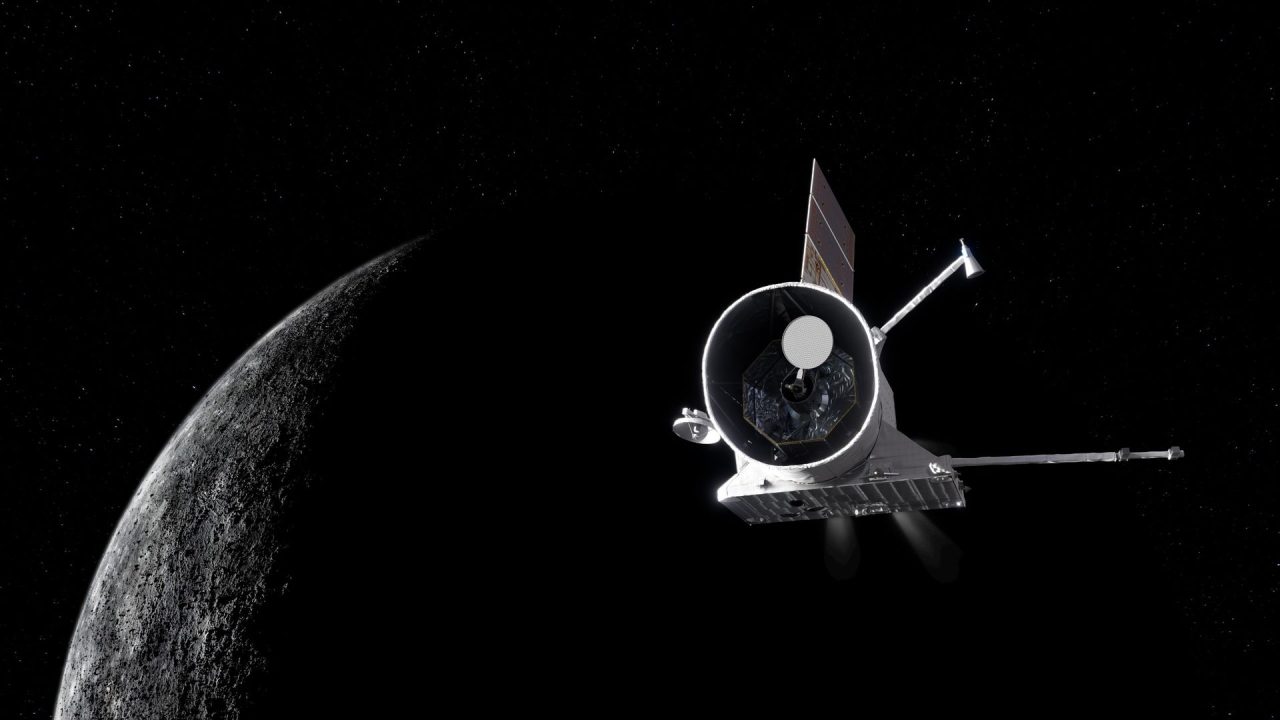
The joint European-Japanese spacecraft BepiColombo is set to enter orbit around Mercury on November 21, marking the culmination of a journey that began more than eight years ago. This arrival follows a critical orbit-insertion burn scheduled to start at 1:24 p.m. EST (18:24 GMT) and lasting 37 minutes.
Developed by the European Space Agency (ESA) and the Japanese Aerospace Exploration Agency (JAXA), the mission comprises two primary spacecraft: ESA’s Mercury Planetary Orbiter (MPO) and JAXA’s Mercury Magnetospheric Orbiter (MMO), also known as Mio. These probes, along with the Mercury Transfer Module (MTM), launched from French Guiana aboard an Ariane 5 rocket in October 2018.
Reaching Mercury presents significant challenges due to the planet’s proximity to the Sun, which accelerates incoming spacecraft and requires substantial energy dissipation for capture. To navigate this, the team executed a complex trajectory involving one Earth flyby, two Venus flybys, and six Mercury flybys over seven years. The timeline extended by one year following a solar panel issue that limited the electric thruster power of the MTM.
The current arrival phase, which began on September 3 when the MTM released MPO and Mio, is expected to last approximately six months. The two orbiters remain connected until around December 9, after which Mio will settle into a highly elliptical polar orbit. MPO will enter a less elliptical polar orbit on March 10, 2027, following a series of engine burns.
Scientific operations are slated to commence on April 6, 2027. The twin probes will collect complementary data from different vantage points to study Mercury’s magnetosphere, internal structure, large iron core, and magnetic field. ESA officials state that this data will provide critical insights into the evolution of planets close to their parent stars and the broader development of our solar system.



Using Venus flybys for gravity assist is clever. Mercury is the hardest body to orbit without huge fuel costs.
The solar panel delay was stressful. Glad they managed to tweak the timeline and still make it in time.
Why does the arrival process take six months? I thought orbit insertion was a quick burn and done.
Eight years of flying just to reach the closest planet feels incredibly long but totally worth it.