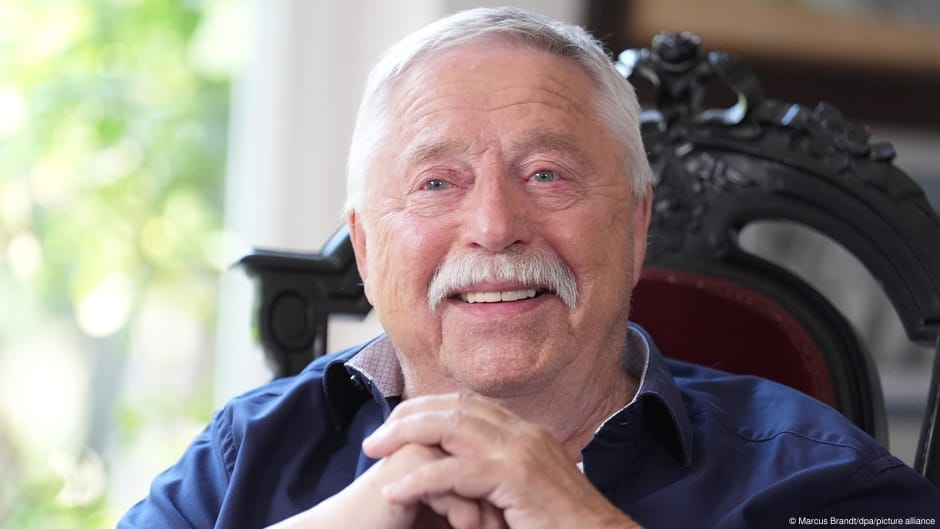
German singer-songwriter Wolf Biermann will turn 90 on November 15, 2026, and is marking the occasion with the release of his latest album, “Unterm Haar nur Himmel” (Under the Hair, Only Sky). The collection addresses contemporary political figures and global conflicts, echoing the themes of freedom and resistance that have defined his career. Known as one of Germany’s most influential troubadours, Biermann continues to use his music to comment on world affairs, urging listeners to engage actively in their communities.
Biermann’s political consciousness was forged during his childhood in Hamburg. Born in 1936, he lost his father—a communist dockworker and Jewish resistance fighter—who was murdered at Auschwitz in 1943. The family later experienced the devastating firebombing of Hamburg in 1945, an event Biermann describes as profoundly shaping his worldview. His mother, who raised him with strong anti-fascist and communist ideals, instilled in him a sense of purpose tied to surviving and eventually taking “revenge” for his father’s death.
In 1953, at the age of 16, Biermann moved voluntarily to East Berlin, aligning himself with the official state ideology of communism. He studied political economy, mathematics, and philosophy while working as an assistant director at the Berliner Ensemble. However, his reality as a performer quickly diverged from the regime’s expectations. He began writing and performing satirical songs that criticized the East German government, leading to tensions with party officials who initially tried to co-opt his talent.
The relationship between Biermann and the authorities deteriorated until 1965, when the Socialist Unity Party imposed a ban on his performances and publications. During his 1976 tour in West Germany, where he performed for thousands in Cologne, the East German government stripped him of his residency rights, citing his critical stance. This effective exile cemented his status as a symbol of dissent. Today, Biermann remains active, using his music to critique figures such as Donald Trump and Vladimir Putin, while maintaining his lifelong commitment to freedom and social justice.

Nice that he critiques both Trump and Putin. Real consistency, not just playing to the left crowd.
I am skeptical about this being a new album. Is he really writing new material or just compiling old works?
The Hamburg firebombing story is heartbreaking. His entire career seems driven by that early trauma and loss.
Do you think his lyrics still resonate with younger listeners who did not grow up under the GDR regime?
Surprised to see he is still politically active. It is rare for artists of his generation to stay this sharp.
Nine decades old and still fighting the good fight. His voice has defined German resistance for decades.