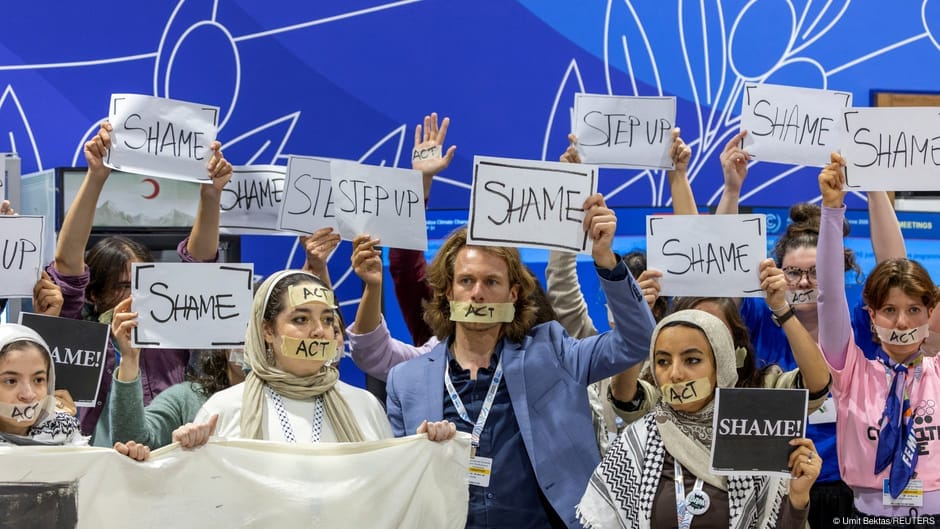
The United Nations climate summit, COP31, held in Antalya, Turkey, has extended into its second day of overtime as negotiators from nearly 200 countries fail to reach a final agreement. The talks were scheduled to conclude on Friday evening but have continued into the weekend due to deep divisions regarding fossil fuel policies and climate financing.
Critics argue that the summit is stalling primarily due to a lack of financial commitment from wealthy nations. Harjeet Singh, the global convener of the Fill the Fund campaign, stated that Europe and other rich countries arrived with “empty pockets,” accusing them of blocking just transition mechanisms and refusing to fund adaptation and loss and damage funds. “You can’t ask developing countries to transform their economies while they’re drowning in disasters and debt,” Singh wrote, attributing the lack of progress to a deficiency in both money and political will from those who caused the crisis.
Geopolitical divisions have also hindered the final text of the agreement. Andres Martin Garrido Sanchez, head of Peru’s delegation, warned that the outcome would be “very limited” because major oil producers, including Gulf Arab states and Russia, have opposed language aimed at reducing reliance on coal, oil, and gas. While neighboring Panama objected to the term “fossil fuels” appearing in the final document, Peru maintained a slightly more moderate position, prioritizing the attraction of renewable energy investment to ensure national energy security.
Despite these obstacles, some progress has been made on specific targets. China and Australia issued a joint statement backing Turkey’s proposal to increase the share of global electricity demand to 35% by 2035, up from the current 20%. This voluntary goal, supported by dozens of countries including the EU, Japan, South Korea, and Canada, aims to boost clean energy usage, although environmental groups have criticized the draft for not explicitly stipulating the use of renewable sources like solar and wind, potentially allowing for natural gas and coal-fired power plants.
Negotiations are expected to continue through the weekend as delegates attempt to bridge the gap between ambitious electrification targets and the financial realities facing developing nations. Meanwhile, the host nation is dealing with immediate climate impacts, including rising sand temperatures that are affecting the gender ratio of hatched sea turtles in local populations.

I doubt any real deal happens this weekend. Geopolitical rifts make it impossible to get consensus on fossil fuel language.
Doesn’t the 35 percent target allow coal? Environmental groups say gas counts as clean energy here. That feels like a trap.
Sea turtles changing gender ratios is terrifying. Climate impact is already happening here in Turkey, not just future projections.
Rich nations always send empty wallets to these meetings. It is insulting to expect progress without actual funding commitments.