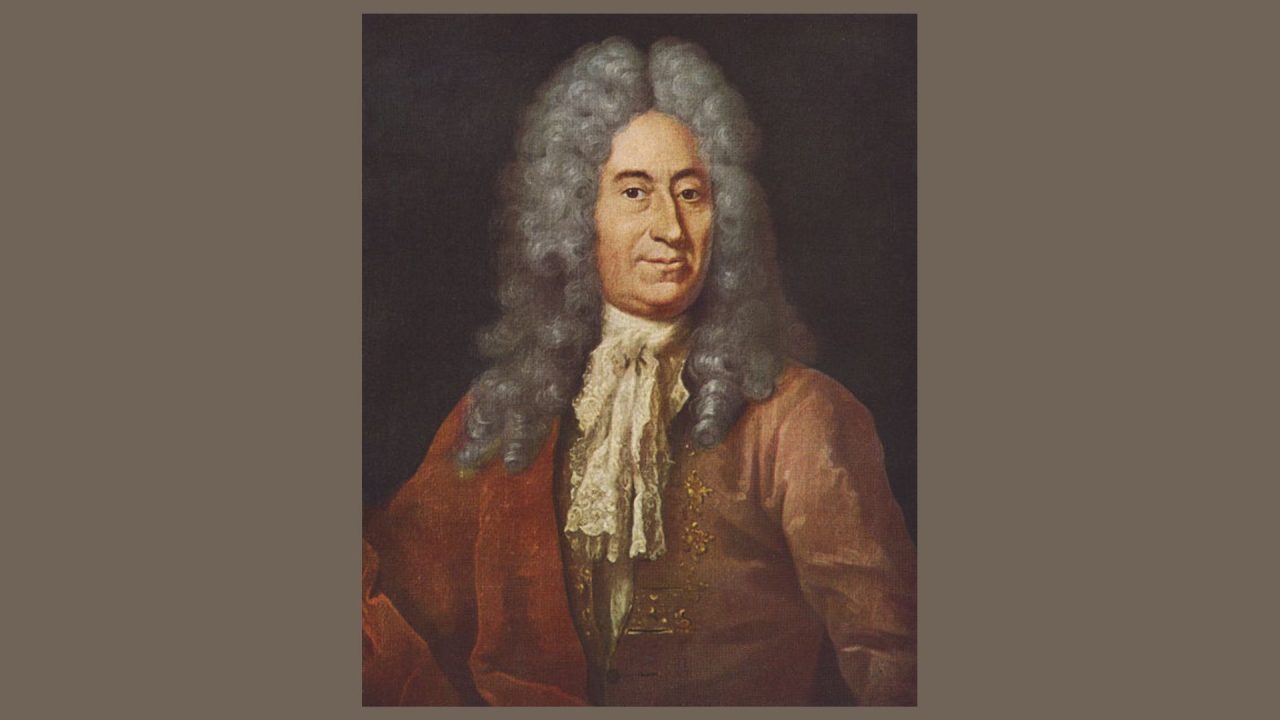
On November 21, 1676, Danish astronomer Ole Rømer presented evidence that light travels at a finite speed, overturning the prevailing scientific belief that light moves instantaneously. The breakthrough occurred almost accidentally during Rømer’s long-term study of Io, one of Jupiter’s moons, which he was tracking to develop a reliable cosmic clock for predicting orbital periods.
For years, Rømer monitored Io as it passed behind Jupiter, disappearing and reappearing on a 42-hour cycle. He noticed that the timing of these eclipses was inconsistent. When Earth was at its closest point to Jupiter, the eclipses occurred approximately 11 minutes earlier than expected. Conversely, when the two planets were at their farthest apart, the events happened about 11 minutes later. Rømer identified this pattern and used it to make accurate predictions for future eclipses, such as the event on November 9, 1676.
Presenting his findings to the Royal Academy of Sciences on November 21, 1676, Rømer concluded that the discrepancies in timing were caused by the finite speed of light. This discovery was pivotal in shaping modern physics and astronomy, as it provided a method for measuring the vast scale of the universe. As explained by Live Science, this concept established the speed of light as a fundamental limit, meaning that any object with mass requires infinite energy to reach that velocity.



My favorite part of history is when people accidentally prove something completely different from what they planned.
Can we agree that Jupiter’s moon Io was the real unsung hero of the entire scientific revolution here?
The connection to Einstein’s relativity feels heavy. One man’s observation set the stage for infinite energy requirements.
Eleven minutes is huge in the grand scheme of things. We are just barely scratching the surface.
I remember my physics teacher mentioning this. Always fascinating how one tiny detail changed everything for us.
Seventy years before Newton. Rømer really outpaced everyone else with this single presentation at the academy.
The math involved must have been brutal. I am sure he used abacuses for this calculation.
Wait, is he saying Rømer figured out the speed of light just by watching a moon get blocked?
I never knew it was accidental. Science happens when you least expect it, which makes it even more impressive.