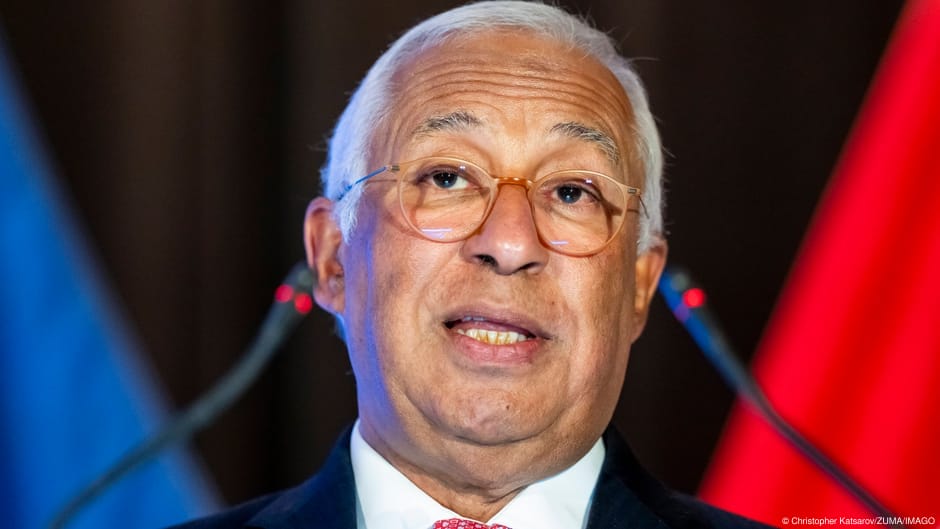
European Council President Antonio Costa has introduced a revised proposal for the EU’s 2028–2034 multiannual financial framework, introducing a 3% tax on major digital firms to lower the mandatory contributions from member states. The new draft reduces the overall budget by €204 billion compared to the initial plan presented by the EU Commission in 2025, a move intended to address concerns from northern European countries, including Germany, that had argued for a smaller financial commitment.
The proposal introduces a set of new ‘revenue channels’ to keep national contributions at a reasonable level. Beyond the tax on the tech sector, the plan includes levies on tobacco products and electronic waste. The proposed tax on digital services applies to companies generating at least €50 million in annual turnover from digital activities within the EU and €750 million globally. These firms would pay an annual contribution equal to 3% of their net turnover derived from online advertising, digital intermediation services, and user-generated data.
Despite Costa’s assertion that the plan is a ‘good basis for moving towards a final agreement’ and a realistic approach to current priorities, the proposal has already faced resistance. France rejected the draft, describing it as ‘deeply disappointing’ and arguing that it falls short of the necessary funding for the Common Agricultural Policy, particularly regarding income support for farmers. The French presidency stated that the current proposal does not yet provide a foundation for an agreement.
Costa’s draft is now set to be the central topic of discussions when EU leaders convene in Brussels next week. While the European Union aims to reach a general consensus on the budget by the end of 2026, with formal adoption planned for 2027, the immediate pushback from key member states suggests that securing final approval may require further negotiation.



Another week in Brussels. Let’s see if they actually reach an agreement soon.
I support the smaller budget but worry about cuts to green energy initiatives.
France rejecting it so quickly shows how fragile this budget framework really is.
Tech companies will just move their headquarters elsewhere to avoid this tax.
Is this going to happen before the next elections? Seems like a long timeline.
Taxing e-waste too? That makes a lot of sense for environmental goals.
Germany will probably love this smaller budget. Less pressure on our national contributions.
Three percent feels low. France is right to worry about farmer income support disappearing.
Finally taxing tech giants. I hope they actually pay up instead of finding loopholes.