Levent Alpöge, a mathematician and member of the technical staff at artificial intelligence company Anthropic, has announced that he believes he has solved the Riemann Hypothesis with the assistance of the company’s AI model, Claude. The claim was made in a four-page explanation posted to his personal website on Friday, stating that the discovery was finalized late Sunday night. In his post, Alpöge noted that while he and Claude had collaborated effectively for months, the AI significantly outpaced him in the final stages of the proof.
The Riemann Hypothesis, formulated in 1859, is a long-standing unsolved problem concerning the distribution of prime numbers. It was selected in 2000 by the Clay Mathematics Institute as one of the Millennium Prize Problems, carrying a reward of $1 million for a verified solution. Alpöge published the proof within 17 million lines of Lean, a specialized programming language designed for formal mathematical verification.
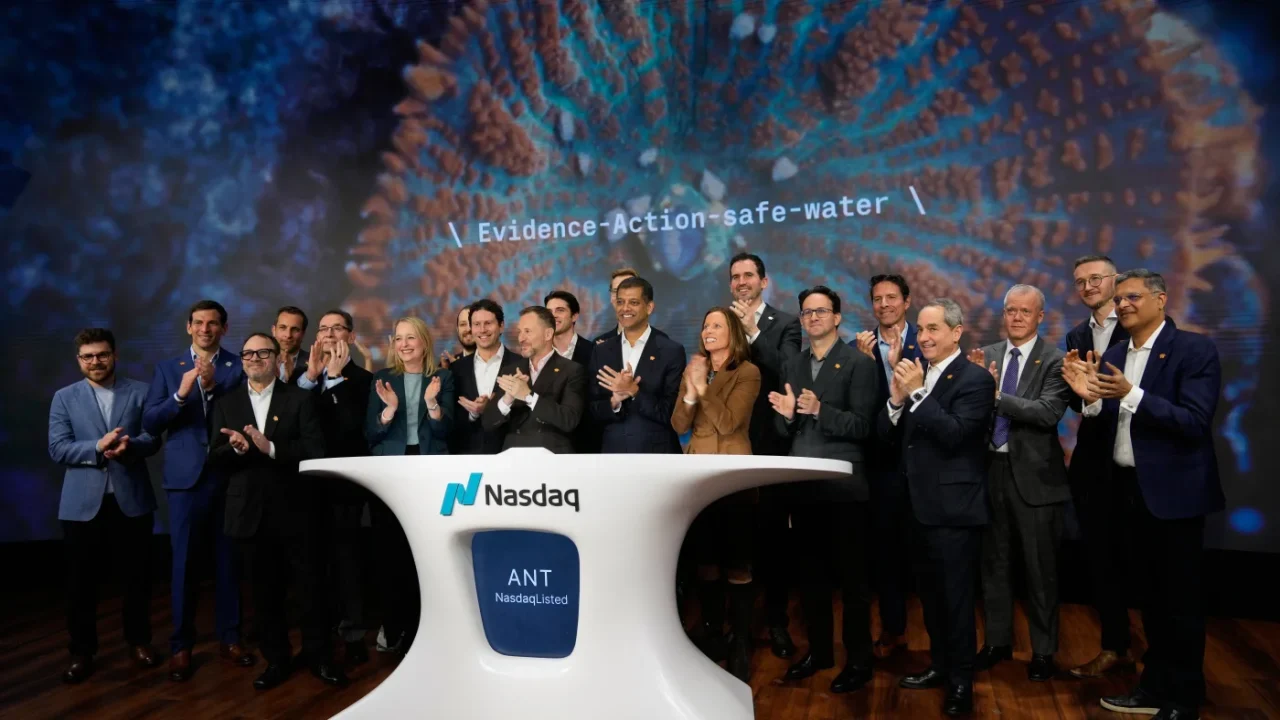
The announcement occurred just one day after Anthropic completed the most valuable initial public offering in history, with the company’s stock debuting on the Nasdaq. Alpöge reportedly contacted Anthropic CEO Dario Amodei on the day of the IPO to inquire about the timing of such a major mathematical reveal. Anthropic did not immediately respond to requests for comment from The Associated Press regarding the specific claim.
Experts note that while traditional mathematical discoveries are typically published as formal papers requiring human peer review of every line, Alpöge’s proof relies on automated verification. Alex Kontorovich, a distinguished professor of mathematics at Rutgers University, explained that while Claude’s confirmation of the code’s validity is a strong indicator of correctness, human understanding of the proof’s depth remains a separate challenge. “If you can satisfy the computer, there’s a very, very good chance you’re going to satisfy me too,” Kontorovich said, adding that the computer is more meticulous than any individual mathematician.
Martin Bridson, president of the Clay Mathematics Institute, described the event as historically significant, noting that it promises to reshape perceptions of what is possible in extending human mathematical understanding. However, he cautioned that the process of verifying whether the hypothesis is truly solved will be long and difficult. As of hours after the announcement, the Riemann Hypothesis remained listed as unsolved on the Clay Mathematics Institute’s official website.


They need to be careful not to hype this before it is officially verified. Patience, grasshoppers.
History being made right now. I can’t believe I’m reading this. The Clay Institute should be excited.
Even if the computer verifies it, can we actually understand the logic? That’s the hard part.
Claude outpacing the mathematician in final stages is concerning. What is the future of human expertise?
The timing with the IPO is wild. Did he just ask the CEO about the schedule first?
I’m skeptical until peer review is done. 17 million lines of code is hard for humans to check.
Wait, really? Solving a Millennium Prize problem with an AI? That feels like science fiction becoming reality.