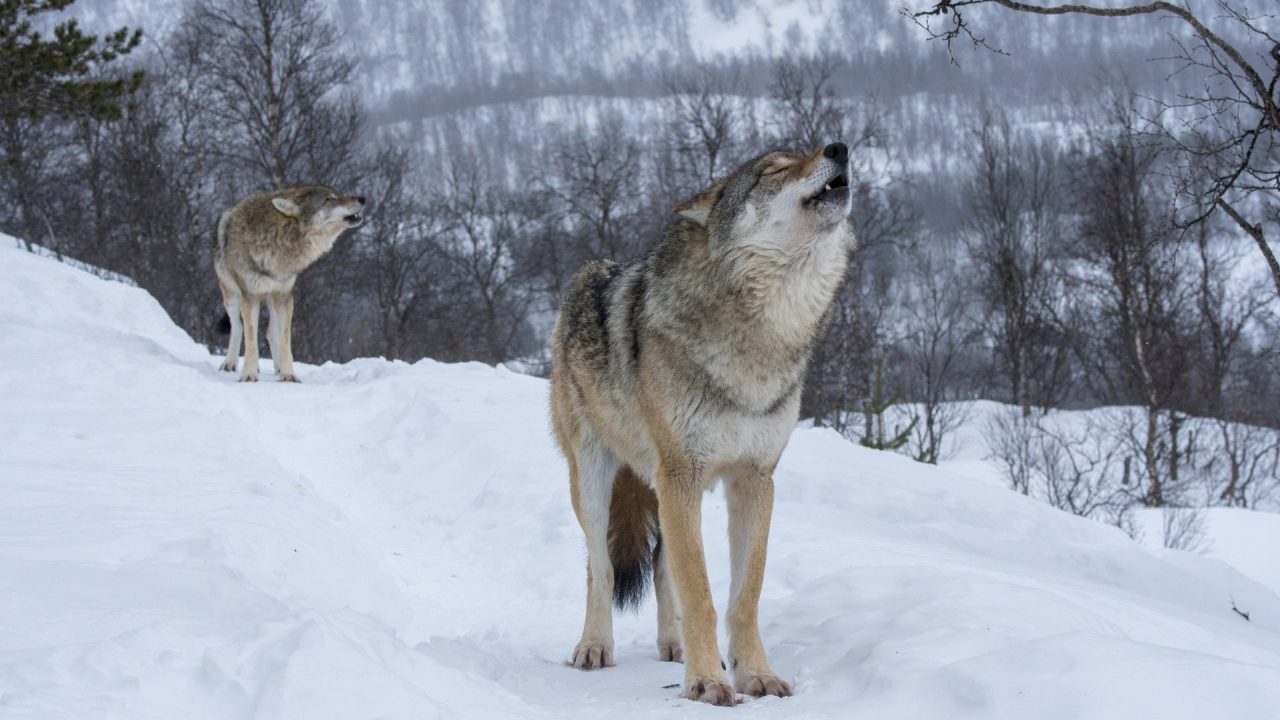
Contrary to popular folklore, wolves do not howl at the moon. Experts state that the behavior is driven by social needs, including maintaining pack cohesion and defending territory.
Arik Kershenbaum, a zoologist at the University of Cambridge, explained that a lone wolf may howl to reconnect with its pack or to find a new group and mate. When packs howl together, known as chorus howling, they are often advertising their territory to deter neighboring groups. Tamás Faragó, an ethologist at Eötvös Loránd University in Hungary, noted that packs are more likely to howl in the center of their territory, when pups are present, or after securing food.
While group howling has a repellent effect on intruders, its primary function is social bonding. Faragó observed that collective howling helps synchronize the mood of a pack, which is common before hunting. However, lone wolves intruding into another pack’s territory will typically remain silent to avoid revealing their presence.
The acoustic reach of a wolf howl is significant. According to the Wolf Conservation Center in New York, the sound can travel up to 10 miles (16 kilometers) in open terrain. The combination of low- and high-frequency sounds allows the vocalizations to carry information about individual identities even when lower frequencies are blocked by vegetation.
Researchers have identified distinct “howling dialects” among different canid species. A 2016 study found that timber wolves predominantly use low, flat howls, while red wolves favor high, looping sounds. Additionally, a 2023 study indicated that ancient dog breeds, which share a closer lineage with gray wolves, howl more frequently than modern breeds that rely on barking.
Scientists continue to investigate whether specific howl patterns correspond to different emotional states, such as relaxation versus territorial aggression. Kershenbaum dismissed the moon myth, suggesting that the association likely stems from historical times when people were more active outdoors during bright lunar nights, coinciding with peak wolf activity.


I still see them howling on full moon nights. Coincidence or just our stubborn cultural bias sticking around?
So dogs howling at sirens is basically a leftover evolutionary habit from their wolf ancestors? That makes a lot of sense.
Ten miles is incredible. Imagine how loud the forests must sound when the whole pack chimes in together.
I never actually believed the moon thing, but it is fun to see it officially debunked at last.