Levent Alpoge, a mathematician and technical staff member at AI company Anthropic, has announced that he utilized the company’s Claude AI tool to formulate a proof for the Riemann Hypothesis. The discovery, which Alpoge detailed on his personal website, represents a potential milestone in both mathematics and the application of artificial intelligence in scientific research.
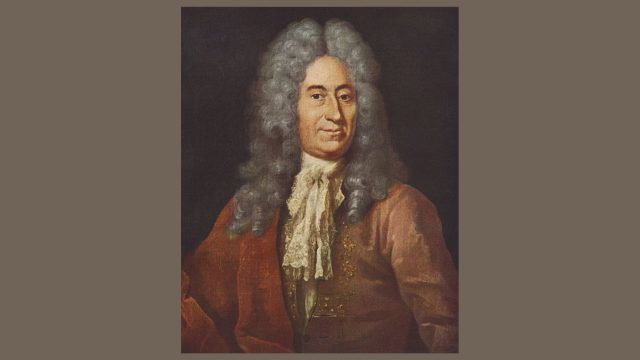
The Riemann Hypothesis, first proposed by German mathematician Bernhard Riemann in 1859, concerns the distribution of prime numbers. It is one of seven unsolved problems designated as Millennium Prize Problems by the Clay Mathematics Institute, which offers a reward of $1 million for a correct solution. If Alpoge’s proof withstands independent scrutiny, it would resolve a challenge that has eluded mathematicians for over a century.
Alpoge noted that the collaborative process between him and Claude generated more than 250,000 pages of mathematical material. He admitted that the AI system outpaced his own capabilities in the final stages of the work. “Claude and I have had a great time together with such breadth in recent months, but this time Claude far outpaced me near the finish line,” he wrote. “No, Claude flew, and danced, and sparkled near that finish line.”
Martin Bridson, president of the Clay Mathematics Institute, described the announcement as having historic significance. While acknowledging the promise of a dramatic transformation in mathematical understanding, Bridson cautioned that the path from this initial claim to a fully verified and understood proof will be long and difficult. The proposed solution remains pending independent verification by the mathematical community.
This event follows a trend of artificial intelligence systems making significant contributions to advanced mathematics. In September, rival company OpenAI announced that its technology had assisted in solving a problem related to the Navier-Stokes equations, another Millennium Prize Problem, a claim that also awaits independent confirmation.


Great if true, but remember the Navier-Stokes claim. These AI proofs often have subtle, critical flaws.
The Riemann Hypothesis solved? My grandfather believed it was impossible. I am genuinely shocked by this news.
Wait, a researcher from the company making the AI claims they solved it? Feels a bit circular to me.
250,000 pages? That is absolutely insane. Hope the peer review process can handle that massive amount of data soon.