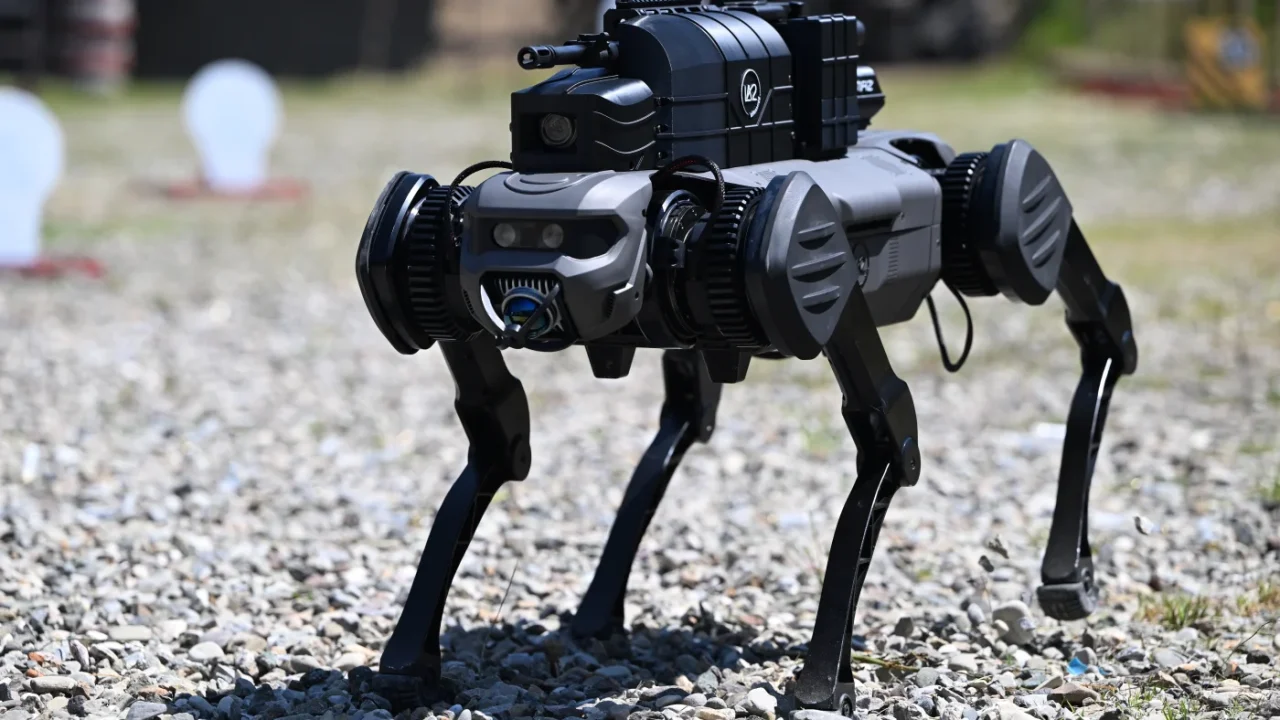
National delegations in Geneva reached a modest compromise on Saturday, agreeing to continue discussions on AI-powered lethal autonomous weapons systems, though no binding regulatory framework was established. The outcome of the week-long United Nations conference fell short of the legally binding deal expected by Secretary-General António Guterres, who had set a 2026 deadline for such an agreement.
The participating nations agreed to ‘elaborate’ on a potential accord by 2028, a move that effectively extends the negotiation process for two additional years. Izumi Nakamitsu, the U.N. high representative for disarmament affairs, described the result as a ‘significant achievement’ while acknowledging the gap between this progress and the Secretary-General’s original goals.
Advocacy organizations and human rights groups criticized the outcome as a ‘watered-down mandate,’ arguing that major military powers, including the United States and Russia, have impeded efforts to adopt stronger language. Max Tegmark, a machine learning specialist at the Massachusetts Institute of Technology, noted that states are prioritizing continued dialogue over regulation, despite ongoing concerns that these technologies facilitate atrocities.
Earlier in the conference, a coalition of seven countries, including Brazil, proposed launching negotiations for a comprehensive rulebook to prevent machines from acting without human control. That specific initiative did not gain traction. Ambassador Frederico Meyer of Brazil highlighted the disconnect between the rapid advancement of technology and the slow pace of diplomatic consensus.
The talks were conducted under the Convention on Certain Conventional Weapons, which is ratified by 128 countries. Under this framework, all decisions require unanimous consent, meaning any single nation can block a proposal. Consequently, advocates argue that the final agreement represents a low common denominator that fails to address the existential threats posed by widespread autonomous weaponry before it becomes too entrenched to regulate effectively.



Calling this a significant achievement feels like spinning a non-deal. Total disappointment honestly.
Two more years is an eternity in tech terms. What will the systems look like by then?
It is frustrating that diplomacy lags so far behind technology. We need stronger rules now.