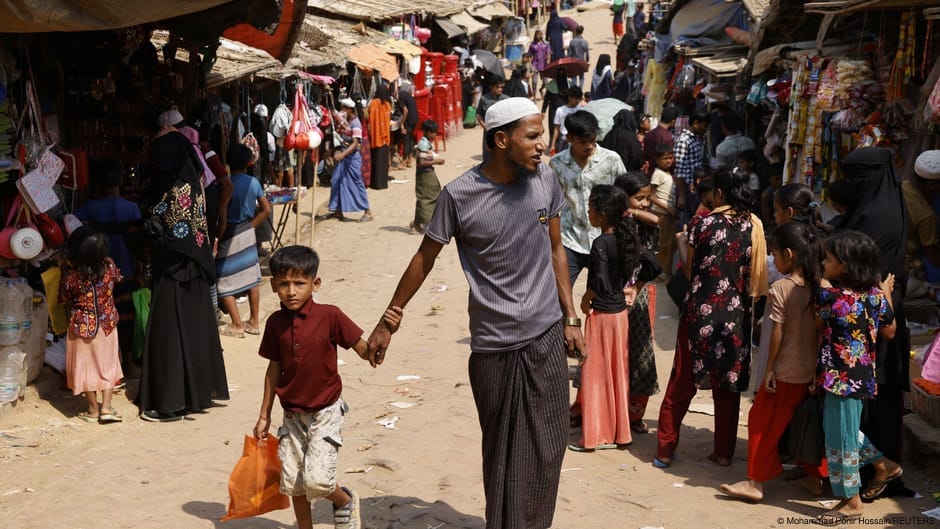
The International Court of Justice (ICJ) has delivered a historic ruling, declaring that Myanmar is responsible for committing genocide against the Rohingya community a decade ago. In its judgment, the UN’s top court ordered the Myanmar government to prevent the recurrence of such crimes, implement legal reforms to protect the Rohingya, and provide victims with restitution and reparations.
This verdict marks the first time the ICJ has found a state guilty of genocide. The case was brought by The Gambia in 2019, which accused the Buddhist-majority nation of a deliberate campaign of arson, rape, and murder targeting the predominantly Muslim Rohingya in 2016 and 2017. During the trial, Myanmar defended its actions as legitimate counterinsurgency operations against the Arakan Rohingya Salvation Army. However, the ICJ firmly rejected this argument. Speaking from a 15-judge panel that voted 9-6 in favor of the ruling, President Yuji Icasawa stated that the casualties and damage were ‘far in excess of what was justified by military necessity.’ He noted that the execution of men and boys, widespread sexual violence, and the burning of villages were inconsistent with the intent of conducting counterinsurgency.
For Rohingya activists, the judgment represents long-overdue validation of their suffering. Lucky Karim, who fled Rakhine State with her family in 2017 at the age of 14, described the day as personal and significant, noting it took nearly a decade for the world to truly hear their voices. Wai Wai Nu, another prominent activist, emphasized that the ruling validates decades of persecution that had been met with denial or minimization by the military.
While the legal victory is significant, the path to actual relief remains fraught with difficulty. The ICJ mandated that Myanmar allow for the ‘safe, voluntary and dignified’ return of refugees and prosecute those responsible for the crimes. However, former military chief Min Aung Hlaing remains in power, and much of the country, including Rakhine State, continues to be engulfed in civil war. Furthermore, the Arakan Army, which currently controls large parts of Rakhine, faces its own allegations of persecuting the Rohingya. Experts warn that the current conditions are not conducive to realizing the court’s orders, and enforcement ultimately rests with the UN Security Council, where veto powers held by China and Russia may pose significant obstacles.

Hopeful but realistic? Hard to say. Legal judgments are great until you have to actually make a dictator comply with them.
It is a moral victory, sure, but the Arakan Army has its own issues. The ground reality is messy and complex.
Who enforces this? China and Russia will block any serious sanctions. Myanmar’s military just waits out the international pressure again.
I’m shocked this took ten years to adjudicate. The delay itself feels like a betrayal of those who lost everything.
Reparations mean nothing if the people cannot actually return home safely. The conflict situation in Rakhine makes that impossible right now.
The 9-6 vote shows this wasn’t an easy call, but the evidence of mass atrocities was overwhelming and undeniable.
Finally a legal precedent set. But without Security Council backing, this feels like just more paperwork for them to ignore.