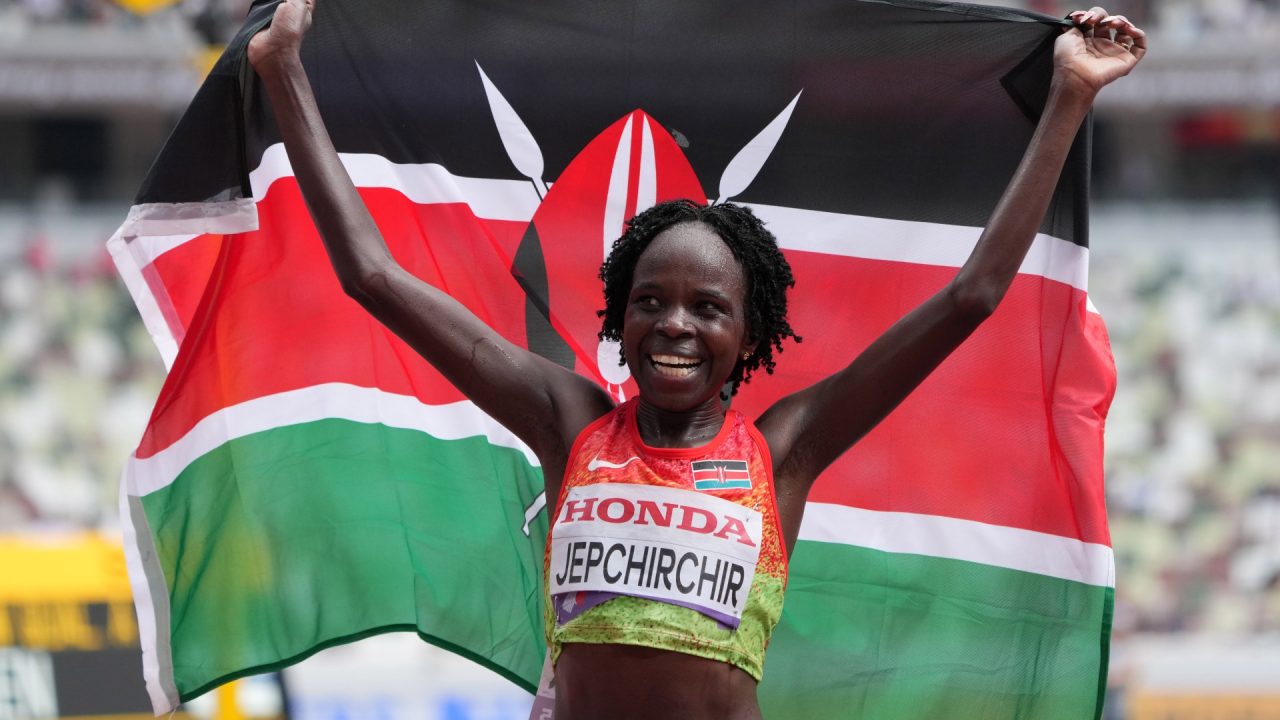
Kenya’s longstanding reputation as a global powerhouse in distance running is facing renewed scrutiny after world and Olympic marathon champion Peres Jepchirchir received a three-year ban for violating anti-doping rules.
The Athletics Integrity Unit announced the sanction on Thursday, revealing that Jepchirchir tested positive for the banned blood booster erythropoietin (EPO). The sample was collected before her victory at the Sydney Marathon in August, which marked her fourth win at a World Marathon Major after previously triumphing in New York, Boston, and London. The former half-marathon world record holder admitted to the infraction.
Jepchirchir is the latest in a series of prominent Kenyan athletes to face formal sanctions. Since 2017, more than 140 Kenyan athletes have been suspended by the AIU, with the majority being distance runners. Experts indicate that while the visibility of these cases has increased due to expanded testing regimes, the underlying drivers of doping remain linked to financial insecurity and performance pressure.
Former Kenyan middle-distance runner Martin Keino noted that the country produces many athletes chasing limited high-paying contracts, creating intense pressure to succeed. “Testing has expanded, particularly out-of-competition testing, and the AIU now goes after suspicious patterns instead of waiting for a positive sample,” Keino said. “The problem is real, but the visibility is new.”
Olympic 800m champion Wilfred Bungei argued that recent violations jeopardize the integrity of the sport and tarnish the legacy of previous champions. “I can only describe it as greed, selfishness and above all just plain stupidity to not understand that it’s not you the doper who is damaged but thousands of Kenyan athletes who built their careers on pure sweat and discipline,” Bungei said.
Responsibility for doping violations is a subject of ongoing debate. While Bungei and Keino believe primary responsibility lies with the athlete, acknowledging that elite competitors are aware of prohibited lists and testing protocols, others point to inadequate education and unqualified support staff. A 2016 investigation by the World Anti-Doping Agency found that some Kenyan athletes had falsified medical records to evade sanctions, highlighting gaps in the country’s anti-doping framework.
In September, Kenya signed the Anti-Doping Amendment Bill 2026 to align with updated WADA standards, a decade after being declared non-compliant with global regulations. Keino suggested that stronger audits, increased funding for testing and education, and stricter accountability for hosts of major events, such as the 2029 World Athletics Championships in Nairobi, are necessary to protect the sport’s integrity.



Finally, a new bill is signed. It is about time we actually enforce rules properly and stop the cycle.
The pressure is real. With so few top spots available, athletes feel forced to cut corners to survive financially.
Are the sponsors backing these runners enough to justify the risk? I think many will deny the sport soon.
I never expected Peres to test positive. She was so dominant recently that I assumed the system missed something else.
It is heartbreaking to see our champions ruined by greed. The real damage is done to honest athletes.