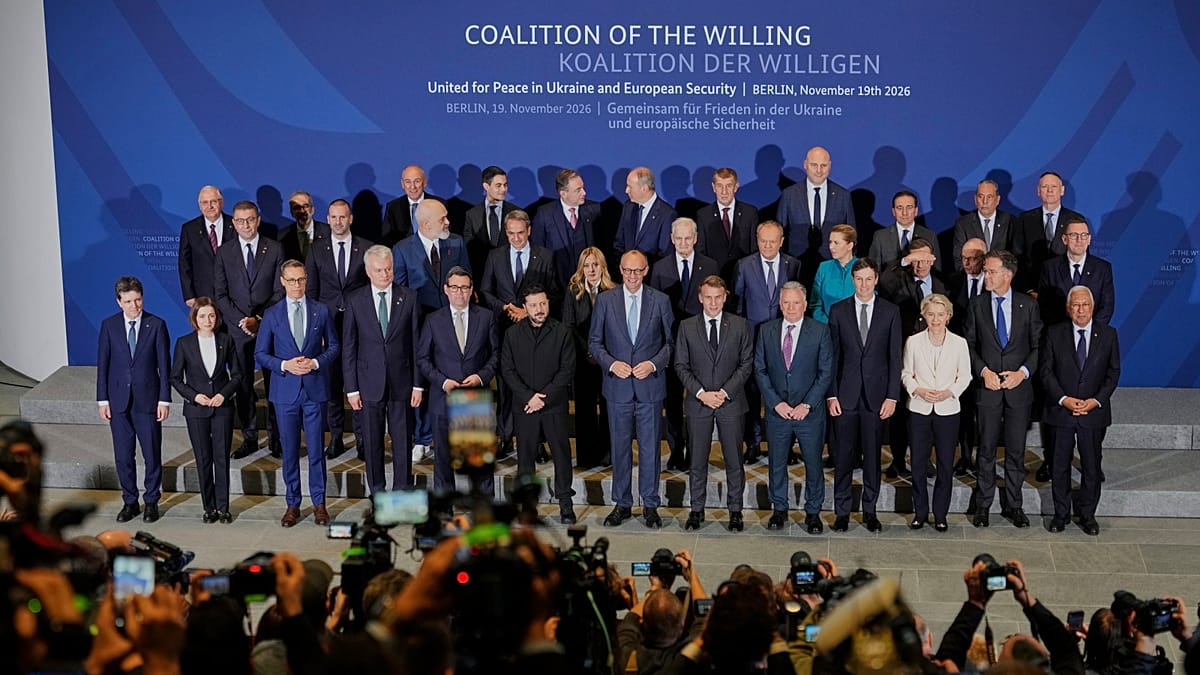
European political leaders have formally rejected a proposal dubbed “Yalta 2.0” for resolving the war in Ukraine, following recent high-level meetings between US President Donald Trump and Russian President Vladimir Putin and Chinese President Xi Jinping. The rejection signals a firm European stance against any settlement that they view as compromising Ukraine’s sovereignty or territorial integrity, particularly in the aftermath of Trump’s trilateral summit efforts.
The term “Yalta 2.0” references the 1945 Yalta Conference, where Allied leaders agreed on post-war arrangements without fully consulting the nations directly affected. European officials expressed concern that the current diplomatic push mirrors this historical precedent, effectively allowing major powers to dictate the outcome of a conflict in Europe.
US President Trump departed China earlier this month after attending the APEC summit in Shenzhen, where he engaged in discussions with Chinese leadership. While the focus of the summit included broader geopolitical issues, the parallel engagement with Russian leadership has drawn sharp criticism from Brussels. European states argue that excluding Ukraine from critical decision-making processes regarding its own future is unacceptable and undermines the rule-based international order.
The split between European and American diplomatic approaches to the Ukraine crisis has widened, with European nations insisting on a role for Kyiv in any peace negotiations. This development highlights the ongoing tension in transatlantic relations over the strategy to end the war in eastern Europe.
Calling it ‘Yalta 2.0’ is a strong rhetorical move, but the substance remains largely the same problem unfortunately.
The transatlantic divide feels wider than ever. America wants quick deals, Europe wants proper procedural justice and safety guarantees.
Trump really loves his summits, but ignoring the actual victim seems pretty reckless strategy for long-term stability here.
I hope Ukraine gets a real seat at the table this time, not just as an afterthought to the deal.
Does this actually change anything on the ground? The war continues regardless of what the diplomats are saying.
Finally, some sense. Europe knows best when it comes to its own backyard security issues and territorial integrity rights.
This comparison to Yalta is quite chilling. History repeats itself when smaller nations get sidelined by the big powers again.