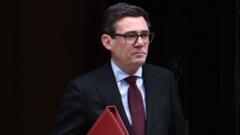
Downing Street has confirmed that negotiations between the United Kingdom and the European Union have reached a critical stage as both sides prepare for a summit in Brussels on Friday. The prime minister’s spokesman described the talks as “going down to the wire,” highlighting the urgency to finalize agreements on key issues including food trade regulations, visa schemes for young people, and carbon emissions pricing.
Should a deal be secured, the government intends to introduce legislation to Parliament next week to implement the new arrangements. Prime Minister Andy Burnham has framed the potential agreement as a move to lower food prices and reduce costs for businesses, while also enhancing cross-border law enforcement cooperation on immigration.
The proposed youth mobility scheme aims to facilitate travel and work opportunities for young people between the UK and the EU. While the UK currently maintains similar agreements with 13 non-EU nations, the new deal would address EU proposals allowing individuals aged 18 to 30 to reside in either jurisdiction for up to four years. Previous talks have stalled over the UK’s desire to cap the number of participants and ban benefits claims, alongside the EU’s insistence that its students pay the same tuition fees as domestic students at UK universities.
Conservative leader Kemi Badenoch has criticized Prime Minister Burnham for “reopening the divisions and debates” of the Brexit era, arguing that the new deals may force UK companies to adhere to EU regulations even if they do not trade directly with the bloc. In response, Burnham’s team stated that Brexit had caused more harm than good and that the current choice is between maintaining a “broken status quo” or pursuing changes that benefit businesses and young people.
The summit also provides an opportunity for the UK to raise concerns regarding the “Made in Europe” scheme, which is designed to shield industries from Chinese competition. Although Burnham has previously suggested committing Labour to a closer long-term relationship with Europe, including potential re-entry as a full member, he has ruled out major changes before the next election, adhering to the party’s 2024 manifesto pledges against returning to the single market or customs union.
Reform UK leader Nigel Farage dismissed the political implications of the talks, claiming that Burnham was playing a “cynical political game” to attract votes from liberal and green parties while distracting from domestic problems, asserting that the public would never vote to rejoin the EU.
Four years is a long time. Will it create dependency issues or genuine cultural exchange opportunities?
I wonder how cross-border law enforcement cooperation will work in practice for regular citizens moving back and forth.
Farage is cynical as always. The public wants practical deals, not just political points scored for attention.
Burnham says the status quo is broken. I agree, but I worry about losing our regulatory independence.
Why are we still arguing about benefits claims? It feels petty and outdated for a modern trade deal.
The carbon pricing agreement is crucial. We need alignment there to make any real environmental impact.
Reopening Brexit debates is risky. I fear we are just circling the drain again without real progress.
Lower food prices would be a huge relief for families. Can we get this legislation passed quickly?
I am worried about the tuition fee debate. Will EU students really pay the same as our domestic ones?
The four-year limit on youth mobility seems generous compared to our current non-EU schemes. Hope this actually helps young people.