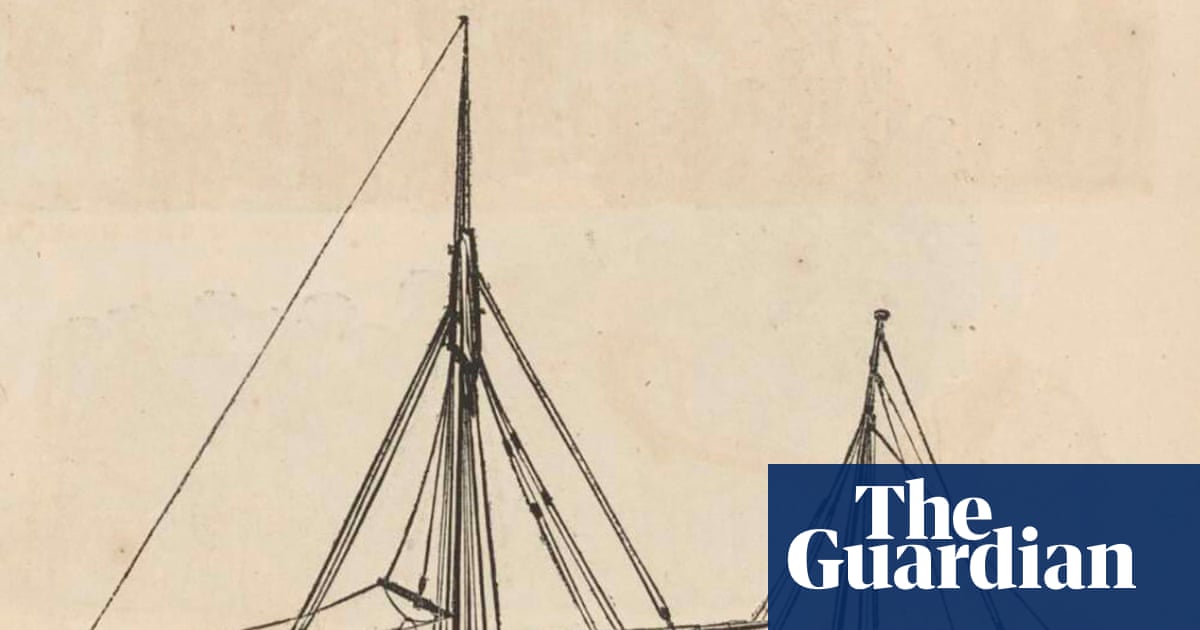
The wreck of Australia’s first locally constructed warship has been located off the coast of far north Queensland, exactly 128 years after it went down in 1898. Marine archaeologists discovered the remains of the former Ex HMCS Spitfire on August 21, marking the anniversary of the vessel’s loss.
Celeste Jordan, principal heritage officer at Queensland’s Department of the Environment, Tourism, Science and Innovation, described the discovery as “remarkable luck.” She noted that rediscovering such shipwrecks helps preserve and protect the stories of the past for future generations.
The 19-metre wooden gunboat was designed and built in Sydney in 1855. Commissioned by the Australian colonial government, it was intended to protect against Russian warships based at Vladivostok during the Crimean War and to address concerns about the French military presence in New Caledonia. While designed to carry a 32-pounder cannon, evidence suggests the weapon was never actually fitted to the ship.
Constructed from ironbark and blackwood and sheathed in copper, the vessel was built by Sydney shipbuilder John Cuthbert and launched by his wife, Susan Cuthbert, from Darling Harbour in 1855. A 1981 article in the Naval Historical Review described it as “a sturdy little vessel.” After its military service, the ship operated as a pilot vessel for Queensland before being sold for £300 to private owners for use as a sea cucumber fishing boat.
According to the Australian National Maritime Museum, the Spitfire developed a leak on August 21, 1898, and foundered during a voyage off Queensland’s Cape York peninsula. The crew was rescued by the Japanese steamship Omi Maru.
The wreck was found by a crew from the Australian National Maritime Museum, the Queensland government, and the Royal Australian Navy while aboard the minehunter vessel HMAS Diamantina. During a month-long expedition, the team searched an area identified through archival records, with sonar detecting the Spitfire as an acoustic anomaly.
Vice Admiral Matthew Buckley, Chief of Navy, stated that the vessel occupies a unique place in Australia’s naval history. “For sailors today, this vessel represents the beginning of a story that continues in the Royal Australian Navy,” he said. The wreck is protected under the Underwater Cultural Heritage Act 2018 and is one of more than 8,000 shipwrecks, sunken aircraft, and other heritage sites in Australian waters.



Protecting these wrecks is vital. You cannot just scuba dive anywhere without considering the heritage aspect.
£300 is such an insult to the military vessel. I hope they got more for the fishing rights.
The crew being saved by a Japanese ship is a really interesting historical detail most people would miss.
Ironbark and copper sheathing? I imagine that hull was absolutely solid. No wonder it lasted so long.
It is amazing that they found it exactly on the anniversary. That really is remarkable luck for the archaeologists.
So it carried a cannon but never used one? That is quite the story for a wooden gunboat.
I did not know Australia had warships that old. The connection to the Crimean War is fascinating to me.
Eighty years later is a wild coincidence. Makes you wonder if the ghost of the ship is still watching.