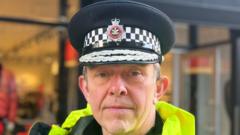
The chief constable of South Wales Police has acknowledged the presence of racists and misogynists within his force, stating that his primary duty is to identify and remove such individuals to restore public trust. Chief Constable Jeremy Vaughan made the comments during a Wednesday hearing before the Welsh Affairs Committee at the UK Parliament, where he was questioned about staff misconduct in the wake of the Sarah Everard murder.
Vaughan told MPs: “Do I think I’ve got racists, misogynists, working for me? Yes. Do I think my work is to find them and excommunicate them from policing? Absolutely yes.” He noted that 126 officers had been dismissed since he took charge six years ago, a figure he described as significantly higher than during his predecessor’s tenure. He added that improved vetting and training processes have strengthened the organization, with only 22 staff currently suspended.
Committee chair Ruth Jones, MP for Newport West and Islwyn, framed the inquiry around the need to address ongoing misconduct issues across Wales in the “post-Sarah Everard era.” She asked how the leaders of the region’s four police forces evaluate their performance in tackling such behavior.
Other chiefs constable provided similar updates. Ifan Charles, head of Dyfed-Powys Police, said several officers are under investigation for gross misconduct, including cases involving misogynistic behavior. Amanda Blakeman, leading North Wales Police, stated her force has been “relentless” in pursuing anti-corruption measures and removing individuals who do not meet professional standards. Mark Hobrough, Chief Constable of Gwent Police, admitted his force had previously suffered from a culture where senior leaders did not represent modern policing values, noting there are currently 37 active misconduct cases and 14 suspended officers.
The hearing also addressed the UK government’s recent policing White Paper, which proposes reducing the number of police forces in England and Wales through mergers. Blakeman expressed concern that centralizing operations into a single force for Wales could negatively impact rural communities, particularly in North Wales, due to increased isolation and reduced service levels. Vaughan indicated broad agreement with the direction of travel regarding efficiencies but emphasized that any restructuring must be properly funded and clearly defined before specifics can be analyzed.
The Sarah Everard case really forced their hand. We need to see concrete results, not just promises.
I wonder if these disciplinary actions will actually translate into better daily experiences for people on the streets.
Removing 126 officers in six years shows they are finally taking the serious issues around misogyny seriously.
Merging forces sounds scary for us up here. Rural areas will definitely suffer from reduced police presence.
It is refreshing to hear chiefs actually admit the problem exists instead of hiding behind corporate jargon.